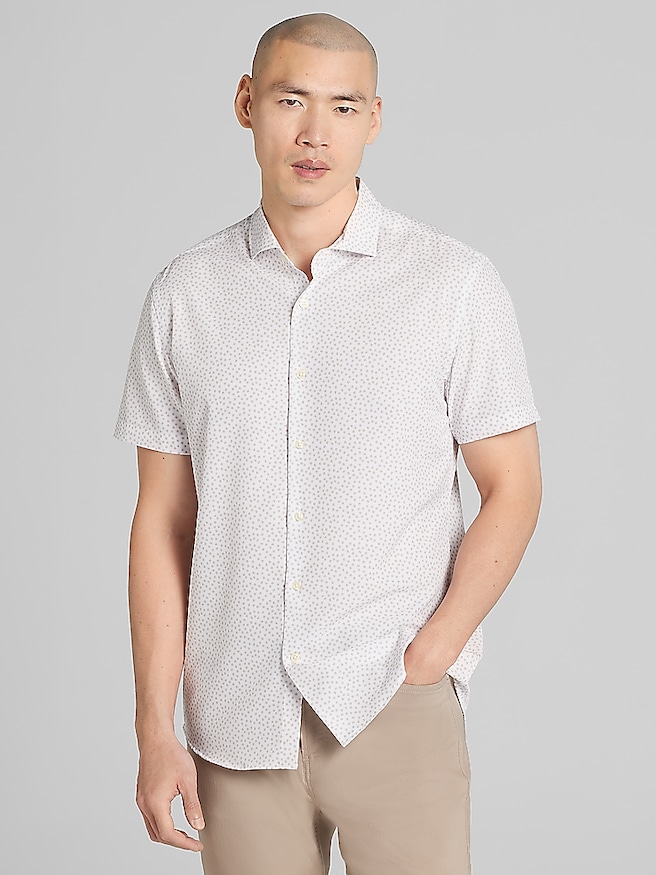
Dress shirts for slim men typically have a narrower cut through the chest, a tapered waist, and less excess fabric in the sleeves, creating a clean silhouette without the billowing that can come from a fuller fit. The goal is a shirt that follows the body while leaving enough room to sit, reach, and move comfortably. On a slender build, that balance matters as much as the size printed on the label. A shirt can fit correctly at the neck yet still carry too much fabric around the middle, especially when tucked into tailored trousers. Slim-fit proportions help reduce that bunching, keeping the front smooth beneath a suit jacket and the back neater above the waistband. Shoulder seams should sit near the edge of the shoulders, while the collar should close comfortably without pressing into the neck. With the cuffs fastened, sleeves should reach the wrist rather than pooling over the hand or pulling upward with ordinary movement. A close fit should not create pronounced pulling across the chest, gaps between buttons, or tightness through the upper arms. Those details are especially noticeable during a presentation, a handshake, or a long stretch seated at a desk. Neck and sleeve measurements provide a useful starting point, but chest, waist, shoulder width, and shirt length also influence the result. Slim, tailored, and extra-slim labels are not standardized, so measurements are more dependable than the fit name alone. Some slender men need additional sleeve length; others need a shorter body or more room across athletic shoulders. A shirt intended to stay tucked should have enough length to remain inside the waistband when reaching overhead. The closer proportions associated with Men's Slim Shirts work particularly well with trim trousers and fitted jackets, provided the shirt still allows natural movement. That makes the category useful for office wardrobes, interviews, wedding attire, and other occasions where a polished appearance needs to remain comfortable beyond the first few minutes.
Fabric and construction shape how a slim dress shirt feels, drapes, and holds up to repeated wear. Cotton is a familiar choice for its breathable feel and ability to absorb moisture, though the weave and fabric weight affect its texture and appearance. Poplin has a relatively smooth surface that looks crisp beneath a jacket, while twill has a subtle diagonal weave and often a softer drape. Oxford cloth has a more visible woven texture, lending itself to dress shirts that bridge professional and relaxed settings. Fine pinpoint weaves can provide a middle ground between a smooth finish and a lightly textured surface. For a close-fitting shirt, fabric with a small amount of stretch can make reaching forward or bending the elbows feel less restrictive. Stretch complements a suitable fit; it should not be relied on to compensate for a shirt that is too tight through the chest or shoulders. Cotton blends may offer easier maintenance or improved resistance to creasing, but their feel and breathability vary with the fibers and construction. Non-iron and wrinkle-resistant descriptions generally indicate features designed to reduce wrinkles, not a guarantee that the shirt will remain perfectly smooth in every situation. A seat belt, crowded suitcase, or full day of sitting can still leave marks. Durability depends on more than fabric thickness. Secure buttons, even stitching, well-finished seams, and stable collar and cuff construction all contribute to a shirt that maintains its appearance through regular use. Care should follow the garment label, particularly when stretch fibers, special finishes, or delicate details are involved. Excessive dryer heat can contribute to shrinkage or affect stretch performance, changing a fit that was comfortable before washing. Prompt removal from the dryer, when tumble drying is permitted, can help limit settled-in wrinkles. Hanging the shirt neatly supports its shape between wears, and ironing at the recommended setting helps preserve the fabric. Collars and cuffs deserve attention because they receive frequent contact with skin, watches, and jacket sleeves. Treating marks promptly according to the care instructions is generally easier than allowing them to build up over repeated wears.
Color, pattern, collar shape, and cuffs give dress shirts for slim men their range, from understated business staples to shirts with more personality for celebrations. White creates a crisp contrast with dark tailoring and provides a neutral foundation for ties, pocket squares, and other accessories. Light blue offers a softer contrast while remaining easy to coordinate with navy, gray, and many patterned jackets. Fine stripes or small checks introduce visual interest without dominating the outfit, especially when the scale of the shirt pattern differs from that of the tie or jacket. For an important meeting, a smooth, lightly patterned shirt can look composed even after the jacket comes off. For a wedding reception or dinner, an open collar and well-fitting trousers can feel dressed up without requiring every element of a suit. Collar choice changes the overall impression: a spread collar leaves more space for a fuller tie knot, while a point collar creates a narrower frame. A button-down collar has a more relaxed character and can suit workplaces where the dress code is less formal. The collar should sit comfortably under jacket lapels, and its shape should remain balanced when worn without a tie. Barrel cuffs offer straightforward everyday wear, while French cuffs bring a dressier finish and require cufflinks. Sleeve length also affects how the shirt pairs with tailoring, since a small amount of cuff showing beyond the jacket sleeve can create a tidy transition. A slim dress shirt is useful for graduates building a professional wardrobe, men updating their office clothing, and anyone who prefers less fabric around the torso. It can also make a practical gift when the recipient’s neck size, sleeve length, fit preference, and care habits are known. Someone who travels frequently may value easy-care fabric, while someone who wears a tie daily may place greater importance on collar comfort and structure. The most versatile choices combine suitable proportions, a comfortable fabric, and details that match the occasions ahead, making the shirt feel like a natural part of the outfit rather than something that needs constant adjustment.