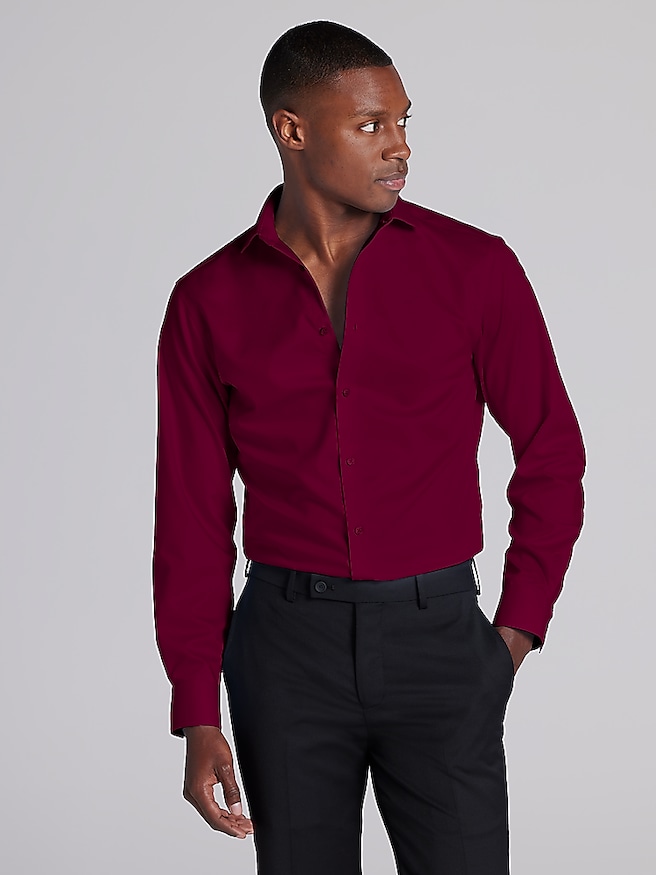
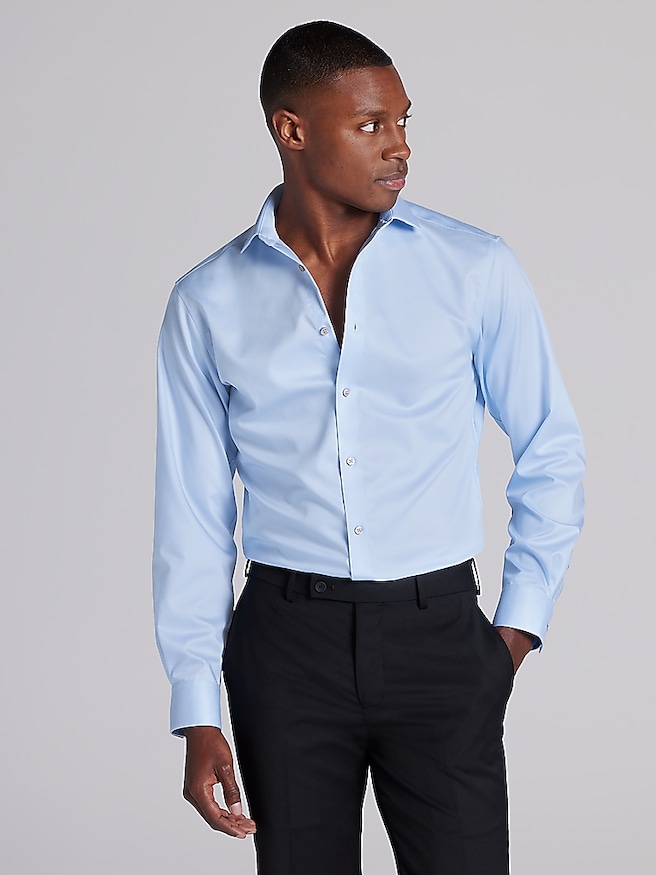
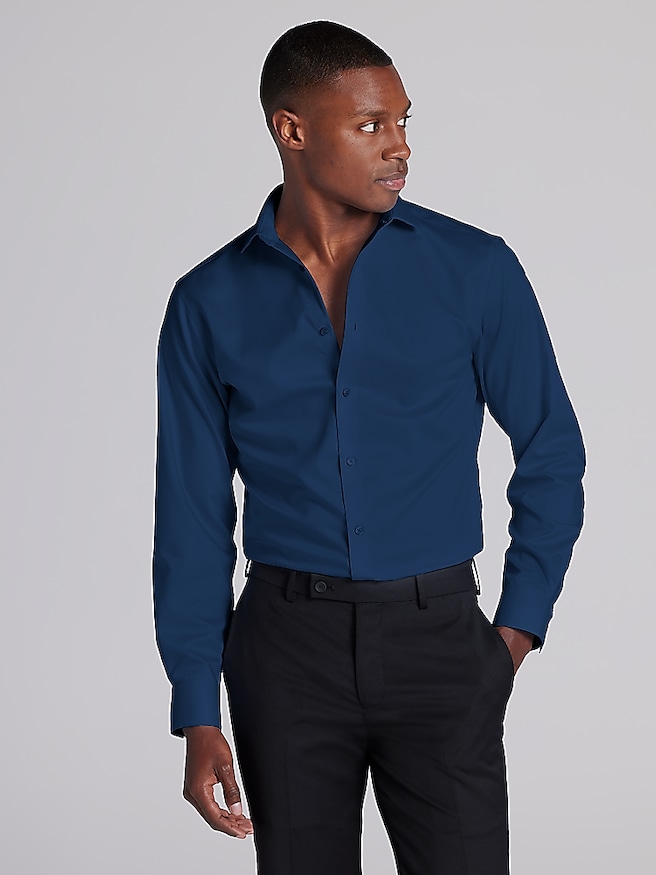
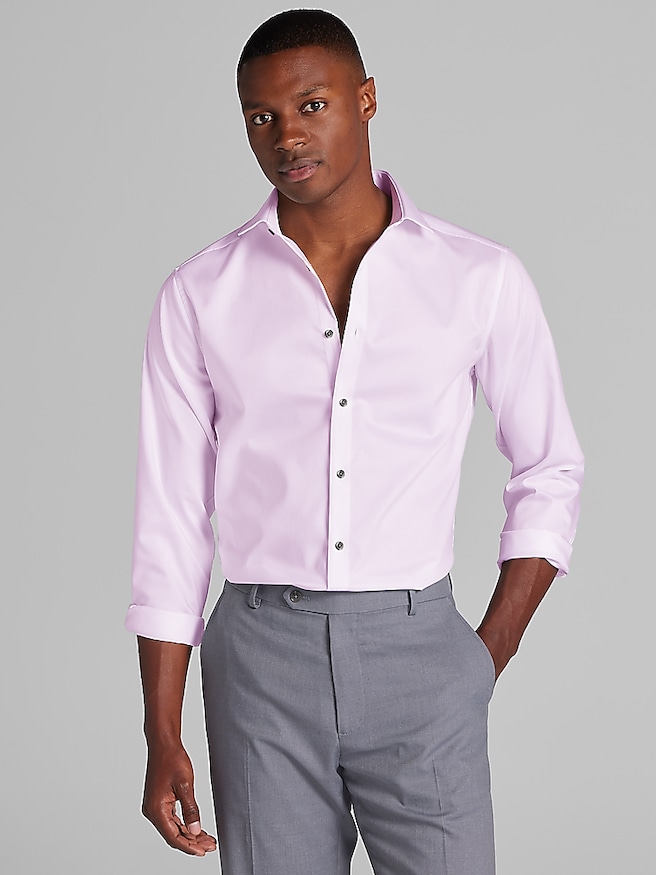
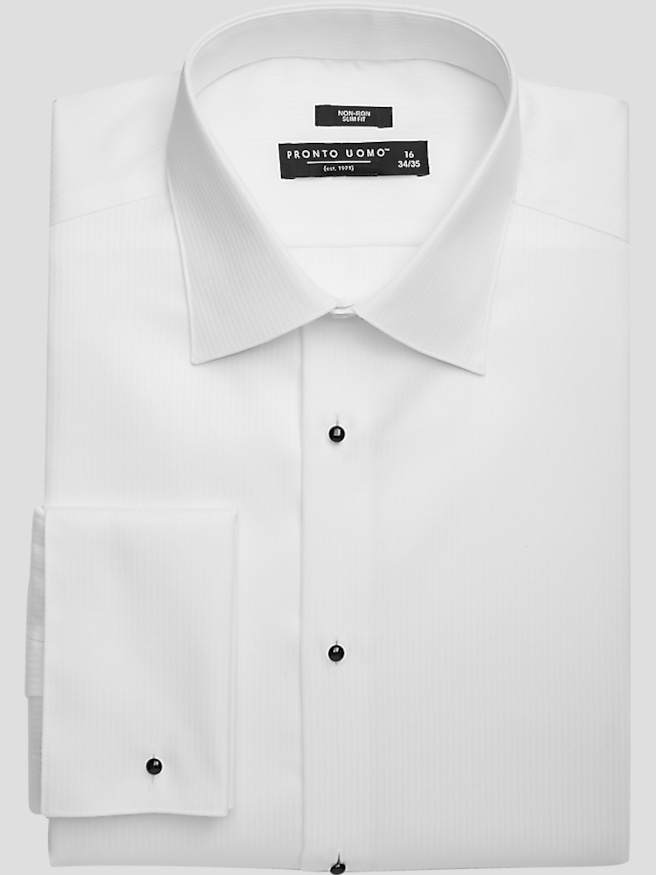
A dress shirt for a freshman party brings a little polish to a night that might start with dinner near campus and end with music in a crowded living room. A solid color or subtle pattern paired with dark denim or chinos usually strikes the right balance: more put together than a T-shirt, but relaxed enough for meeting classmates and settling into a new social scene. White, light blue, and soft pink offer a clean starting point, while navy, muted green, and burgundy create a deeper look for evening gatherings. Fine stripes, small checks, and quiet woven textures add interest without making the whole outfit feel busy. Under warm indoor lighting, a textured solid can have just as much character as a larger print, especially when the rest of the outfit stays simple. Cotton is a familiar choice for its breathable feel, though the weight and weave matter as much as the fiber itself. A smooth poplin shirt tends to look crisp and feel relatively light; Oxford cloth has a more substantial texture and a naturally casual presence. Twill often feels soft and drapes comfortably, with a diagonal weave that gives solid colors a little depth. Cotton blends can offer easier upkeep, and a small amount of stretch may make reaching, sitting, and dancing more comfortable. Those qualities are especially useful when one shirt needs to work for several hours rather than just look good in a photo. During the cooler months, a lighter shirt can sit comfortably beneath a sweater or jacket without becoming too warm once the room fills up. The strongest choice is usually a shirt that feels familiar on the body rather than stiff or costume-like. For a casual freshman gathering, an open collar, dark jeans, and clean sneakers can be enough. For a party in a reserved venue, the same general look becomes sharper with chinos and leather loafers. The dress shirt supplies the structure, while the fabric, color, and accompanying clothes set the level of formality.
Fit has a bigger effect on that balance than a label such as slim or classic. A well-fitting freshman party dress shirt follows the body without pulling across the chest, gripping the upper arms, or opening between the buttons when the wearer sits down. Shoulder seams should sit close to the shoulder edges, and sleeves should reach the wrist without spilling over the hands. A slim fit can give a neat outline on someone who prefers less fabric through the torso, while a classic fit offers more room for broader builds or anyone who likes an easier feel. Neither should restrict movement when leaning across a table or raising an arm to greet a friend. Collar comfort matters even without a tie: the neckline should rest neatly rather than press against the throat or collapse into wide folds. A button-down collar keeps its points anchored for a relaxed, tidy appearance, while a spread or point collar can look a little dressier beneath a jacket. Hem length also changes how the shirt wears. A long, curved dress-shirt tail generally looks more intentional tucked into trousers, while a shorter hem designed for untucked wear can suit a casual party. Too much fabric hanging below a jacket can make an otherwise clean outfit look unfinished. Small styling choices keep the result easygoing. Leaving the top button open softens the neckline, and neatly folding the cuffs back works better than pushing the sleeves into tight bunches. A lightweight undershirt close to the wearer’s skin tone can be less noticeable beneath pale fabric; a V-neck can stay hidden when the collar is open. With floral or geometric patterns, neutral trousers give the print room to stand out without competing colors. Footwear should match the setting as much as the shirt: minimal sneakers suit an informal gathering, while loafers bring a dressier finish. A tie usually is not necessary for a casual freshman party, though an invitation with a formal dress code should take priority over the usual campus mood.
A dress shirt that earns a place in a college wardrobe needs to hold up beyond one evening. The same understated stripe or solid color can move from a freshman party to a class presentation, a club dinner, or a family celebration with a change of trousers and shoes. That flexibility makes fabric feel, construction, and care requirements worth considering alongside appearance. Secure buttons, tidy seams, and evenly finished cuffs are useful signs of careful construction, especially around areas that see repeated handling. Collars and cuffs tend to show wear first, so comfortable fabric and sensible laundering matter more than a shirt that looks crisp only on its first outing. Wrinkle-resistant finishes can help simplify upkeep between classes and social plans, but they do not make a shirt immune to creases or remove the need to follow its care label. Machine-washable shirts can be practical for a shared laundry room; fabrics that require professional cleaning involve a separate routine. Prompt attention to a food spot, washing with suitable colors, and removing a shirt from the dryer when the care instructions recommend it can help preserve its appearance. A hanger gives the collar and shoulders more support than the back of a desk chair, and a quick press or careful steaming, when permitted, can smooth the areas most visible beneath an open jacket. For someone giving a dress shirt to a student, a known neck and sleeve measurement or the size of a well-fitting shirt is more useful than guessing from height alone. An understated color also leaves room for the recipient’s own style. Students building a wardrobe for dressier milestones may find related occasion inspiration in the Button Down Formal Shirt For Prom collection, while a freshman party generally leaves more room for open collars and casual pairings. The lasting appeal is straightforward: a shirt comfortable enough for a full evening, neat enough for group photos, and versatile enough to wear again without recreating the exact same outfit.