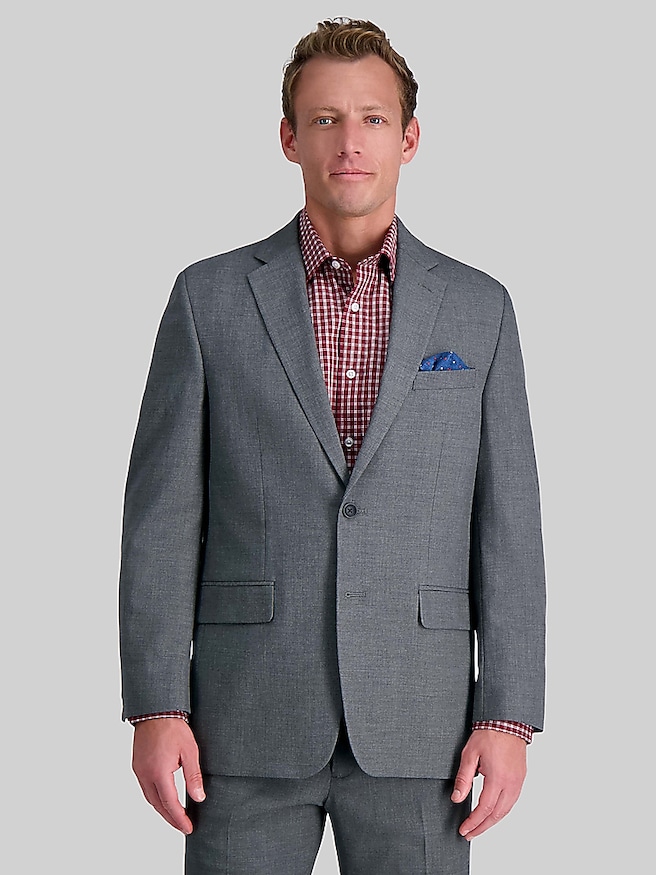
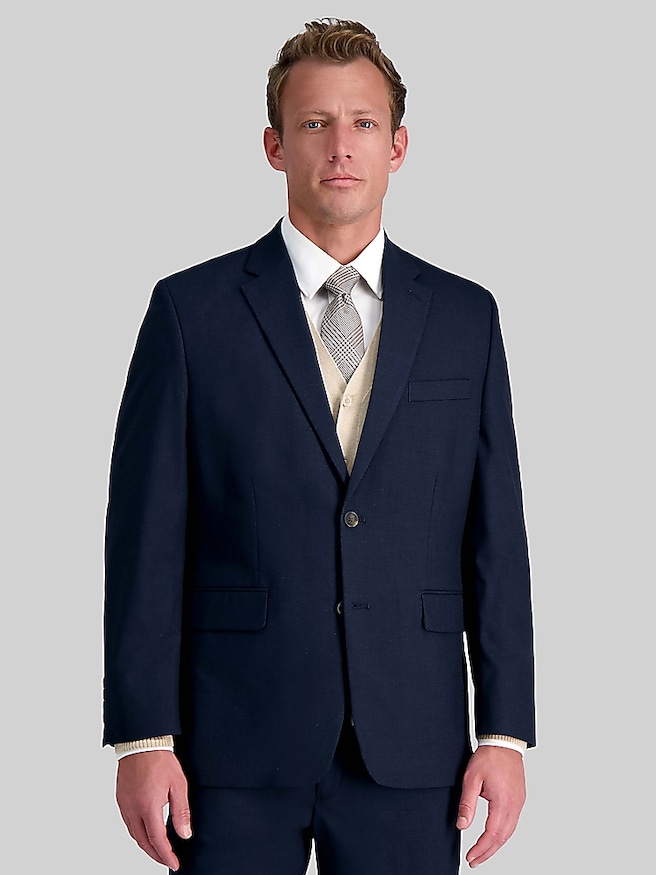
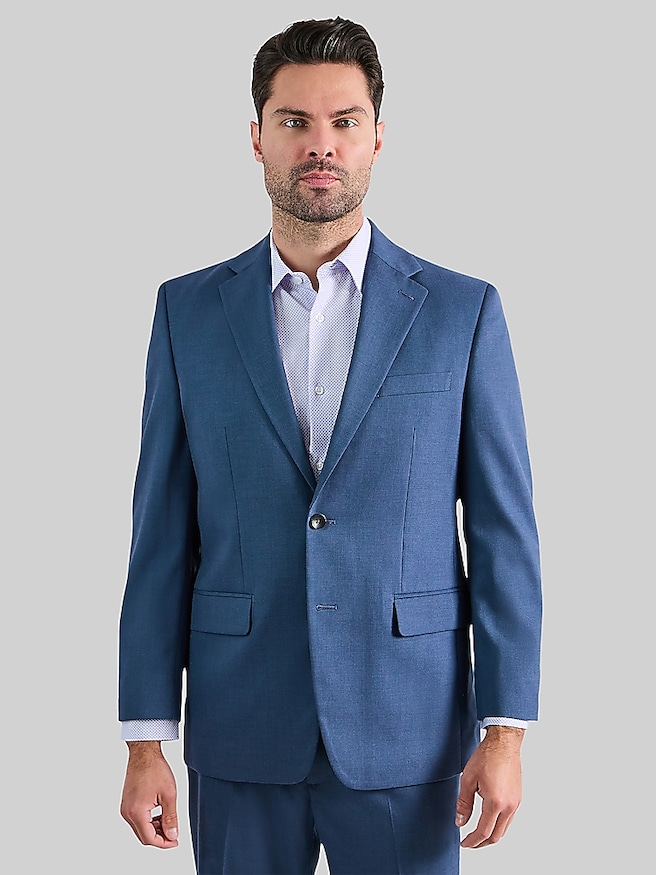
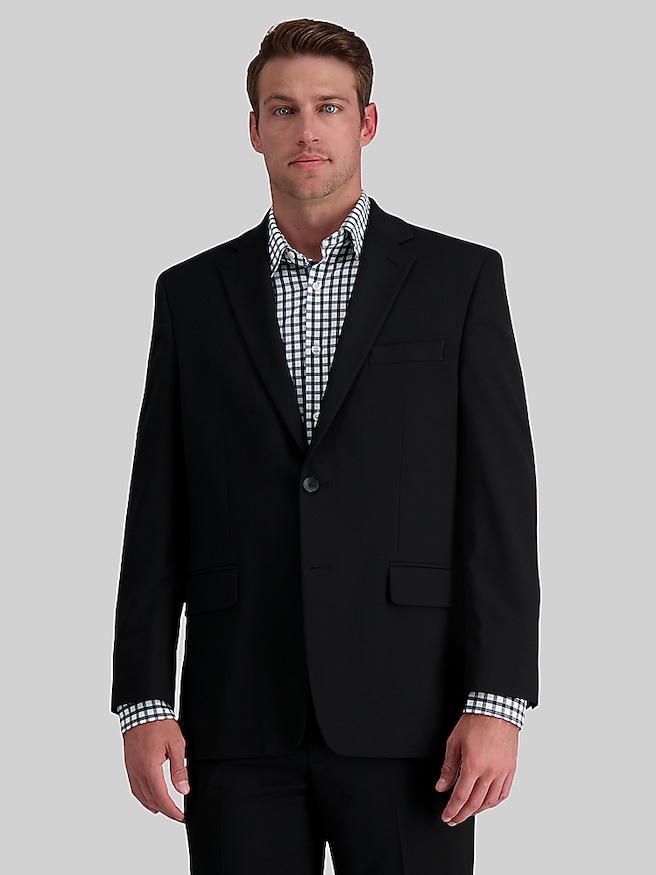
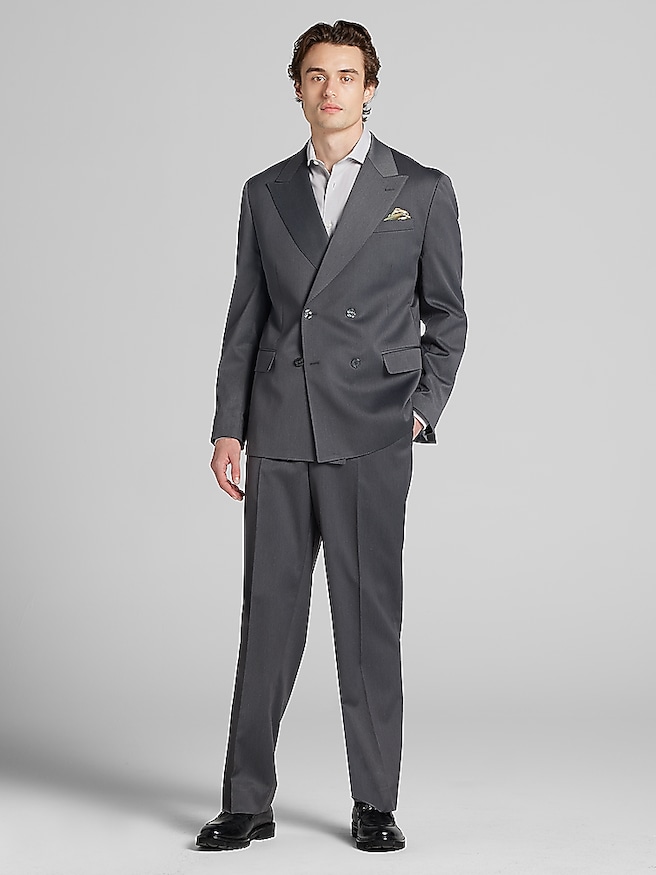
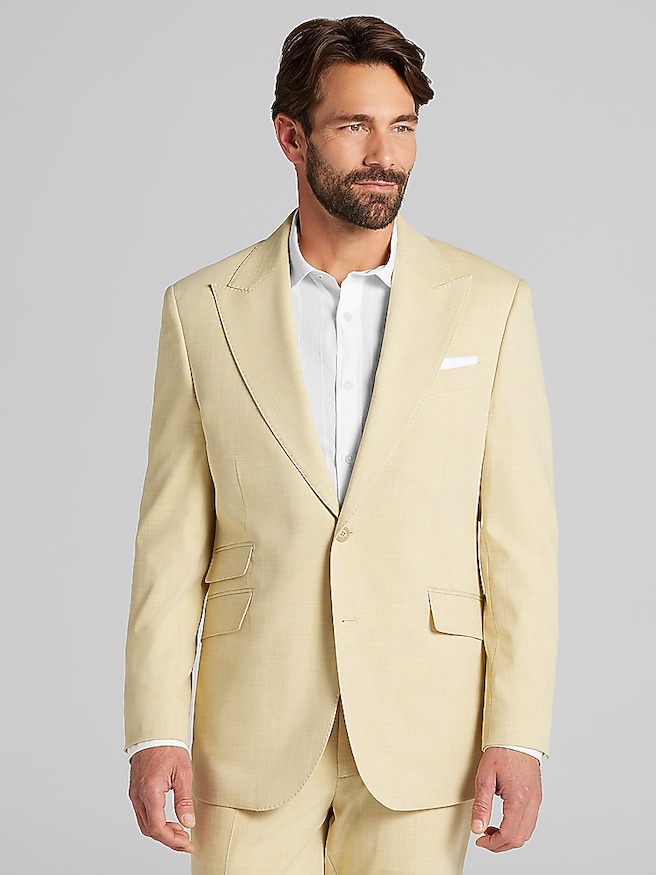
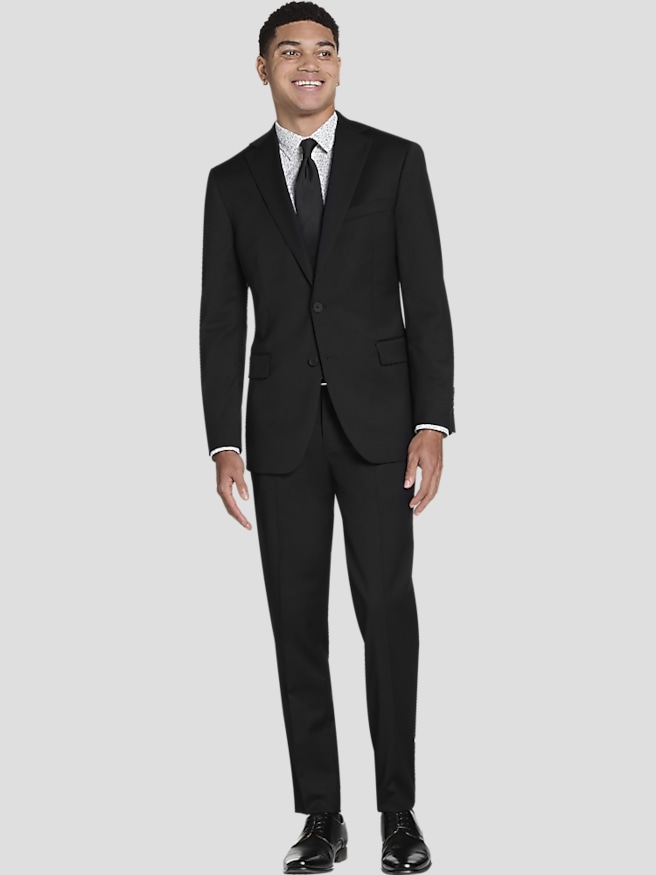
Double-breasted wedding suits bring a distinctive sense of occasion to wedding attire, with overlapping jacket fronts, paired rows of buttons, and a broad sweep of lapel that frames the shirt and tie. The silhouette has roots in traditional tailoring, yet its appeal is as much about proportion as history: a defined shoulder, a shaped waist, and a clean line through the trousers create a composed look without relying on elaborate decoration. For a groom, that structure can provide a clear visual focal point in ceremony portraits and full-length photographs. For groomsmen or guests, it offers a polished alternative to a single-breasted suit when the invitation calls for formal or elevated cocktail attire. The effect changes considerably with color and texture. Deep navy feels restrained and versatile, charcoal has a crisp architectural quality, and lighter neutral tones offer a softer visual contrast against a white shirt. Solid fabrics emphasize the jacket’s construction, while a subtle woven pattern adds depth without competing with a boutonniere or patterned tie. Peak lapels are a familiar feature of double-breasted tailoring, drawing the eye upward and giving the chest a strong frame. A six-button arrangement often reads as more traditional, while a four-button configuration can create a longer, more open line across the front, depending on its placement. Neither detail determines the entire look; lapel width, jacket length, and trouser shape matter just as much. In a coordinated wedding party, matching the overall level of formality usually matters more than making every accessory identical. A groom might wear a textured ivory tie while attendants wear a muted color drawn from the celebration’s palette, allowing the suits to establish continuity. The invitation remains the best reference for expectations, especially for black-tie celebrations, where a conventional double-breasted suit is not automatically a substitute for a tuxedo. Within the appropriate dress code, this silhouette suits everything from a city hall ceremony followed by dinner to a large reception with a full wedding party.
Fabric and construction influence how double-breasted wedding suits look after several hours of standing, sitting, greeting guests, and moving across a dance floor. Wool suiting is valued for its drape, resilience, and ability to recover from light creasing, making it a practical foundation for a structured jacket. Worsted wool typically has a smooth, defined surface that keeps the lapels and overlapping front looking sharp. Wool blends can introduce other qualities, including added stretch or a softer hand, though performance depends on the full fiber composition and the way the cloth is woven. Linen contributes visible texture and a relaxed character, with natural creasing that becomes part of its appearance rather than a flaw. A restrained sheen can add dimension under reception lighting, but a matte finish generally keeps attention on the cut and accessories. The inner construction matters, too: support through the chest helps maintain shape, while lining can allow the jacket to move smoothly over a dress shirt. Because the front overlaps, a double-breasted jacket benefits from particular attention to fit across the torso. The lapels should lie smoothly rather than bow away from the chest, and the buttoned waist should feel secure without pulling into pronounced diagonal lines. Shoulders should sit cleanly, with sleeves falling without deep twisting or bunching. The internal fastening helps anchor the underlapping panel, supporting a balanced closure instead of leaving one side to shift independently. A useful fitting reflects the actual wedding day: sitting at a table, reaching forward for a handshake, and bringing the arms together should all feel manageable. The jacket is generally worn fastened while standing, following its intended button configuration, and can be opened for comfort when seated. Trousers with enough room through the seat and thigh help preserve that ease without sacrificing a neat outline. A moderate or higher rise often works well with the overlapping jacket, keeping the shirt from interrupting the silhouette below the fastening point. For a broader look at wedding silhouettes with an emphasis on proportion, Tailored Wedding Suits provides a related perspective on polished wedding attire.
The finishing details of a double-breasted wedding suit work best when they complement its strong lines rather than compete with them. A shirt collar with sufficient presence sits comfortably beneath substantial lapels, while a tie knot proportionate to the collar keeps the neckline balanced. A small amount of shirt cuff visible beyond the jacket sleeve creates a clean border, particularly when hands are visible in photographs. Pocket squares need not duplicate the tie; a simple white fold can bring definition to the chest, while a quiet accent color can connect the outfit to the wedding setting. Boutonnieres sit most naturally at the lapel buttonhole, with their size kept in proportion to the lapel itself. Smooth leather dress shoes reinforce the suit’s formality, and well-maintained soles and comfortable insoles matter during a long ceremony or an extended reception. Trouser hems should fall cleanly over the shoes without excess fabric collecting at the ankles. These small decisions also affect how useful the suit becomes beyond the wedding. A restrained color and understated cloth can carry the same silhouette into anniversary dinners, formal celebrations, and professional occasions where assertive tailoring feels appropriate. Long-term appearance depends as much on routine care as on the initial fabric choice. After wear, empty the pockets, brush away surface dust with a suitable garment brush, and hang the jacket on a broad, shaped hanger that supports the shoulders. Trousers benefit from hanging in a way that preserves their crease, and both pieces should have space to air before returning to storage. Follow the care label, address stains promptly with professional advice when needed, and avoid frequent cleaning simply out of habit. When professional cleaning is necessary, treating the jacket and trousers together helps maintain a consistent appearance. Careful pressing protects lapel shape and prevents unwanted shine, helping the suit retain the composed finish that makes double-breasted tailoring so effective for wedding photographs and memorable occasions afterward.