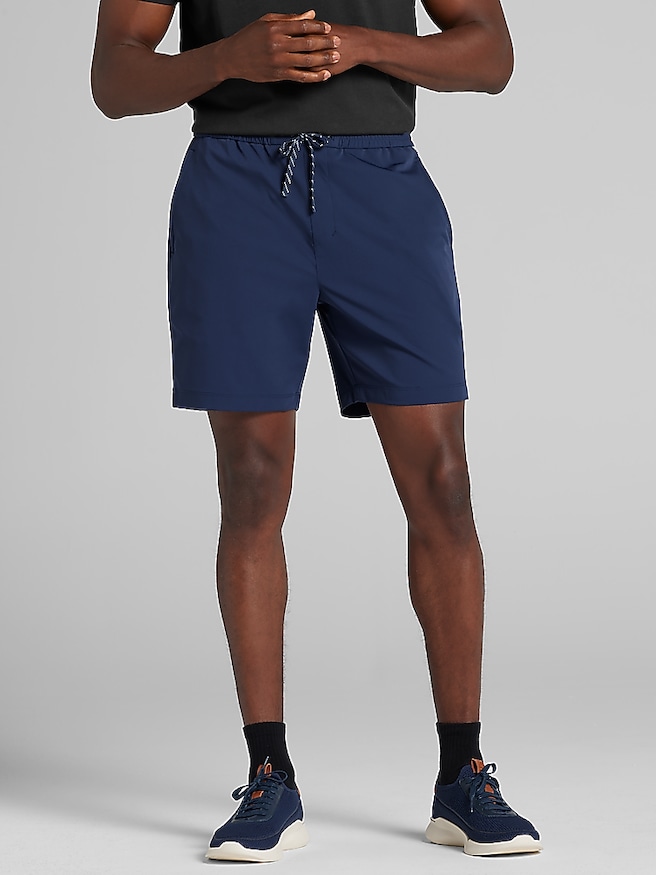
Jogger shorts combine the easy feel of athletic clothing with a shape that looks at home beyond a workout. The familiar elastic waistband, adjustable drawcord, and relaxed movement of jogger pants translate naturally into shorts for errands, casual plans, travel, and downtime. Their appeal is practical: enough comfort for sitting through a long drive, enough freedom for a walk, and a clean enough outline to pair with a favorite tee or polo. Fabric makes a noticeable difference in how that balance feels. Cotton-rich jersey generally has a soft hand and a flexible drape, making it comfortable against the skin without feeling overly structured. French terry has small loops on the inside and a smooth outer surface, giving shorts a bit more substance while maintaining an easy feel. Fleece-backed fabrics tend to feel plush and substantial, though that extra thickness can also create a fuller silhouette. Woven fabrics often hold a crisper outline, while blends with stretch can make bending, reaching, and sitting more comfortable. Polyester or nylon blends may offer useful resilience, but moisture management and quick-drying performance depend on the actual fabric and its stated features rather than the fiber name alone. Fabric weight matters just as much as composition. A lighter knit folds easily into a gym bag, while a denser material can give pockets and hems more definition. Neither is automatically better; the useful distinction is whether the shorts are meant primarily for exercise, relaxed everyday wear, or a little of both. Smooth seams, an even hem, and a waistband that lies flat all contribute to comfort that lasts beyond the first try-on. The best match feels natural during ordinary movement, without constant adjustments at the waist or pulling across the seat. That everyday ease is what gives jogger shorts a place in a casual wardrobe, whether the day's plans involve a coffee stop, a few household projects, or an unhurried afternoon with friends.
Fit gives jogger shorts their character, and a relaxed waist does not have to mean a baggy leg. A balanced shape leaves comfortable room through the seat and thigh, then falls toward the hem without flaring dramatically or gripping the leg. Some cuts have a narrower opening, while others keep a straighter line; either can look neat when the proportions work with the wearer's build. Inseam length changes the overall impression, too. A shorter length shows more leg and can make movement feel less restricted, while a longer length offers more coverage and a more substantial profile. The right choice is less about following a single rule than about where the hem sits when standing, walking, and taking a seat. Rise deserves equal attention because it affects where the waistband rests and how much room remains through the seat. A drawcord fine-tunes the waist, but it cannot compensate for shorts that are too tight across the hips or too loose everywhere else. Pocket placement also has a practical role. Deep, stable pockets can keep small belongings from shifting as much, while a secure closure may be useful for a key or card. A large phone can change the drape of a lightweight knit, so pocket construction matters for anyone who carries more than the basics. For everyday outfits, a simple crewneck tee keeps the athletic influence clear, while a knit polo and clean sneakers give the same general silhouette a more finished look. A lightweight overshirt can add definition without making the outfit feel dressed up. Jogger styling and a slim fit can overlap, although the waistband and fabric often distinguish their overall feel. The narrower profiles associated with Cyber Monday On Slim Fit Shorts offer another point of comparison for a casual wardrobe built around comfortable proportions. With either approach, shorts tend to look most intentional when the top and footwear share the same relaxed level of formality.
Lasting comfort also depends on how jogger shorts are made and cared for. Waistband recovery is especially important: elastic should feel supportive without digging in, and the casing should remain smooth rather than twisting during wear. Reinforcement around pocket openings and other frequently stressed areas can help construction stand up to repeated use. A substantial fabric is not automatically more durable than a lighter one; yarn quality, stitching, and the demands placed on the shorts all play a part. Repeated friction from a seat, bag, or crowded wash load can affect the surface of some knits, while excessive dryer heat can contribute to shrinkage or weaken stretch fibers. The care label remains the most reliable reference because similar-looking fabrics may need different treatment. Washing with similar colors, closing zippered pockets, and avoiding an overloaded machine can help limit unnecessary abrasion. Turning shorts inside out may help protect the outer surface, especially when the fabric has a soft finish. Promptly removing them after washing and using the recommended drying method can also help preserve their shape. For travel, a pair that folds compactly and works with several familiar tops can simplify packing, though a garment intended for lounging may not have the pocket security or drying performance needed for more active plans. Jogger shorts can also make a useful gift for a son, brother, partner, or friend whose casual wardrobe favors comfort. Familiar details provide better clues than a size label alone: the length they usually wear, whether they prefer a close or roomy thigh, and whether they reach for soft knits or smoother woven fabrics. An adjustable waist offers some flexibility, but the recipient's preferred fit still matters. Those small considerations help turn an everyday basic into something that gets regular use, from changing after a workout to settling in with a book or heading out for a low-key meal.