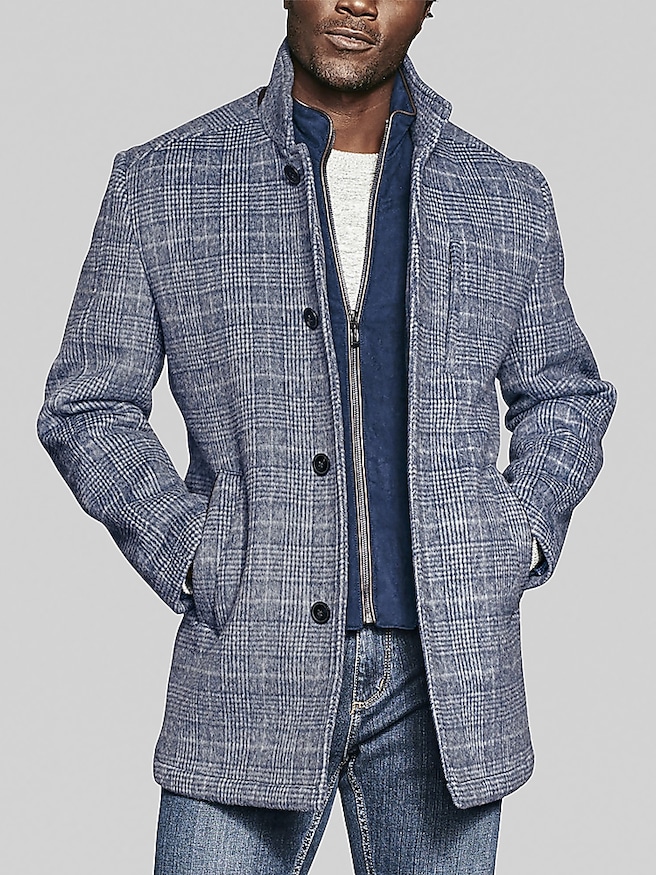
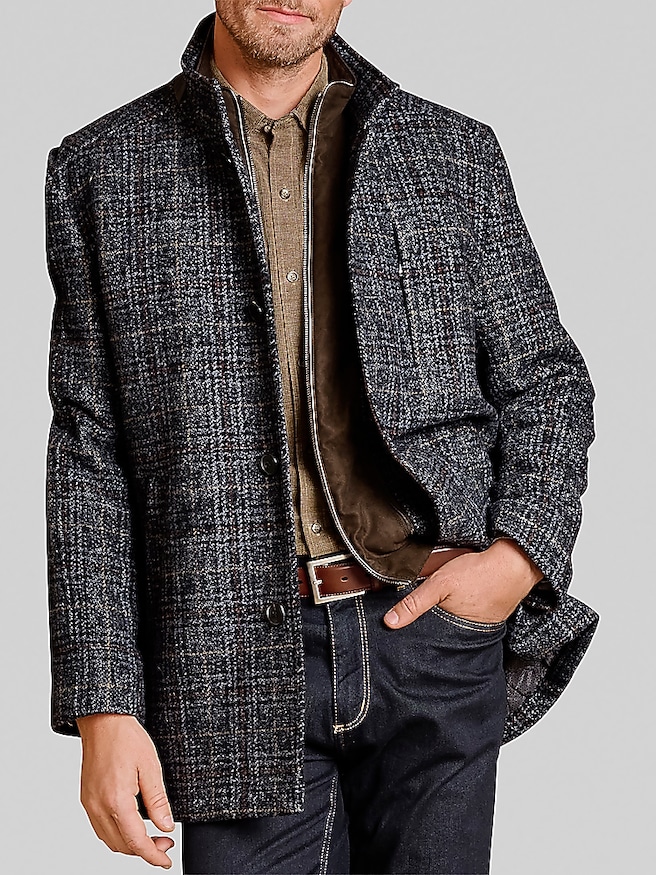
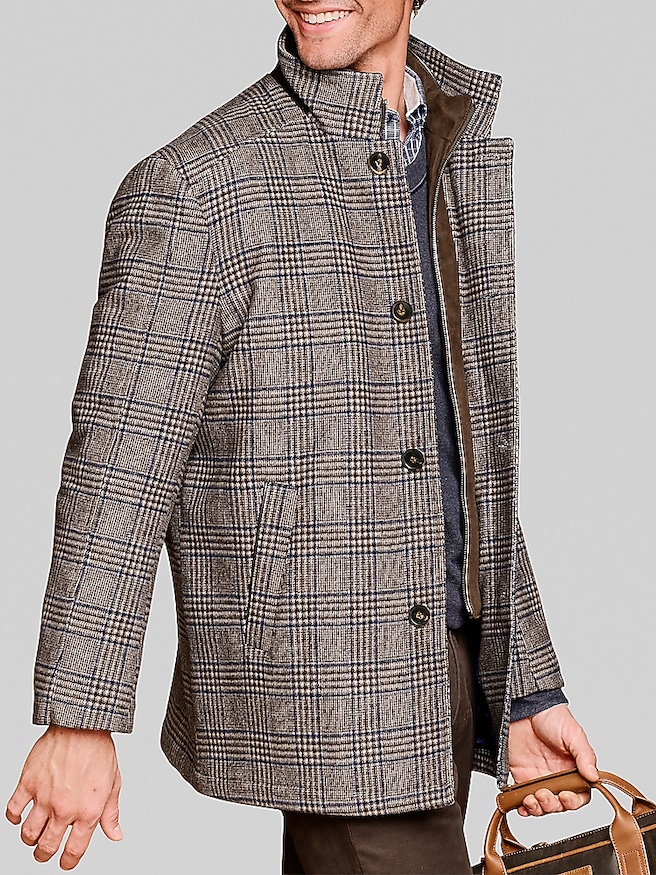
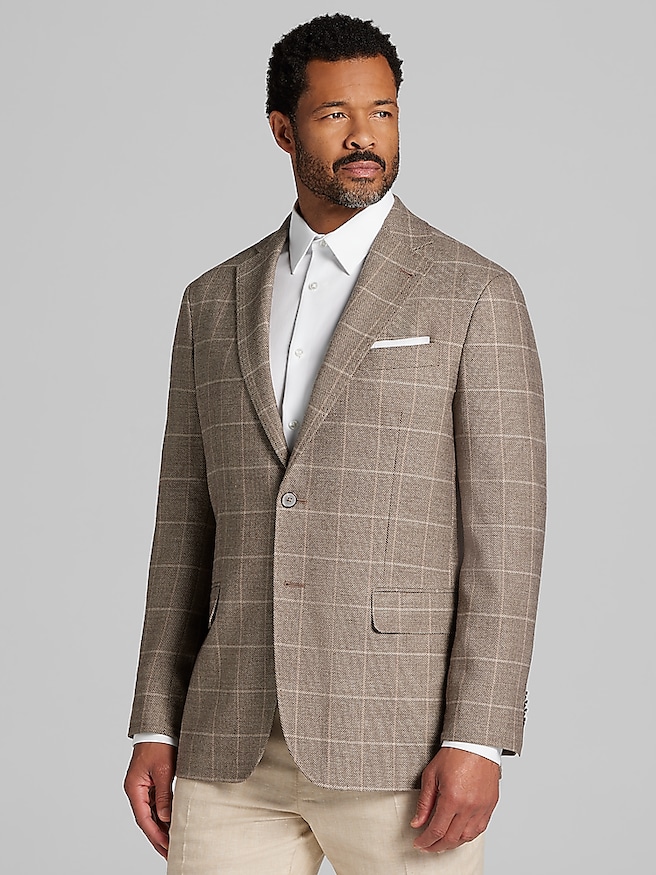
A peacoat brings a distinctive balance of structure and ease to a man's outerwear wardrobe, making it a thoughtful choice for Cyber Monday shopping. Its naval roots show in the broad lapels, substantial collar, and traditionally double-breasted front, details that give the coat its recognizable character without requiring formal clothes underneath. The overlapping front adds coverage across the torso, while a hip-to-upper-thigh length can offer a practical balance between warmth and freedom of movement. Fabric makes a meaningful difference in how that shape looks and feels. Wool provides natural insulation and a textured surface, while wool blends can combine that character with fibers chosen for strength, softness, or a lighter feel. Fiber percentages tell only part of the story: fabric density, thickness, lining, and construction also influence comfort and performance. A tightly woven cloth can help limit drafts, but a peacoat should not be treated as waterproof unless its care and performance information specifically supports that use. Smooth linings help sleeves move over knitwear and jacket fabrics, an important detail when getting dressed for an early commute or heading out after work. Navy and charcoal emphasize the coat's maritime and tailored associations, while black creates a sharper contrast with lighter trousers and sweaters. Brown and camel tones bring a softer visual contrast to dark denim and gray flannel. Surface texture matters, too. A brushed finish feels visually relaxed, while a smoother cloth reads a little dressier. Well-attached buttons, neatly finished seams, and a lining that sits smoothly contribute to a coat that feels considered each time it is worn. Pocket placement deserves attention as well, particularly for someone who regularly carries gloves or wants a comfortable place to rest cold hands. The strongest choice is not necessarily the heaviest coat, but one whose fabric, construction, and coverage suit the way it will be used.
Fit determines whether that substantial fabric feels comfortable or cumbersome. A peacoat should follow the shoulders without leaving the upper sleeves collapsed or pulling the back tight. With the front fastened, the lapels should lie neatly and the fabric across the chest should remain relatively smooth rather than forming strong diagonal creases around the buttons. Enough room for a sweater is useful, but excessive space through the body can make a short, structured coat look boxy. The right balance depends on the layers underneath. Someone who wears fine-gauge knitwear and an Oxford shirt may prefer a closer shape than someone who regularly adds a thick cable-knit sweater. For office wear, the coat also needs to accommodate a suit jacket or sport coat without squeezing its shoulders or bunching its sleeves. Hem coverage is worth checking; a jacket extending noticeably below a shorter peacoat can interrupt an otherwise clean outline. Sleeve length should provide comfortable wrist coverage with arms relaxed, while still allowing easy movement when reaching for a train handrail or holding a steering wheel. Sitting down, reaching forward, and bending the elbows are useful ways to judge mobility, especially across the upper back. A back vent can help the coat move rather than catch at the hips. Men with broad shoulders may need more room above the waist, while a straighter build may suit a cleaner line through the torso. Related silhouettes in Cyber Monday Deals On Modern Fit Coats provide another point of comparison when a more defined shape is preferred. Size labels alone cannot capture these distinctions, so garment measurements and the intended layering combination are more useful than simply choosing the same size as a shirt. A flattering fit preserves the peacoat's structure while leaving enough space to use it comfortably throughout an ordinary day.
That balance makes a peacoat useful for a range of routines and occasions. Over dark jeans, leather boots, and a ribbed sweater, it adds definition without making a casual outfit feel overly dressed. With tailored trousers, a button-down shirt, and polished shoes, the same general silhouette feels appropriate for the office, dinner reservations, or an evening performance. A scarf tucked inside the neckline can add warmth without hiding the lapels, and gloves are easy companions for walks between the station and the office. For gift giving, a peacoat suits someone who appreciates clothing with a clear purpose and a recognizable shape, whether that is a recent graduate building a work wardrobe, a father replacing a well-used coat, or a partner who prefers classic outerwear. The most helpful clues are the recipient's usual layers, preferred coat length, and existing wardrobe colors. Measurements from a coat that already fits well can be more informative than a guess based on height alone. Care is equally important to the coat's long-term appearance. Follow the sewn-in care label, since wool content, linings, and internal construction can require specific cleaning methods. Many structured wool coats call for professional dry cleaning rather than machine washing. Between cleanings, gentle brushing with a suitable garment brush can lift surface dust, and a broad, supportive hanger helps maintain the shoulder shape. Let a damp coat dry naturally in a ventilated space, away from radiators and other direct heat. Avoid loading the pockets with heavy objects that can stretch their openings or distort the front. If pilling develops, use a fabric-care tool appropriate for the material and work carefully rather than pulling at the fibers. Before extended storage, make sure the coat is clean and completely dry, then protect it with a breathable garment cover. These small habits help preserve the texture, shape, and everyday usefulness that make a peacoat worth reaching for year after year.