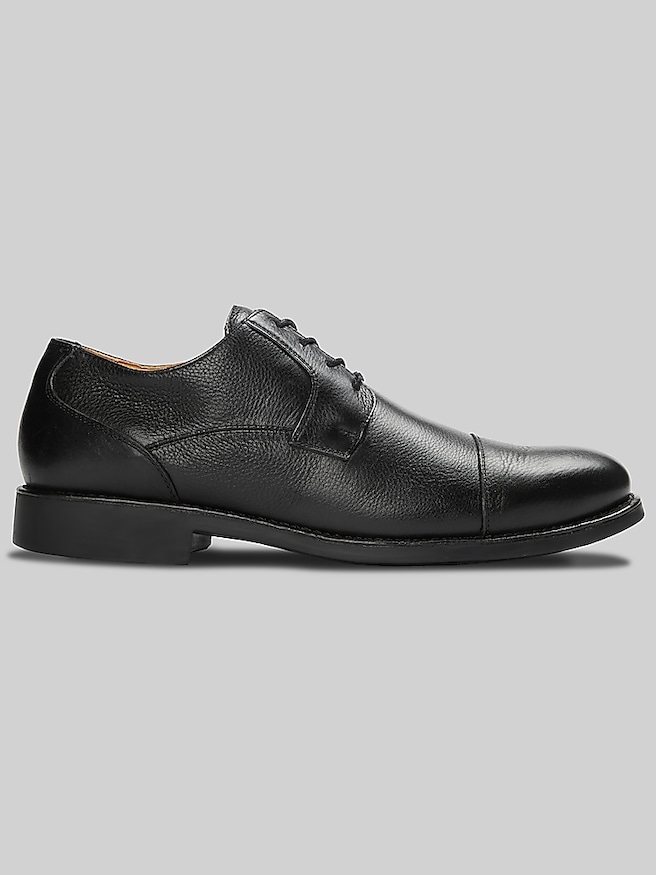
Cyber Monday shoe shopping brings dress shoes, loafers, and casual footwear into focus, with each category serving a distinct place in a man’s wardrobe. A pair that looks at home beneath tailored trousers may have a different shape, finish, and sole from footwear intended for denim and a relaxed button-down. Oxfords have closed lacing that creates a neat profile, making them a natural companion to business suits and formal daytime clothing. Derbies have open lacing, which gives the upper a slightly less formal appearance and can allow more adjustment across the instep. Loafers offer a slip-on alternative, with designs ranging from streamlined and understated to more substantial shapes with decorative stitching or hardware. For outfits built around dark trousers, charcoal tailoring, or clean-lined casual clothing, Cyber Monday black loafers connect a familiar color with an adaptable silhouette. Smooth black leather creates a crisp contrast with gray or navy fabric, while brown footwear introduces warmer tones that work particularly well with tan, olive, and blue. The shape of the toe also affects the overall impression. A gently rounded or almond-shaped toe tends to sit comfortably between traditional and contemporary styling, while a pronounced square or elongated toe makes a stronger visual statement. Decorative perforations, often called broguing, add texture without changing the basic function of the shoe. A plain upper keeps attention on the shape and finish; a cap toe adds definition across the front. For an office presentation, wedding reception, dinner reservation, or graduation celebration, the relationship between footwear and clothing matters more than decoration alone. A slim trouser opening generally pairs well with a streamlined shoe, while fuller trousers can visually balance a more substantial sole. These proportions help footwear look intentional without drawing attention away from the rest of the outfit. A clean, well-maintained finish contributes just as much to that impression as the style itself.
Materials and construction influence how shoes feel through a full day and how they develop with repeated wear. Smooth leather can take a polish and gradually form creases where the foot bends. Full-grain leather retains its natural grain surface, while other leather finishes may be treated for a more uniform appearance. Neither the leather description nor a glossy finish tells the whole story: lining, stitching, reinforcement, and sole construction also contribute to comfort and longevity. Suede has a soft, textured surface that works well with less formal tailoring and casual trousers, though it needs a different cleaning routine from smooth leather. Fabric uppers can create a lighter, more relaxed impression, while synthetic materials vary considerably in flexibility, breathability, and care requirements. Inside the shoe, a smooth lining and well-placed seams help reduce friction. Underfoot cushioning can soften the feel of a firm floor, but it cannot compensate for a shoe that squeezes the toes or allows the foot to slide forward. Fit is best assessed while standing and walking, with the type of socks intended for regular wear. The heel should feel secure without persistent rubbing, the widest part of the foot should align with the widest part of the shoe, and the toes need room to move without pressing against the front. Length alone is not enough; width and instep volume can make two shoes in the same labeled size feel noticeably different. Lace-up styles allow some adjustment, whereas loafers depend more closely on the shape of the opening and the fit around the heel. Leather may soften with wear, but a painful pressure point is not a reliable sign that a shoe merely needs breaking in. For someone who walks between transit stops and an office, flexible soles and dependable traction deserve attention. For long periods spent standing at a reception or workplace event, stable support and a balanced fit can matter more than an especially soft first impression.
Durability comes from the combination of materials, construction, appropriate use, and consistent care. Leather outsoles create a traditional dress-shoe profile, while rubber outsoles can provide grip and a more cushioned feel, depending on their compound and tread. Neither material guarantees traction on every surface, so the sole pattern and intended use remain important. Some welted or stitched constructions may allow resoling, although a cobbler can assess whether a particular pair is suitable for repair. Regular care begins with removing surface dirt before it settles into seams and creases. A soft brush or cloth is suitable for many smooth leather uppers, followed by a compatible conditioner when needed and polish appropriate to the finish. Suede benefits from a dedicated brush and products specifically intended for its textured surface; ordinary leather cream can alter its appearance. Care instructions take priority, especially for coated leather, mixed materials, and decorative finishes. Shoe trees can help preserve shape between wears, and alternating pairs gives the interior time to air out. A shoehorn protects the heel counter from being crushed when putting shoes on, while unfastening laces before removal reduces strain around the opening. These small habits are especially useful for footwear worn repeatedly to work, ceremonies, and evenings out. Shoes can also make a thoughtful gift for a father, partner, brother, or friend when the recipient’s size, width, and everyday clothing preferences are known. Someone who regularly wears suits may appreciate a restrained dress silhouette; someone whose schedule moves between an office and casual gatherings may get more use from an adaptable loafer or understated lace-up. Matching the recipient’s established fit is more dependable than guessing from appearance alone. The strongest choices for Cyber Monday shoe shopping are grounded in those practical details: footwear that suits the wearer’s routine, feels secure in motion, works with familiar clothing, and can be maintained without an elaborate routine. Good shoes earn their place through repeated wear, whether they accompany a first day at a new job or an ordinary dinner with friends.