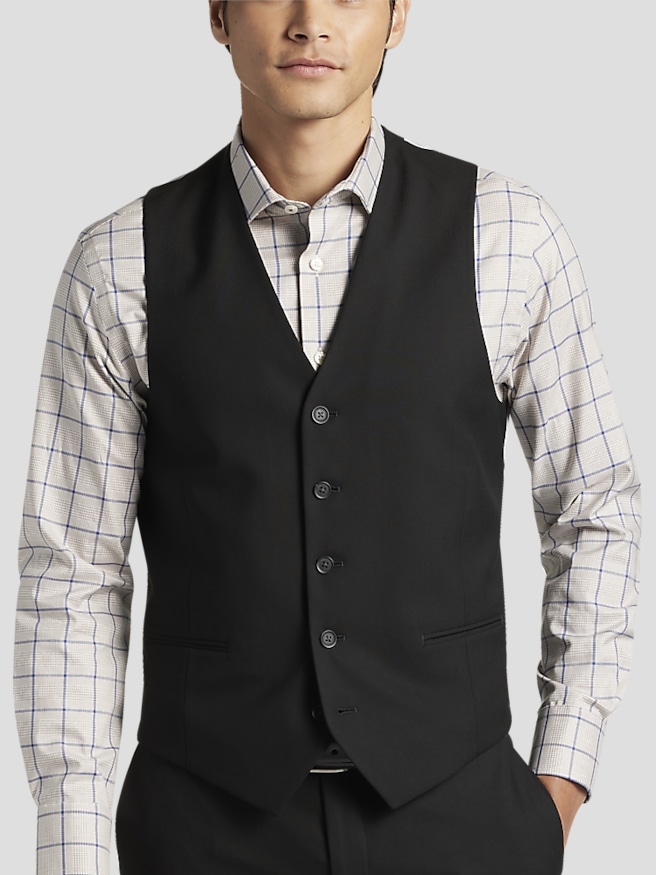
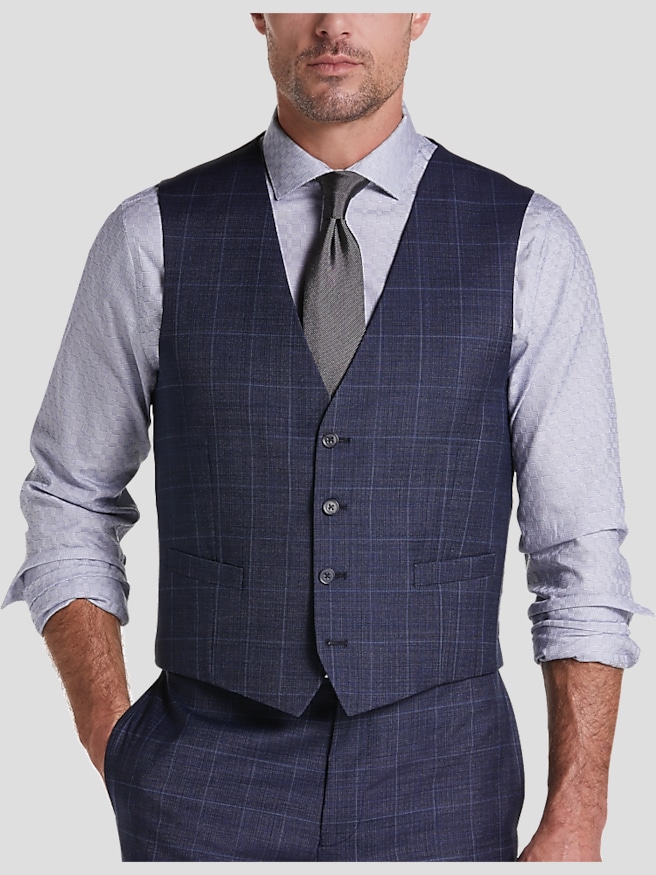
Suit vests bring another layer of polish to a tailored outfit, whether the occasion calls for a full three-piece suit or a vest worn with dress trousers and a crisp shirt. For a Cyber Monday wardrobe refresh, that extra layer can make familiar pieces feel more complete without changing the character of the outfit. A vest creates a clean line through the torso, frames a tie, and keeps the overall appearance composed when a jacket comes off at a reception or business dinner. The effect depends on the fabric as much as the silhouette. Wool offers a refined surface and a natural drape that works well with traditional suiting, while wool blends can combine that character with other qualities, such as added flexibility or resistance to wrinkling. Stretch fabrics allow some give during movement, though a comfortable fit still matters more than stretch alone. Cotton and textured weaves can lend a less formal character, especially when paired with trousers rather than a matching suit. The fabric on the back may differ from the front, with a smooth lining-style panel helping the vest sit neatly beneath a jacket. Color and pattern also shape how easily a vest moves between occasions. Navy, charcoal, gray, and black provide familiar foundations for dress shirts and ties, while subtle checks or a fine woven texture add interest without dominating the outfit. A matching vest gives a suit a unified appearance; a contrasting vest creates a more individual combination when its color and texture relate to the jacket and trousers. For weddings, presentations, anniversary dinners, and other occasions where photographs become lasting keepsakes, a well-proportioned vest adds detail that remains visible even without a jacket. That makes suit vests useful both for someone building a tailored wardrobe and for someone refining an established one. The strongest combinations look intentional from every angle, with the vest supporting the outfit rather than competing with it. Small details, including the shape of the neckline, button arrangement, and pocket placement, help establish whether the finished look feels understated, traditional, or more expressive.
Fit gives a suit vest its structure, and the best starting point is how it rests over the shirt that will be worn underneath. The front should lie close to the body without pulling across the chest or creating pronounced wrinkles around the buttons. Armholes should allow comfortable movement while keeping excess fabric from bunching beneath a jacket. At the shoulders, the vest should sit flat rather than lift away from the body, and the neckline should leave enough space for the shirt collar and tie to look balanced. Length is equally important: a traditional suit vest generally covers the trouser waistband so that a strip of shirt does not show between the two pieces during ordinary movement. Trouser rise affects that relationship, which is why the vest and trousers are best considered together. A slim silhouette follows the torso closely, while a classic silhouette leaves more room through the chest and waist; neither should feel restrictive when sitting through a ceremony or reaching across a conference table. An adjustable back strap can refine the waist, but it cannot correct a vest that is substantially too large or too small. Buttoning conventions also influence the finished appearance. On many traditional single-breasted styles, the lowest button is left undone, helping the lower edge fall naturally, though the garment’s design should take precedence. A neatly tucked shirt, a centered tie, and trousers sitting at the intended waistline give the vest a clean foundation. For a complete three-piece look, explore Men's Cyber Monday Suits alongside suit vests, keeping fabric, color, and cut consistent across the outfit. When coordinating separates, shades that are close but not identical can look accidental, while a deliberate contrast is easier to read. A charcoal vest with lighter gray trousers, for example, creates a clear distinction. Patterned shirts and ties work best when their scale does not compete with the vest, leaving one element to carry the visual emphasis.
Care and construction help determine how well a suit vest holds its shape through repeated wear. Even stitching, securely attached buttons, smooth pocket openings, and a lining that lies flat are useful details to notice. The front edges should hang evenly, and the fabric should recover reasonably well after ordinary sitting and movement rather than remain sharply creased. Care requirements vary by fiber, lining, and construction, so the garment’s care label should govern cleaning and pressing. Some fabrics require professional cleaning, while others may permit a different method; assuming every vest can be washed the same way can affect its shape or finish. Between wears, allowing the garment to air out and storing it on a suitable hanger helps preserve its lines. A light brushing with a fabric-appropriate garment brush can remove surface dust, while spills deserve prompt attention using a method suited to the material. Pressing also calls for restraint: excessive heat or direct pressure can leave shine on certain suiting fabrics, and a pressing cloth may be appropriate when the care instructions allow ironing. Pockets look neater when they carry little weight, since a phone, bulky wallet, or heavy key ring can distort the front. These practical considerations matter for a vest worn regularly to the office as well as one reserved for milestone occasions. For a gift recipient, an existing suit, preferred shirt fit, and usual approach to dressing provide better direction than choosing by appearance alone. Someone who wears tailored clothing often may appreciate a versatile vest that works with established trousers and jackets, while someone preparing for graduation, a wedding, or an important professional event may value a coordinated finishing layer. Measurements and garment sizing deserve particular attention when choosing a gift, since the close-fitting nature of a vest leaves less room for guesswork. With suitable fabric, balanced proportions, and thoughtful care, a suit vest can become a dependable part of a dress wardrobe, adding definition to an outfit whenever the occasion calls for a more considered finish.