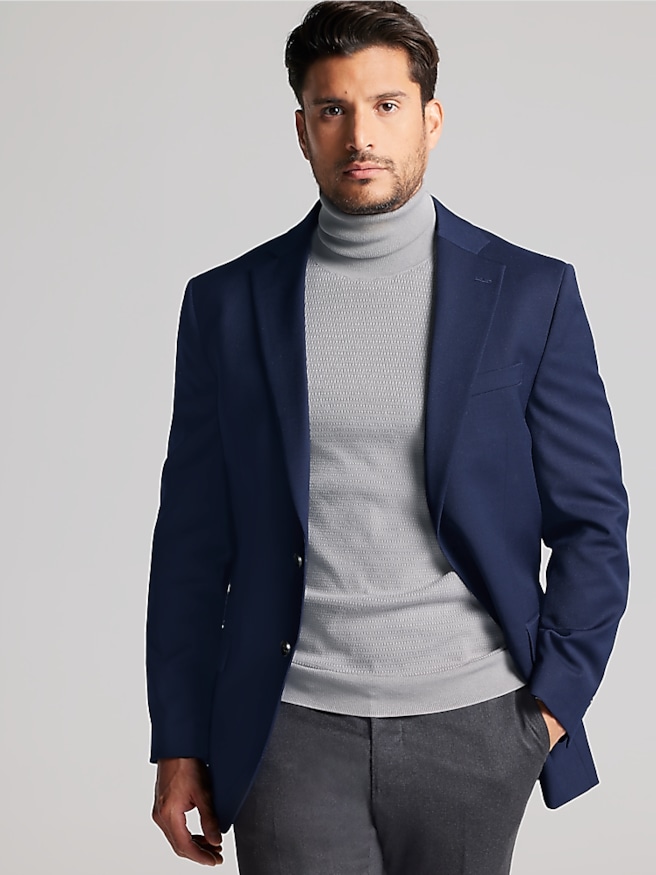
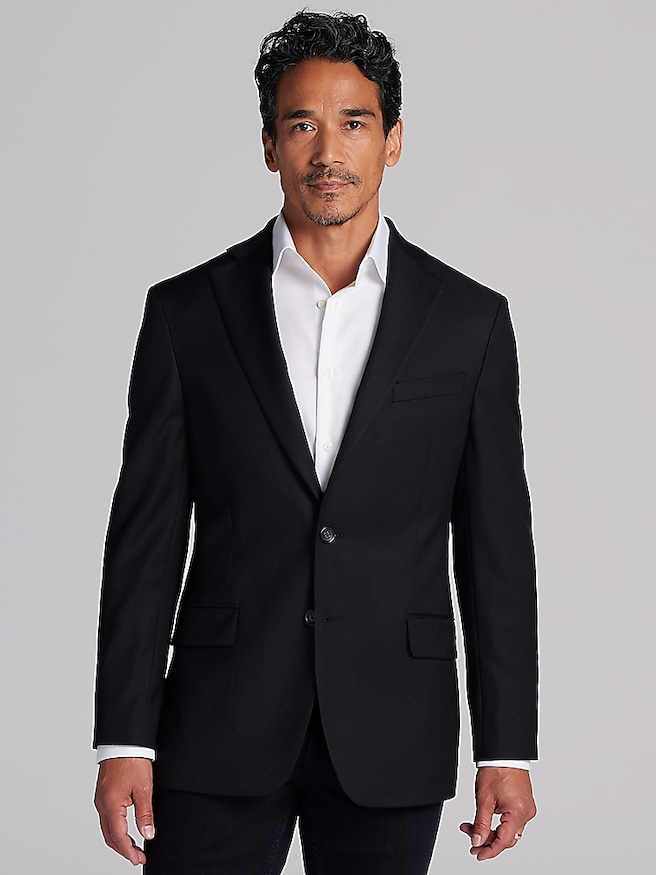
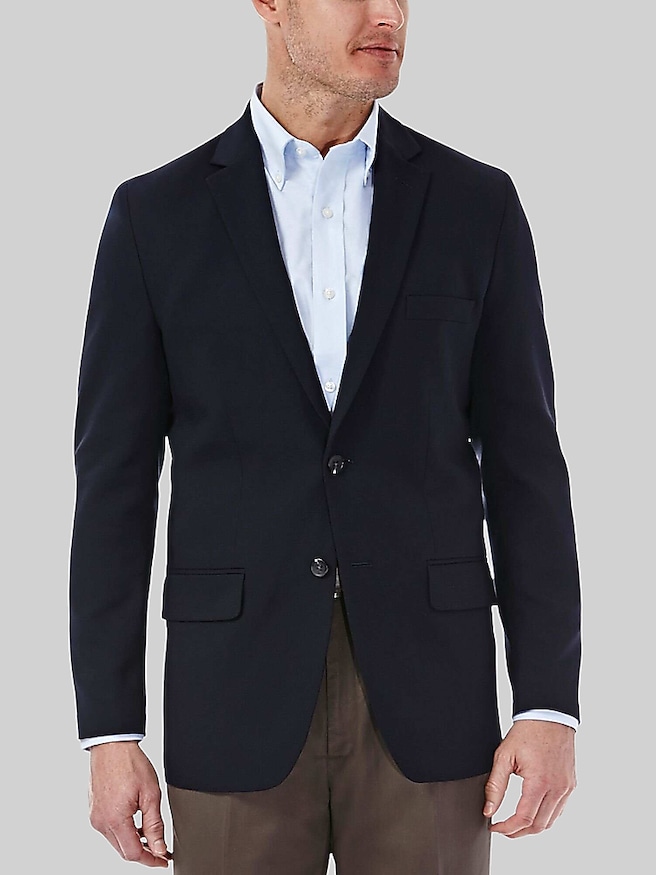
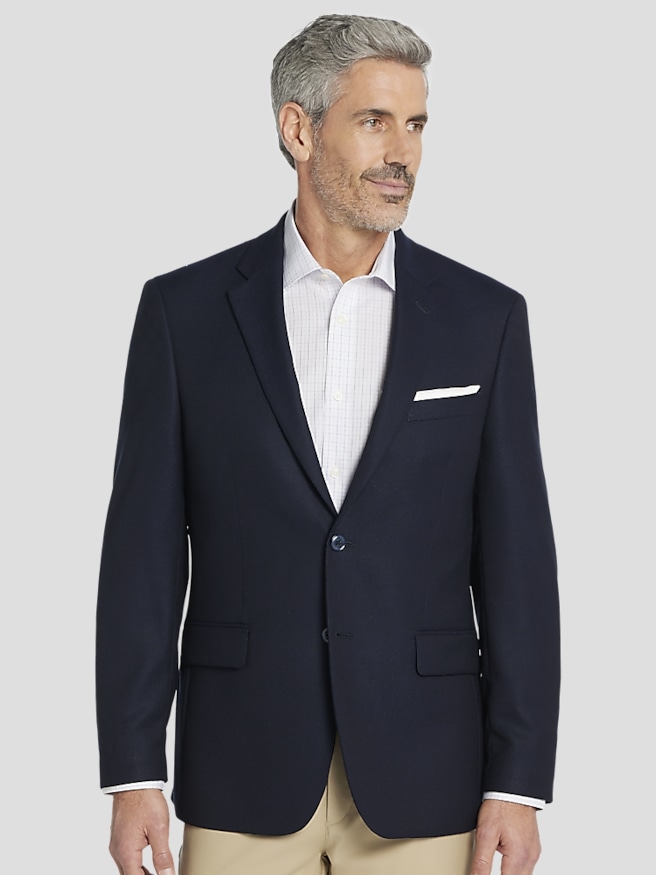
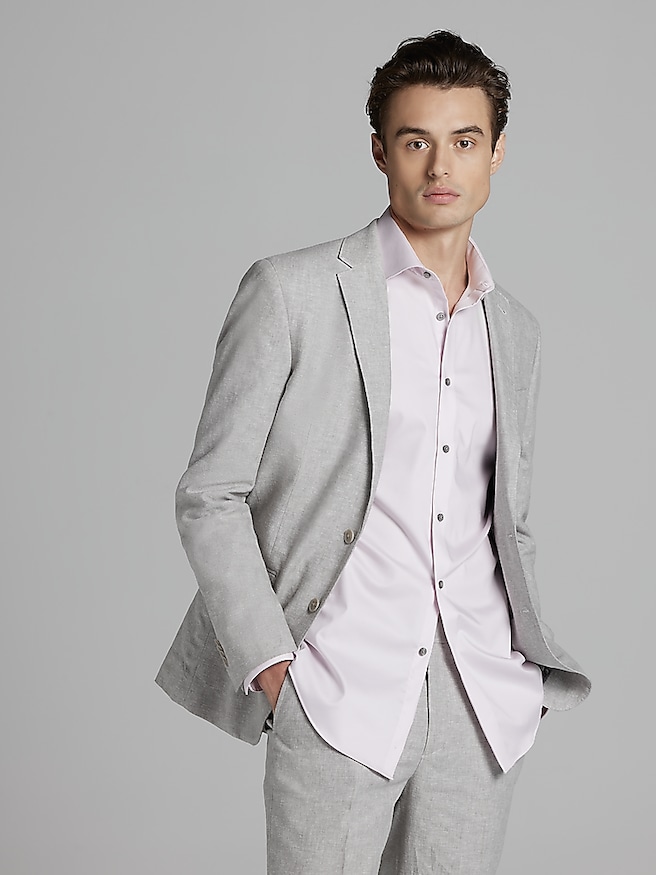
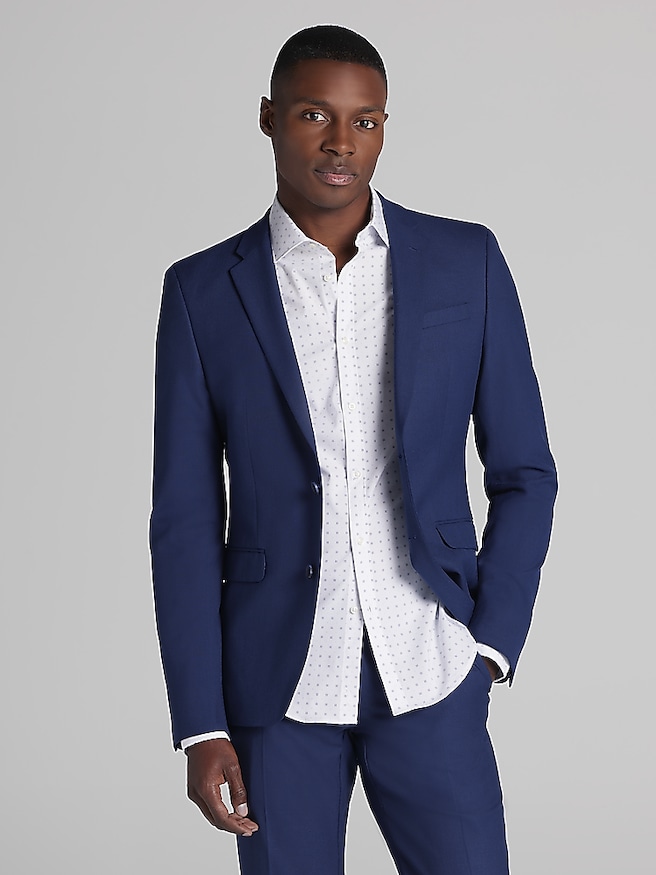
Modern fit jackets offer a tailored silhouette that generally sits between the roomier proportions of a classic fit and the closer cut of a slim fit. The shape follows the chest and waist without needing to hug the body, creating a clean outline for business meetings, wedding receptions, dinner reservations, and other occasions that call for a little polish. For Cyber Monday browsing, that balance makes modern fit a useful starting point for anyone building a more versatile wardrobe or replacing a jacket that no longer feels quite right. Fit names are not standardized, however, so measurements and the way a jacket sits on the body matter more than the label alone. Shoulder seams should meet the natural shoulder line without hanging over the upper arm, and the collar should rest against the shirt collar rather than standing away from the neck. With the jacket buttoned, the lapels should lie smoothly and the front should close without pronounced pulling or an X-shaped crease around the button. A slight contour at the waist gives the jacket definition; deep wrinkles across the back or strained vents suggest that more room may be needed. Sleeve length should usually leave a small amount of dress shirt cuff visible, while the jacket body should provide balanced coverage through the seat. Regular, short, and long sizing can affect those proportions as much as chest size does. Someone who spends much of the day seated at a desk will also appreciate enough room through the upper back to type and reach comfortably. Trying the jacket with the shirt and trousers intended for it gives a more realistic sense of the finished outfit. A modern fit should look composed while standing and remain comfortable through ordinary movement, whether that means shaking hands, taking a seat at a reception, or carrying a laptop bag into a meeting.
Fabric and construction determine much of how a modern fit jacket feels, drapes, and holds up to repeated wear. Wool is valued for its natural resilience and ability to fall smoothly over the body, making it a practical foundation for tailored clothing. Fine wool cloth can create a refined surface for dressier occasions, while a more textured weave adds depth to a jacket worn with separate trousers. Cotton often has a more relaxed character and may develop visible creasing that suits an informal outfit. Linen has a distinctive texture and an intentionally less pristine appearance, so its natural wrinkles are part of the fabric’s character rather than necessarily a sign of poor fit. Blended fabrics can combine softness, resilience, and easier maintenance, although the result depends on the fibers, their proportions, and the weave. A small amount of elastane can add flexibility, but stretch should complement the correct size rather than compensate for a jacket that is too tight. Lining also affects the experience of wearing a jacket: a smooth lining helps it slide over a shirt, while partial lining can give the garment a less enclosed feel. Structure through the chest and shoulders influences whether the overall impression is crisp and formal or softer and more relaxed. Notch lapels work across many everyday tailoring situations, and a two-button front creates a familiar, adaptable shape. On a conventional two-button jacket, fastening the top button while standing and leaving the lower button open helps preserve the intended drape; unbuttoning before sitting reduces strain across the front. Side or center vents allow the hem to move more freely, but they should not flare noticeably when standing at ease. For durability, look for secure buttons, tidy stitching, stable pocket edges, and a lining that does not pull against the outer cloth. Those small construction details matter when a jacket becomes part of a regular rotation rather than something worn only for an occasional photograph.
Color, pattern, and texture help determine how easily a modern fit jacket fits into an existing wardrobe. Navy, charcoal, and medium gray provide adaptable foundations, while brown and muted blue can introduce variety without making coordination complicated. A subtle check or textured weave gives a plain shirt more visual interest; a stronger pattern generally works best when the surrounding pieces are quieter. For a presentation or interview, a smooth jacket with a pressed dress shirt and tailored trousers creates a deliberate, professional impression. For dinner or a less formal gathering, an open-collar shirt or fine-gauge knit can soften the same silhouette. The distinction between a separate jacket and part of a suit is important: when a coordinated suit is the goal, the jacket and trousers should match in fabric, color, and pattern, not merely look similar under one room’s lighting. The broader selection of Cyber Monday suit jackets provides another place to explore tailored shapes for coordinated dressing. Modern fit jackets can also make thoughtful gifts for someone starting a new role, attending more formal events, or developing a personal approach to dressing well. Accurate chest and sleeve measurements, preferred jacket length, and familiar colors are more dependable starting points than guessing from casual shirt size. Once a jacket is part of the wardrobe, careful maintenance helps preserve its shape. Follow the garment’s care label, since similar-looking fabrics can require very different treatment. Many tailored jackets need professional cleaning, but unnecessary cleaning can be avoided by airing the garment after wear and brushing away surface dust with an appropriate clothing brush. Use a broad, shaped hanger to support the shoulders, empty the pockets before storage, and leave enough closet space to prevent crushing the lapels. Address spills promptly according to the care instructions rather than rubbing the fabric aggressively. Alternating between jackets gives each one time to rest, while avoiding overfilled pockets helps keep the front smooth. The result is a garment that retains its intended character: defined through the body, comfortable in motion, and ready to bring structure to a wide range of outfits.