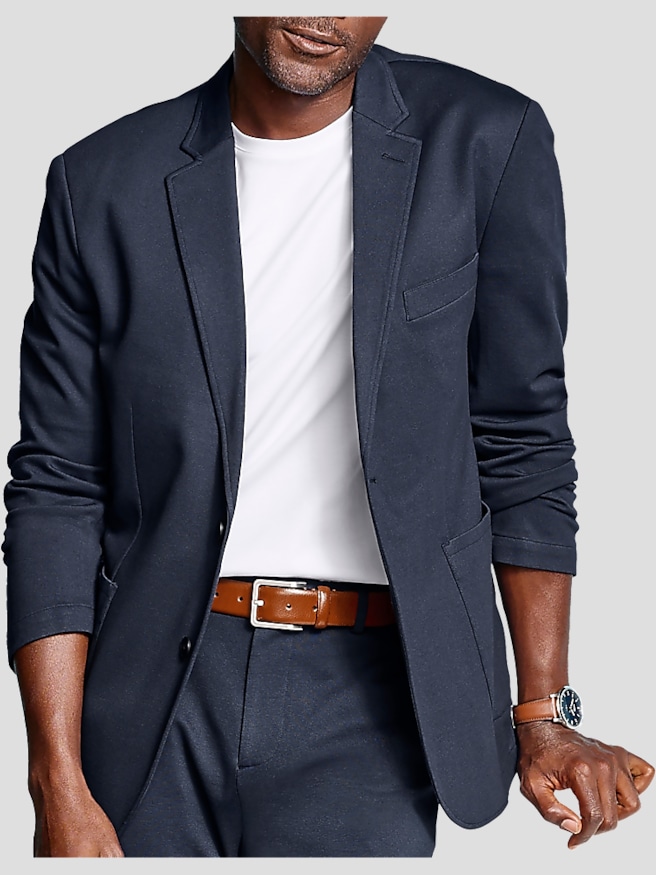
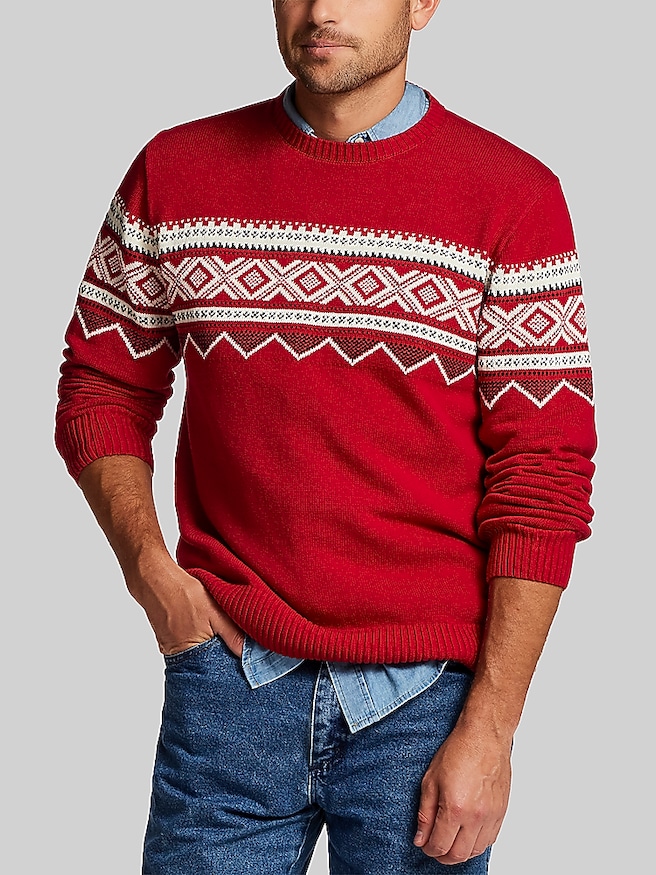
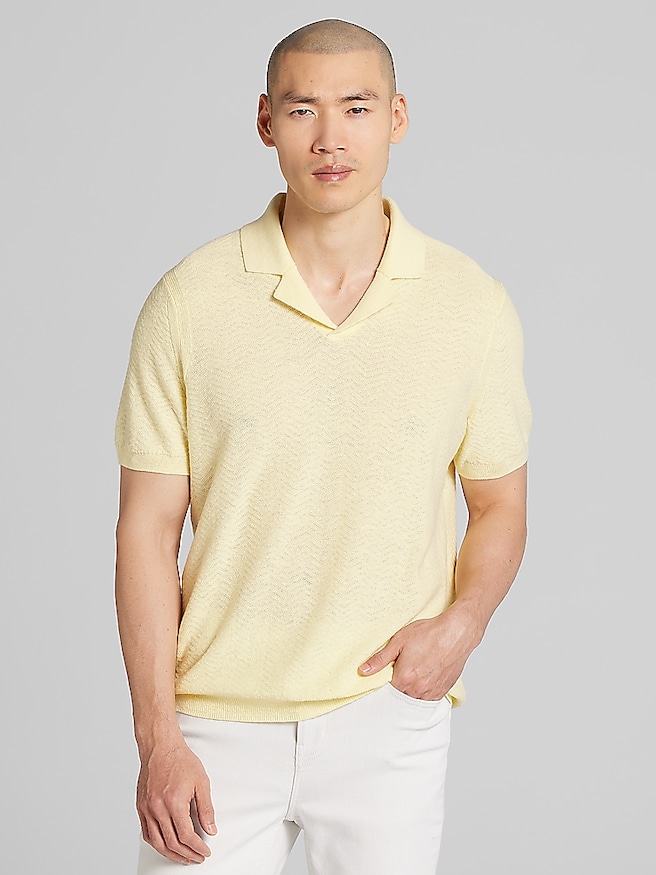
Comfortable knitwear combines a soft feel, easy movement, and warmth suited to the setting, whether that means a cool office, a quiet evening at home, or a walk to dinner during the cooler months. Its comfort comes from more than fiber alone: yarn thickness, stitch structure, garment weight, and fit all influence how a knit feels against the body. Cotton often has a smooth, familiar touch and works well for lighter layers, especially indoors. Wool offers insulation and can absorb moisture vapor, helping manage the clammy feeling that sometimes comes with moving between cool outdoor air and heated rooms. Fine merino wool typically feels smoother than coarser wool, though sensitivity varies from person to person. Cashmere is valued for its soft hand and warmth at a relatively light weight; its delicate fibers also benefit from gentle handling. Blended yarns bring other qualities into the mix. Depending on their composition and construction, they may improve shape retention, add stretch, or make care simpler. No single material is best for every routine. Someone who spends much of the day in a heated workspace may appreciate a breathable, fine-gauge knit, while someone who regularly walks outdoors may prefer a more substantial texture beneath a coat. Gauge describes the fineness of the knit: fine-gauge fabrics generally have smaller stitches and a smoother surface, while chunky knits use larger stitches for a more pronounced texture. An open, airy stitch can feel quite light despite its thickness, whereas a compact knit may offer more coverage without much bulk. Ribbing adds texture and natural give, and cable patterns create depth that stands out against smooth trousers or dark denim. These details give comfortable knitwear its appeal: enough structure to look considered, with the flexibility to reach for a bag, settle into a desk chair, or stretch out on the sofa without feeling restricted. For direct contact with skin, a smooth neckline and unobtrusive seams can matter just as much as the softness of the fabric itself.
Fit is where that softness becomes everyday ease. Knitwear should accommodate the layers beneath it without pulling across the chest, bunching under the arms, or drawing tightly across the back when reaching forward. A close, clean fit can sit neatly under a tailored jacket, but close should not mean stretched; stitch patterns that visibly open across the torso can signal too much tension. A more relaxed shape leaves space for a T-shirt or button-down and suits days when comfort takes priority without sacrificing a tidy appearance. Shoulder placement depends on the design, though a conventional shoulder seam generally sits near the shoulder’s edge. Sleeves should allow the elbows to bend comfortably, and cuffs should rest securely without squeezing the wrists. Hem length matters, too. A knit that overlaps the waistband helps maintain coverage while sitting, while excess fabric at the hips may bunch beneath outerwear. Necklines change both the feel and the character of an outfit. A crewneck creates a simple frame at the collar, a V-neck leaves more space for a shirt beneath, and a turtleneck provides additional coverage around the neck. Button-front and zip-front styles make it easier to adjust warmth between a chilly commute and a warm meeting room. For a closer focus on these versatile layers, Comfortable Men's Sweaters brings the emphasis to an everyday wardrobe staple. Smooth knits in charcoal, navy, oatmeal, or deep brown pair easily with tailored trousers, chinos, and denim, while a textured surface can give a simple outfit definition without a bold pattern. A fine knit beneath a sport coat feels appropriate for many business-casual settings; a substantial ribbed layer with chinos feels at home at a casual gathering or weekend lunch. On longer travel days, a layer that opens at the front can be particularly useful when temperatures shift between the car, terminal, and cabin. The most wearable shape is one that feels comfortable both standing in front of a mirror and sitting through the day ahead.
Durability in knitwear depends on the quality of the yarn, the stability of the construction, and how the garment is worn and cared for. A heavier knit is not automatically tougher, and an exceptionally soft surface may need more attention where friction occurs. Pilling happens when loose fibers gather into small balls, often beneath the arms, along the sides, or where a shoulder strap rubs. It does not necessarily mean a garment has reached the end of its useful life. Gentle removal with a tool appropriate for the fabric can improve its appearance, provided the knit is laid flat and handled carefully. Snags call for similar restraint: pulling or cutting a loose loop can worsen the damage, while a suitable repair can help preserve the surrounding stitches. The care label remains the starting point for cleaning because fibers, dyes, trims, and construction can require distinct treatment. Some knits tolerate machine washing on a specified cycle, while others need hand washing or professional cleaning. Where washing is permitted, the recommended water temperature and detergent help protect the fabric; excessive heat and agitation can shrink or distort certain fibers. Wet knitwear can become heavy, so supporting it rather than wringing or hanging it helps prevent stretching. When directed by the label, reshaping and drying flat helps maintain the original proportions. Between wears, airing a garment and allowing it to rest can reduce unnecessary washing. Folded storage is often preferable to hangers, which can leave shoulder marks or gradually lengthen a knit. These habits are especially worthwhile for pieces worn repeatedly through the cooler months, from weekday office layers to comfortable clothing for evenings with family. Knitwear can also be a thoughtful gift for a father, partner, brother, or friend when chosen around familiar preferences: a neckline already worn often, a color that fits an established wardrobe, and a care routine that feels manageable. For someone sensitive to texture, a smooth cotton knit or a layer worn over a soft shirt may be more welcome than a lofty, fuzzy finish. Lasting comfort comes from that match between fabric, fit, and everyday life.