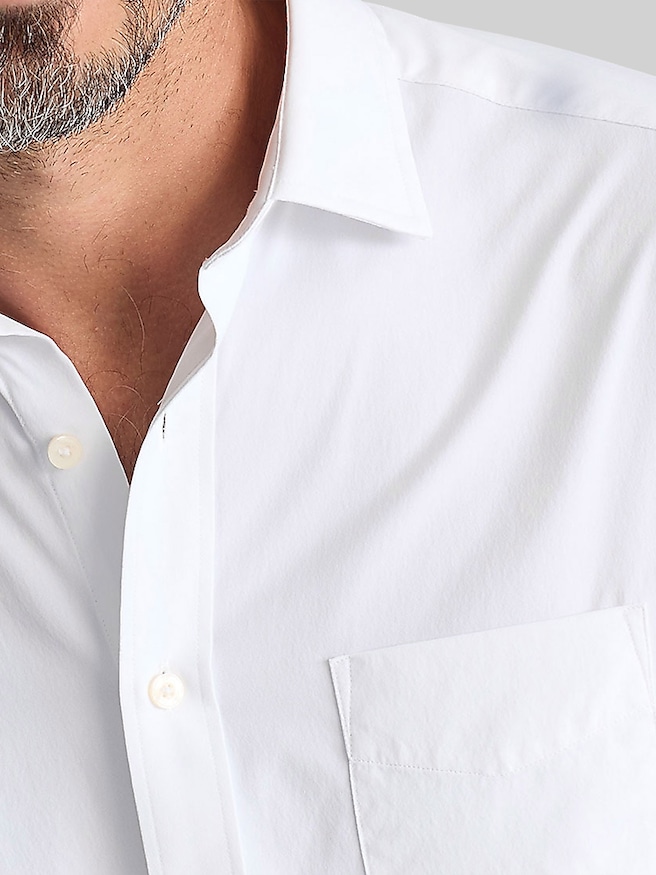
Comfortable button-up shirts bring together a soft feel, room to move, and a finished appearance that works beyond a single dress code. The fabric matters as much as the silhouette: a shirt can look crisp on a hanger yet feel restrictive across the shoulders, while a softer weave can offer polish without stiffness. Cotton is a familiar choice for its breathability and pleasant feel against the skin, though the weave and finishing process influence how it wears. Cotton poplin typically has a smooth surface and a clean appearance that pairs naturally with dress pants. Oxford cloth has a more noticeable basket-weave texture, giving it substance and an easygoing character suited to chinos or denim. Twill is recognizable by its diagonal weave and can have a supple drape, making it useful for shirts that need to look neat without feeling rigid. Linen offers natural texture and an airy construction, with creasing that contributes to its relaxed appearance rather than a perfectly pressed finish. Cotton-linen blends can balance those qualities, depending on the proportions and construction. For added flexibility, some fabrics include a small amount of elastane or another stretch fiber; that extra give can make a difference when reaching for a bag, sitting through a meeting, or driving across town. Knit button-up shirts offer another approach, combining a button-front appearance with the flexible feel associated with knit fabrics. Blends containing polyester may offer easier care or improved wrinkle resistance, but those qualities depend on the fabric and any applied finish. Softness alone does not tell the whole story, either. Smooth interior seams, a comfortable collar, and fabric that drapes without clinging all contribute to how a shirt feels after several hours. The most useful combination is one that matches the wearer's routine, whether that means a structured appearance for the office or a softer, more casual feel for dinner with friends. A brushed surface may feel especially soft, while a smoother finish can slide more easily beneath a jacket.
Fit gives comfortable button-up shirts their everyday usefulness, allowing a clean outline without limiting ordinary movement. Shoulder seams that sit near the edge of the shoulder help the sleeves hang naturally, while enough space through the chest and upper back allows the arms to reach forward without pulling the placket apart. A close fit should still leave room to sit comfortably, and a relaxed fit does not need to look oversized. Slim silhouettes generally follow the torso more closely; classic and relaxed shapes provide additional ease, although fit names and measurements vary. The small details become noticeable over a full day: a collar that presses against the neck, cuffs that catch at the wrist, or a hem that repeatedly comes untucked can distract from an otherwise good fit. For shirts worn with the collar fastened, neck measurements deserve particular attention. Sleeve length also affects comfort, especially beneath a sport coat, where excess fabric can bunch at the wrist or elbow. Longer, curved shirttails generally work well tucked into trousers, while shorter hems can create a balanced untucked appearance when their proportions suit the wearer. Button-up describes the front closure; button-down refers specifically to collar points secured with buttons. That distinction helps explain why two shirts with similar fabrics can give an outfit a different character. A button-down collar often feels at home with chinos and loafers, while a spread or point collar can create a sharper line beneath a jacket. Neither detail determines comfort on its own. Fabric, construction, and fit work together, whether the shirt is worn for an office presentation, a restaurant reservation, a graduation celebration, or a day of travel. An undershirt can add a familiar layer against the skin, provided there is enough room to prevent bunching. For men who move between desk work, appointments, and social plans, a shirt that stays comfortable while seated and standing can be more useful than one that looks good only when perfectly arranged.
Color, pattern, and care requirements help determine how easily a comfortable shirt becomes part of a regular rotation. White and light blue create a straightforward foundation for tailored clothing, while navy, gray, and muted earth tones offer depth with denim or casual trousers. Fine stripes and small checks add visual interest without overwhelming a simple outfit; a more pronounced texture can provide a similar effect in a solid color. Fabric opacity also matters, particularly with pale shades, since the visibility of an undershirt may affect the finished appearance. Durability comes from more than fabric weight. Secure buttons, evenly sewn seams, and well-finished cuffs support repeated wear, while proper laundering helps preserve the qualities that made the shirt appealing in the first place. Care labels establish whether a shirt can be machine washed, requires professional cleaning, or needs particular drying conditions. Excessive heat can contribute to shrinkage in some fabrics and may affect stretch fibers, so laundering and drying methods should follow the garment's instructions. Prompt removal from the dryer, when tumble drying is permitted, can reduce lingering creases; smoothing the collar, placket, and cuffs before hanging also helps maintain a neat shape. Wrinkle-resistant does not necessarily mean completely wrinkle-free, and linen's natural creases remain part of its character. Comfortable button-up shirts can also make thoughtful gifts for a partner, father, brother, or friend, especially when the recipient's size, usual fit, and care preferences are known. Someone who regularly wears tailored trousers may appreciate a smooth fabric and a tuck-friendly length, while a person who favors denim may get more use from a textured weave and an easy silhouette. For additional everyday options beyond button-front styles, Comfortable Shirts offers a broader starting point. Across dressier and more relaxed wardrobes, lasting comfort comes from details that suit the person wearing the shirt: a collar that sits naturally, sleeves that move freely, and fabric that feels good long after the first button is fastened.