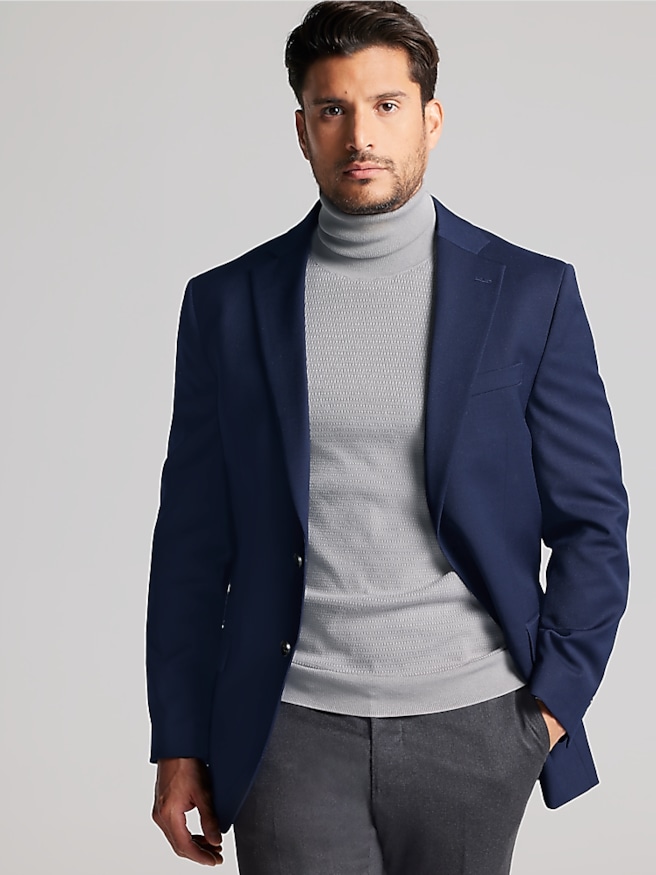
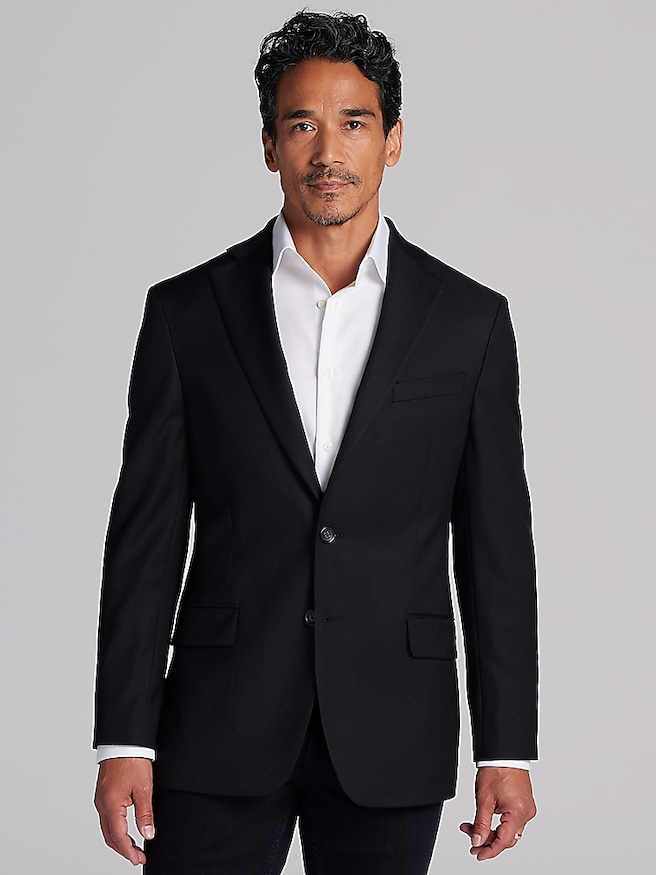
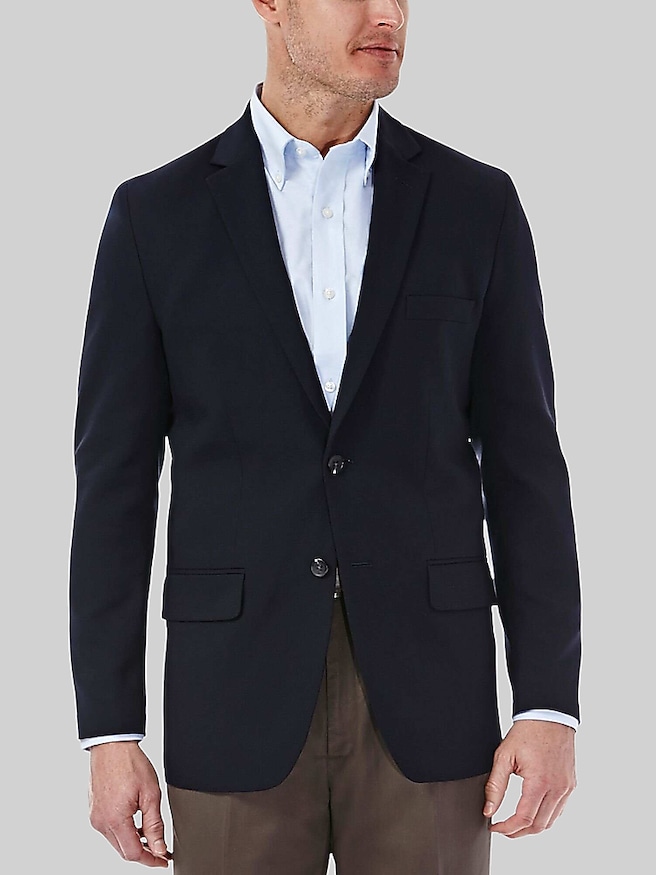
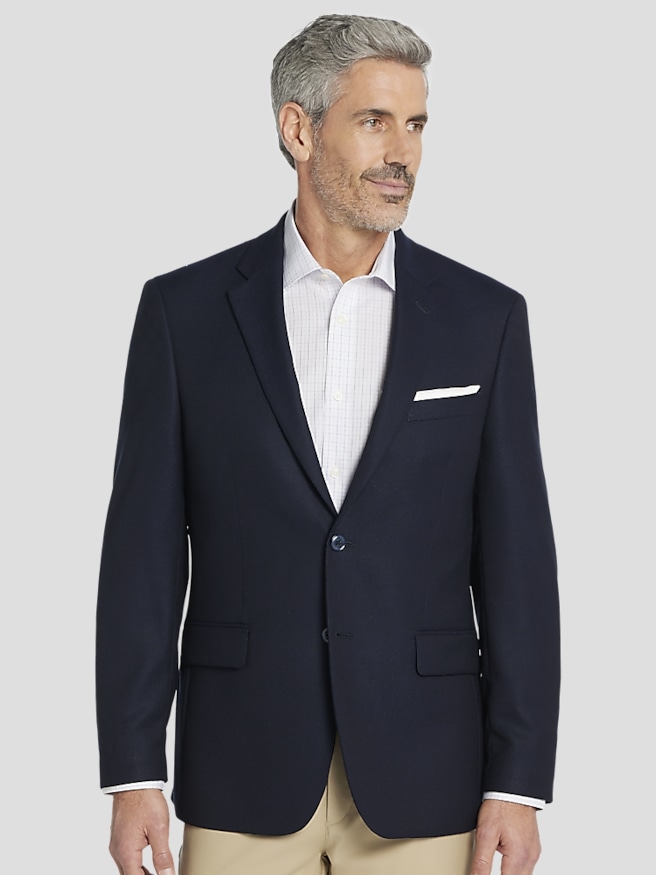
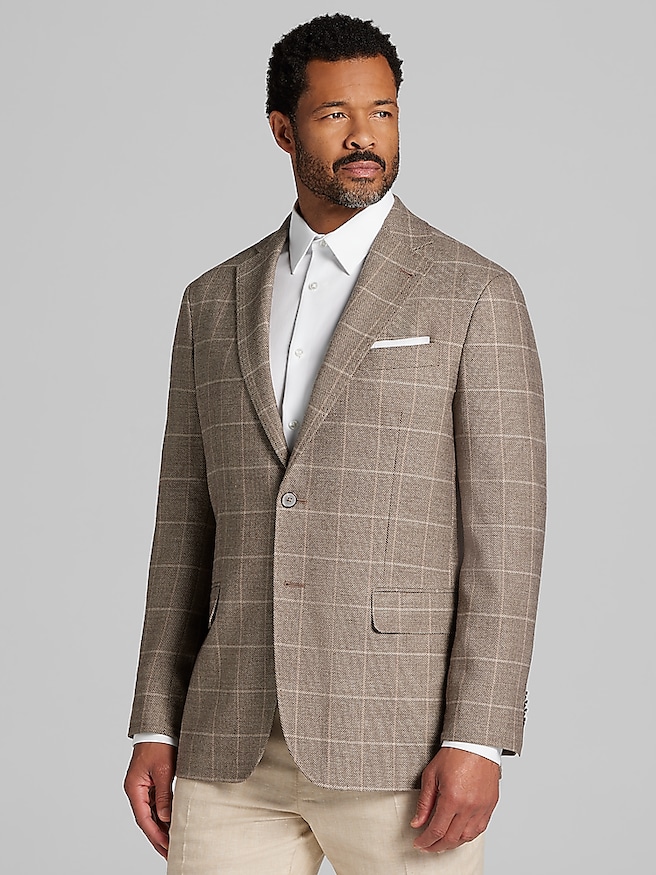
Colorful sport coats are tailored jackets worn with coordinating pants rather than as part of a matching suit. Their appeal lies in the balance between structure and individuality: a defined shoulder and shaped lapel give an outfit polish, while color brings personality to familiar shirts and trousers. Burgundy, cobalt, teal, olive, and rust each offer a distinct alternative to neutral tailoring, with effects that range from understated to expressive. A deep wine jacket can feel restrained beside charcoal pants, while a brighter blue makes a stronger impression against a white shirt. Muted shades are often easier to combine with an established wardrobe; saturated colors naturally become the focal point. Pattern changes that balance, too. A small check or subtle windowpane can read almost like a solid from a distance, while a broad plaid creates a more noticeable statement. Texture adds another layer, giving even a single-color jacket visual depth without requiring a bold print. These qualities make colorful sport coats useful for men dressing for wedding receptions, anniversary dinners, networking events, creative workplaces, and other occasions where a full suit is unnecessary but a considered appearance matters. They also suit someone who enjoys traditional tailoring but wants an outfit to feel less predictable. A burgundy jacket over a pale blue shirt, for example, looks deliberate without depending on an elaborate combination of accessories. An olive coat with cream trousers offers a softer contrast, while teal beside dark gray keeps a richer shade grounded. The most successful combinations usually leave some breathing room around the jacket: quieter pants, a simple shirt, and shoes that complement the overall level of formality. A sport coat can sharpen an outfit, but it does not replace a tuxedo when an invitation specifies black tie. Its strength is flexibility within settings that welcome separate jackets and pants, whether the result is businesslike, celebratory, or relaxed.
Fabric and construction influence how a colorful sport coat looks, feels, and holds its shape over repeated wear. Wool is valued for its resilience, drape, and ability to recover from light creasing, making it a useful choice for jackets worn regularly. A smooth wool weave gives color a cleaner, more uniform appearance, while a textured weave can soften the effect and add dimension. Cotton often lends a more casual character, with a surface that may develop visible creases as it is worn. Linen has a distinctive texture and naturally relaxed wrinkling; blends can combine some of that character with the qualities of other fibers. Synthetic fibers may contribute strength or shape retention, although comfort and performance depend on the complete fabric and construction rather than fiber content alone. Lining, shoulder structure, and the amount of internal support also affect the experience. A softly constructed jacket tends to follow the body with less rigidity, while a more structured coat creates a defined outline. Neither approach is automatically better; the right choice depends on personal preference, intended use, and how the jacket sits on the wearer. Fit begins at the shoulders, where the seam should sit close to the natural shoulder edge without hanging noticeably beyond it. With the jacket buttoned while standing, the front should lie smoothly rather than pull into pronounced creases. The collar should rest near the shirt collar, and the lapels should lie flat against the chest. Sleeve length generally allows a small amount of shirt cuff to show, while the body needs enough room for comfortable movement and the intended layers underneath. Trying a jacket over a dress shirt produces a different result than trying it over knitwear, so the planned outfit matters. Sitting at a dinner table, reaching forward, and moving the arms can reveal tightness that is less obvious in a mirror. Sleeve and waist adjustments can refine the silhouette, but the shoulders and overall proportions need to be close from the start.
The appeal of Cool Sport Coats For Men often comes down to how naturally a distinctive jacket works with familiar wardrobe staples. A colorful coat does not require an entirely new outfit. Dark, clean-finished denim and an open-collar shirt can support a relaxed interpretation, while tailored trousers, a crisp dress shirt, and leather lace-ups create a more polished one. A fine-gauge knit offers another option when a collared shirt feels too formal for the setting. Color relationships help keep these combinations cohesive: navy can steady rust or burgundy, gray can give cobalt a quieter backdrop, and cream can create clear contrast with deeper greens. When the jacket has a visible pattern, repeating one of its less prominent colors elsewhere in the outfit can connect the pieces without making them look matched. Accessories work best when they support that relationship rather than compete with it. A textured tie or a restrained pocket square can add interest, but several bold patterns at once may obscure the jacket’s color and cut. For someone receiving a sport coat as a gift, knowing the recipient’s usual jacket size, preferred silhouette, and everyday dress habits is especially helpful. A familiar color family in a richer shade may be more wearable than a dramatic departure from personal taste. Long-term appearance also depends on care. The garment’s care label should determine cleaning methods, since the outer fabric, lining, and internal structure may have different requirements. Between wears, a broad, shaped hanger supports the shoulders, and space in the closet helps prevent crushing. Emptying the pockets before hanging the jacket reduces unnecessary strain and distortion. Surface dust can often be removed with an appropriate garment brush, while spills deserve prompt attention according to the fabric’s care instructions rather than vigorous rubbing. Professional cleaning should follow the garment’s needs and label guidance, not an automatic schedule after every wear. Thoughtful handling helps preserve the qualities that make a colorful sport coat worth wearing repeatedly: a clear shade, a balanced silhouette, and enough character to make a simple outfit feel personal.