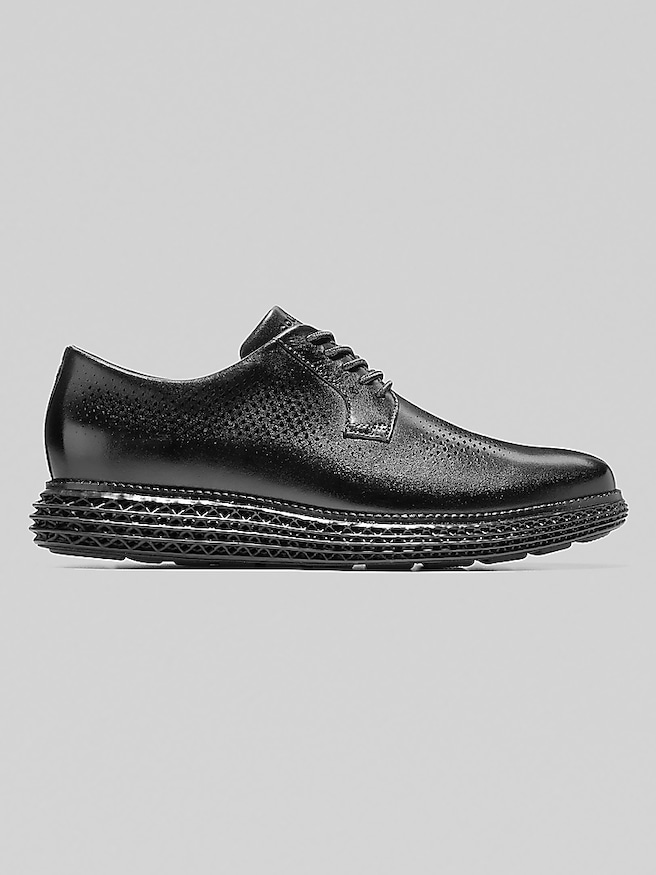
Hybrid oxford shoes combine a familiar dress-shoe shape with cushioning and lightweight construction more commonly associated with sneakers. That balance makes them a practical choice for a workday that includes a morning presentation, a walk between buildings, and dinner after the last meeting. A lace-up leather upper keeps the look polished, while a flexible sole can make the shoe feel less rigid than a traditional dress shoe. Materials help define both appearance and upkeep: smooth leather has a clean finish that pairs naturally with tailored clothing, while suede and nubuck introduce a softer, more textured look suited to relaxed office outfits. Nubuck is leather with a lightly buffed outer surface; suede has a more noticeable nap. Neither should be treated exactly like smooth leather when cleaning or conditioning. Construction below the upper matters just as much. EVA, short for ethylene-vinyl acetate, is a lightweight foam used in footwear midsoles and outsoles to provide cushioning without the weight of a dense, traditional sole. Rubber sections at the heel or forefoot can add abrasion resistance and traction in high-contact areas, although tread design and the walking surface still influence grip. A padded footbed and lining can soften the feel underfoot, but cushioning alone does not determine support or fit. The shape of the shoe, its flexibility, and the way it holds the heel all contribute to comfort. Lacing also deserves attention. Although oxford is often used broadly for dress-casual lace-ups, a traditional oxford has closed lacing, while a blucher-style construction has open lacing panels that allow more adjustment across the instep. Blind eyelets, which lack visible metal rings, keep the appearance understated. Together, these details explain the appeal of a hybrid dress shoe: recognizable tailoring above the sole, with a more easygoing feel underneath. The result can bridge the space between a formal leather lace-up and an athletic shoe without looking fully like either one.
Fit is especially important in this category because a soft step can make an otherwise cramped shoe seem comfortable at first. The toes should have room to rest naturally rather than pressing against the front or overlapping, and the widest part of the foot should sit comfortably within the shoe’s forefoot. A secure heel should not require tightening the laces until the instep feels compressed. Some movement is normal as a shoe flexes, but persistent slipping can create friction and undermine an otherwise comfortable fit. For a broader foot, the correct width is generally a better solution than adding unnecessary length. Sizing can vary between shoe shapes, so a familiar size is a starting point rather than a guarantee. Trying dress-casual footwear with the socks intended for regular wear gives a more useful impression of its fit. Anyone who uses an orthotic should also account for its thickness and check whether the original footbed is removable; not every padded lining or insole is designed to come out. Leather may soften with wear, but a break-in period should not be expected to correct pinched toes or concentrated pressure. Intended use helps narrow the decision further. For someone who alternates between a desk and frequent walks around an office, modest flexibility and a stable heel can be more useful than an especially thick layer of cushioning. For travel, a lighter shoe can make packed luggage easier to manage and transition neatly from a client visit to a restaurant. At weddings, graduations, and other dressed-up gatherings, a streamlined leather upper can complement a sport coat and trousers when the dress code allows a relaxed sole. A hybrid oxford is not a substitute for athletic footwear during exercise, and a cushioned outsole does not automatically make a shoe appropriate for every formal occasion. Its strongest role is everyday polish with enough ease for a schedule that involves more than sitting still.
Color, finish, and sole profile determine how naturally these shoes work with an existing wardrobe. Black smooth leather creates a sharper contrast with gray trousers and can anchor a simple office outfit, while brown tones sit comfortably beside navy, tan, and textured fabrics. A low-contrast sole usually reads as dressier than a bright, visibly athletic one. With chinos, a button-down shirt, and an unstructured jacket, a hybrid lace-up can look intentional rather than like a compromise between dress shoes and sneakers. Straight or gently tapered trouser hems help keep the shoe’s shape visible without bunching over the laces. For a related interpretation of the lace-up silhouette, explore Cole Haan Hawthorne Oxford. Keeping any dress-casual pair looking good depends on care suited to its materials. Smooth leather benefits from regular dust removal, gentle cleaning, and an appropriate conditioner used according to the care instructions. Polish can refresh color and finish when the leather’s treatment permits it, but it should not be applied indiscriminately to suede, nubuck, or contrasting sole materials. A suede brush can lift surface dirt and restore the nap on textured leather, while a compatible protective treatment may help limit staining. Excess moisture should be blotted away, with shoes left to dry naturally away from direct heat. Cedar shoe trees can help maintain shape and absorb some residual moisture between wears. Alternating pairs also gives linings time to dry and reduces the wear concentrated on a single pair. Inspecting the heel, toe, and outsole periodically can reveal uneven abrasion before comfort noticeably changes; whether a sole can be repaired depends on its construction. As a gift, this type of footwear suits someone building a work wardrobe, starting a new role, or looking for a polished alternative to casual sneakers. Knowing the recipient’s size, width, preferred colors, and usual dress code makes the choice more personal. The most useful pair is one that fits comfortably, works with clothing already worn regularly, and receives the care its materials require.