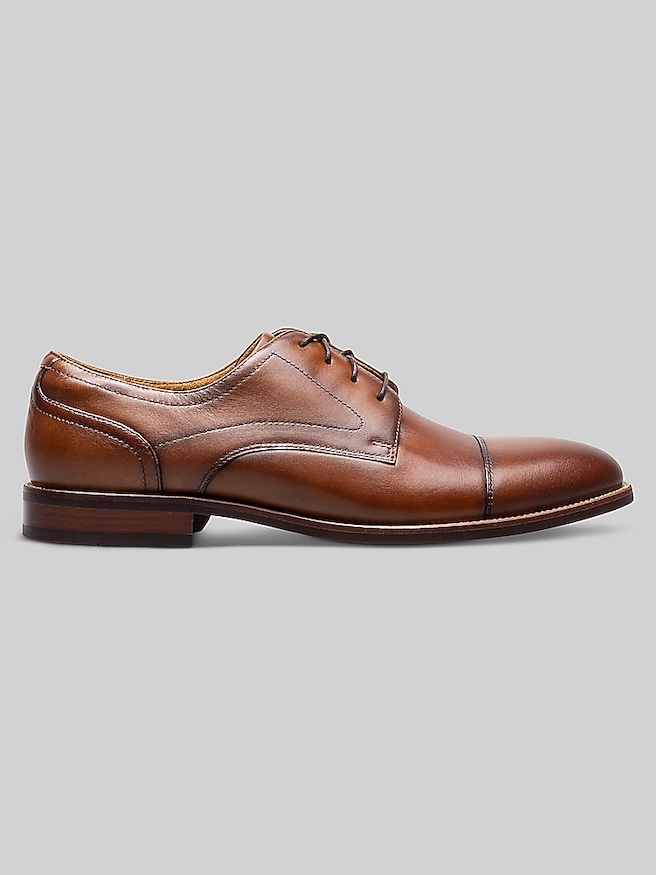
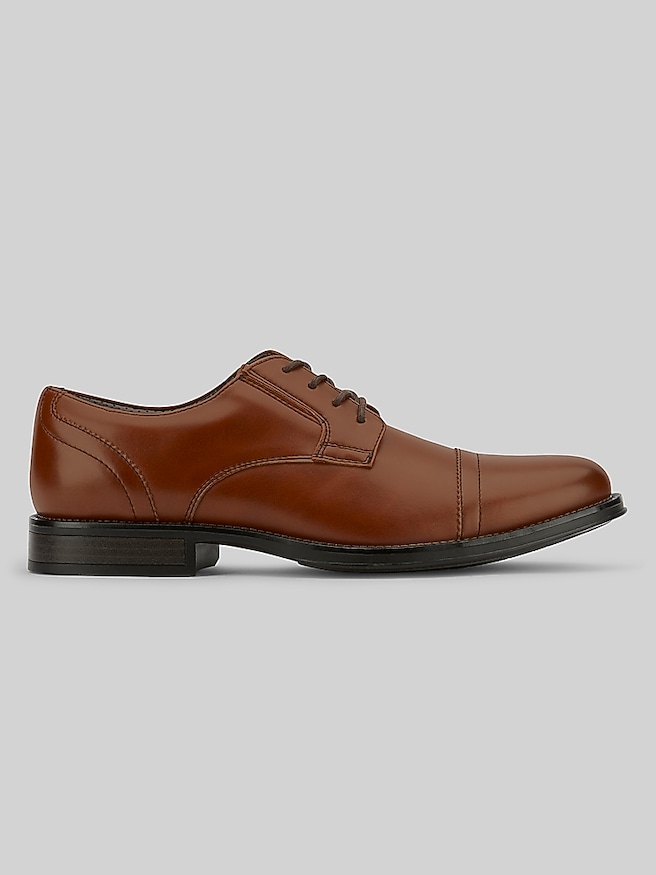
Cognac dress shoes bring a rich, amber-brown finish to tailored clothing, adding depth without the stark contrast of black footwear. The color sits between lighter tan and deeper brown, though the exact shade can lean golden, reddish, or darkly burnished depending on the material and finish. That range gives cognac shoes a distinctive place in a dress wardrobe: polished enough for many business settings and wedding celebrations, yet relaxed enough to wear with chinos and a sport coat. Against a navy suit, the color creates a clear, intentional contrast; with medium gray trousers, it adds warmth while keeping the outfit restrained. Texture and shape influence the overall effect as much as color. A smooth plain toe has a clean profile that lets the finish stand out, while a cap toe introduces a defined line across the front. Wingtip patterns and decorative perforations add visual texture, especially when darker shading emphasizes the edges and seams. Loafers offer a less structured look, with details such as a raised moccasin-style seam or metal ornament creating a focal point beneath the trouser hem. Lace-up silhouettes generally complement more tailored outfits, while understated slip-ons can move comfortably between an office dress code and a dinner reservation. For those drawn to a more angular profile, Stacy Adams Square Toe Shoes provide a related style direction to consider alongside color and detailing. The strongest pairing usually comes from balancing the shoe’s visual weight with the clothing: a streamlined shape works naturally with tapered trousers, while a broader toe can sit more comfortably beneath a straight leg. Cognac is also useful when an outfit needs personality without a bold pattern. A white shirt, navy trousers, and richly shaded brown footwear can look complete with very little added decoration. For events with a strict black-tie dress code, however, traditional black formal footwear is generally the more appropriate choice.
Materials and construction determine how cognac shoes feel, how they hold their shape, and how their finish changes with wear. Leather uppers can develop natural creasing and a softer feel over time, with the surface taking on subtle character at the flex points. Smooth leather emphasizes the clarity of the color, while embossed or textured surfaces break up reflected light and make the shoe look more dimensional. Synthetic uppers may have a more uniform appearance and require a care routine suited to their particular coating. Material descriptions matter because two shoes with a similar color and silhouette can respond differently to polish, moisture, and repeated bending. Burnishing, when present, adds darker shading around areas such as the toe and heel; it is a finishing effect rather than a separate leather type. Beneath the upper, lining, cushioning, and outsole construction help shape the wearing experience. A cushioned footbed can soften the feeling underfoot, but softness alone does not establish a supportive fit. The heel should feel secure, the widest part of the foot should align with the widest part of the shoe, and the toes should have room without sliding forward. An elongated dress-shoe toe may leave space beyond the toes by design, so that empty space is not necessarily a reason to choose a smaller size. Sneaker sizing is not a reliable substitute for checking the fit of a particular dress-shoe shape. Trying footwear with the socks intended for regular use gives a more useful impression, especially for someone moving from thick athletic socks to thinner dress socks. Lace-ups allow some adjustment across the instep, while loafers depend more heavily on a close match through the heel and upper. For a workday that includes a commute, desk time, and standing presentations, a stable heel and comfortable flex through the forefoot matter more than a plush first impression alone. Someone who uses orthotics should also check interior depth and whether the footbed is removable rather than assuming every style can accommodate an insert.
With regular care, cognac footwear can remain a dependable part of a wardrobe for work, celebrations, and evenings out. Durability depends on the upper material, the way the sole is attached, the quality of the fit, and the demands placed on the shoes. Repeated friction at a loose heel or excessive pressure across a tight forefoot can create wear that conditioning cannot correct. Rotating between pairs gives interiors time to dry between uses, while shoe trees can help leather uppers maintain their shape during storage. A soft brush or cloth removes surface dust before it works into creases and seams. For smooth leather, a compatible conditioner used according to the care instructions can help maintain suppleness; polish should be chosen carefully because a darker shade may alter the cognac finish. Testing a small, inconspicuous area first is especially important on shoes with contrasting burnishing or a lighter toe. Suede, coated materials, and textured finishes may need different products, so a single cream or cleaner should not be treated as universal. Shoes that become damp should dry naturally away from direct heat, and using a shoehorn helps protect the structure at the back when putting them on. Those small habits support the details that make cognac appealing: clear color, defined seams, and a profile that looks intentional beneath tailored pants. For everyday coordination, a belt in a similar brown tone usually creates enough continuity without requiring an exact match. Navy or charcoal socks can extend the line of the trousers, while a subtle patterned pair can echo the shoe’s warm undertones. Dark, clean-finished denim and an unstructured jacket offer another natural setting for less formal silhouettes. As a gift, cognac dress shoes can suit a graduate building a professional wardrobe, someone starting a new role, or a partner who enjoys dressing for dinner and special occasions. The most useful choice reflects the recipient’s usual clothing, preferred shoe shape, and established fit—not simply the appeal of the color on its own.