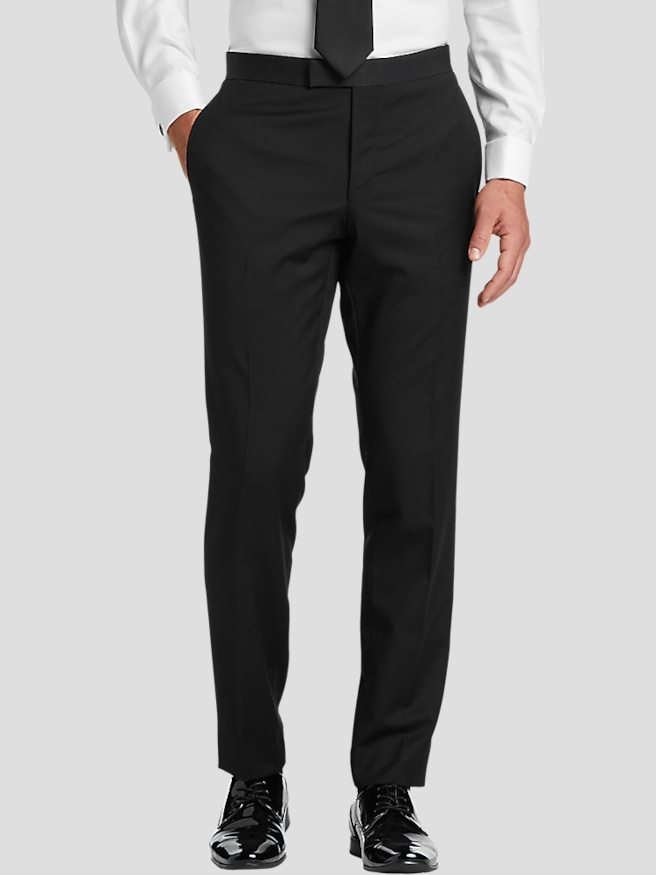
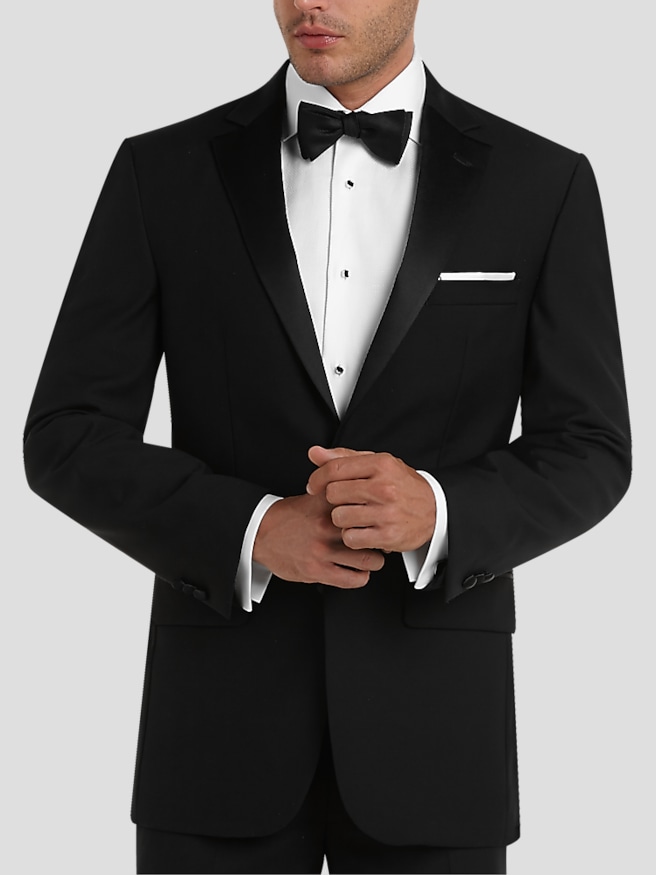
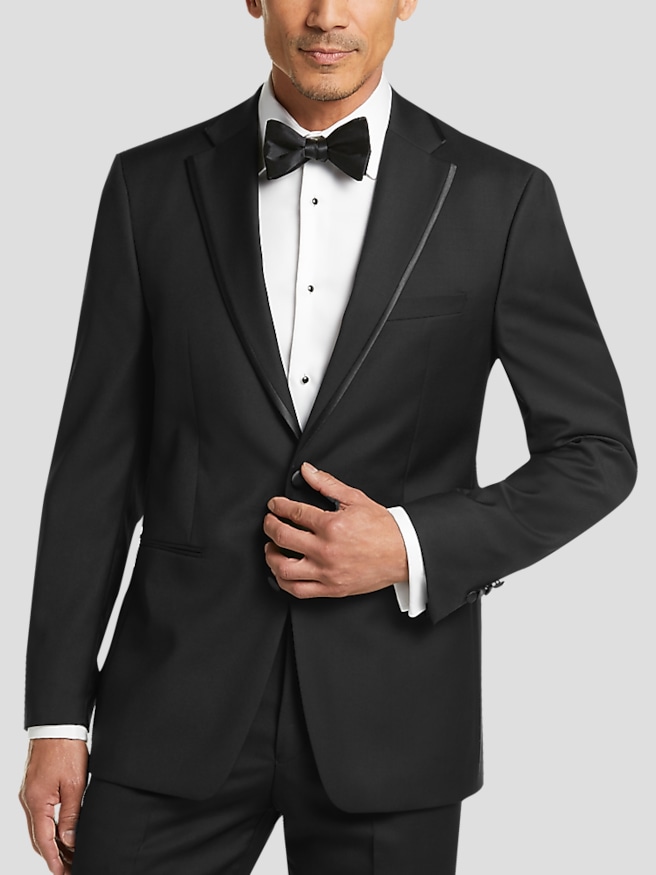
For civilian guests at a military ball, a tuxedo is the standard choice when the invitation specifies black tie. A dark suit is appropriate only when the event’s stated dress code permits it, including black-tie-optional occasions. Civilian suits and tuxedos for military balls reflect the formality of an evening shared with service members in dress uniforms, whether the guest is a spouse, partner, relative, friend, or invited community supporter. A black or midnight blue tuxedo creates a traditional foundation, with contrasting lapel trim and coordinating trousers distinguishing it from a business suit. Peak lapels give the jacket a defined, angular outline, while a shawl collar offers a smooth curve around the neckline. Both can suit a formal military ball without relying on conspicuous patterns or decorative details. When a dark suit is permitted, deep navy and charcoal provide a restrained appearance, especially in a solid fabric with a matching jacket and trousers. A tuxedo pairs naturally with a white formal shirt and bow tie; a dark suit generally calls for a crisp dress shirt and a conservative necktie. Those distinctions matter in a ballroom where guests may move from a receiving line to ceremonial remarks, dinner, and dancing. The objective is polished civilian eveningwear that complements the setting rather than imitates a uniform. Military insignia, rank markings, and costume-inspired uniform details have no role in an ordinary civilian outfit. Event-specific instructions remain the deciding factor, since expectations can vary by host and occasion, and the phrase “military ball” alone does not establish every detail of the dress code. If an invitation says only “formal,” clarification from the organizer is more reliable than assuming that a business suit meets the requirement. Within the appropriate level of formality, clean proportions, subdued color, and carefully coordinated accessories give the outfit its character. The result should look equally composed during official photographs and across a dinner table, without drawing attention away from the people and traditions being recognized.
Fabric and construction shape how formalwear looks and feels over a full evening. Worsted wool is a familiar choice for both suits and tuxedos because its smooth surface supports a crisp silhouette, while its natural resilience helps the cloth recover from ordinary movement. Wool blends can offer a balance of structure, comfort, and durability, although the overall feel depends on the blend, weave, and construction rather than fiber content alone. A fine, even texture generally looks more formal than a coarse or heavily textured weave. On a tuxedo, satin or grosgrain facing provides a deliberate contrast at the lapels, often echoed by a stripe along the outside of the trousers. A dark suit typically keeps the lapels and trousers in the same cloth, creating a quieter finish that also works for other dress occasions. Lining, seams, and the structure through the chest influence how easily a jacket moves and how smoothly it settles after sitting. Fit is particularly noticeable during a military ball’s mix of standing, seated dining, and dancing. Shoulder seams should sit near the natural shoulder edge, with a collar that rests against the shirt rather than leaving a visible gap. A jacket that closes without pulling across the front preserves its shape, while sufficient room through the upper back allows a comfortable handshake or embrace. Slim, modern, and more generous silhouettes can all look formal when their proportions suit the wearer. Trousers need enough ease through the seat and thighs for a seated meal, with a waistband that stays comfortably in place. A clean hem keeps excess fabric from pooling over dress shoes, and balanced sleeve length leaves a modest amount of shirt cuff visible. These details are useful for guests attending their first military ball as well as those returning to an annual celebration. Tailoring adjustments can refine sleeve length, trouser length, and the waist, but a sound fit through the shoulders and chest is the strongest starting point for a composed appearance.
Accessories complete the outfit without needing to become its focal point. With a tuxedo, a black bow tie, white formal shirt, and polished black dress shoes establish a traditional black-tie combination. Patent leather offers a glossy finish, while well-maintained smooth leather can also provide an appropriately formal appearance. Shirt-front details and cuff styles should work together: French cuffs require cuff links, while other formal shirts may use covered buttons or studs, depending on their design. A cummerbund or formal waistcoat can provide a finished transition between the shirt and trousers when appropriate to the tuxedo’s styling. With a permitted dark suit, a restrained silk tie and a simple white pocket square keep the presentation focused. Dark dress socks long enough to cover the leg when seated maintain a continuous line beneath the trouser hem. Comfort matters here, too; shoes that fit securely and a shirt collar that accommodates a fastened tie help the wearer remain at ease through a lengthy program. A considered Suit and Tux wardrobe can extend beyond military balls to weddings, formal receptions, and other occasions, provided each outfit matches the invitation. Thoughtful care helps preserve that usefulness. Fabric-specific care labels take priority, especially when a garment combines wool with delicate lapel facing or decorative trim. After wear, a structured hanger supports the jacket’s shoulders, while properly hung trousers retain their line. Allowing garments to air before storage and addressing stains promptly can help maintain their appearance between professional cleanings. Pressing requires particular care around tuxedo lapels, where unsuitable heat or pressure can affect the finish. Breathable garment storage, clean shoes, and neatly stored accessories also make the next occasion easier to prepare for. From the first greeting to the final photograph, a well-maintained suit or tuxedo offers a respectful, confident presence suited to the significance of a military ball.