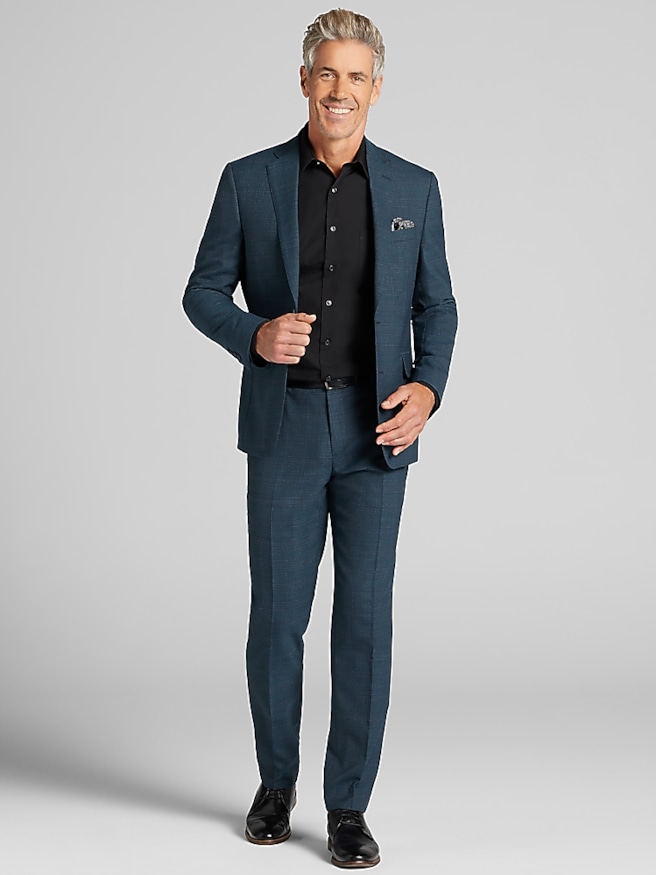
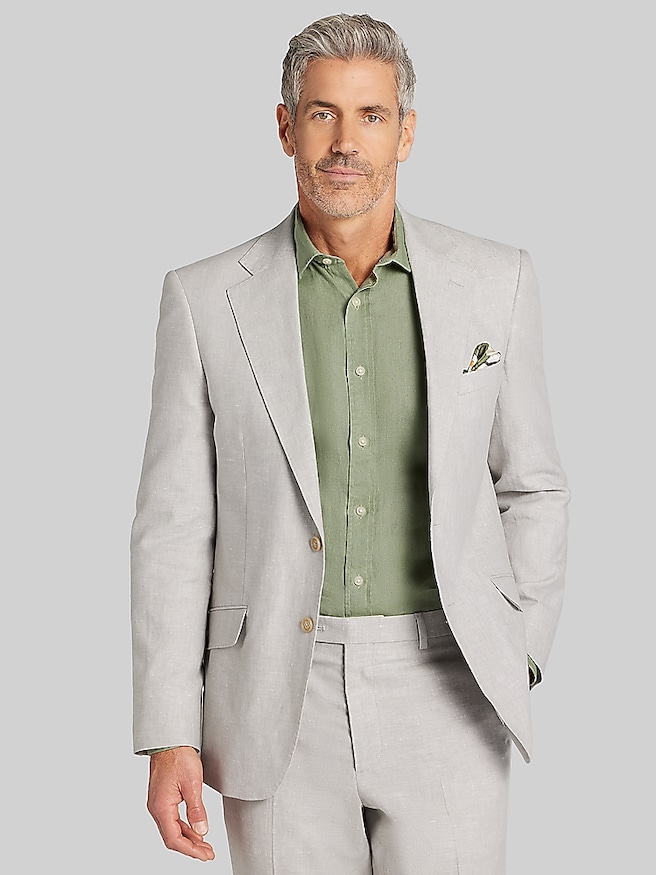
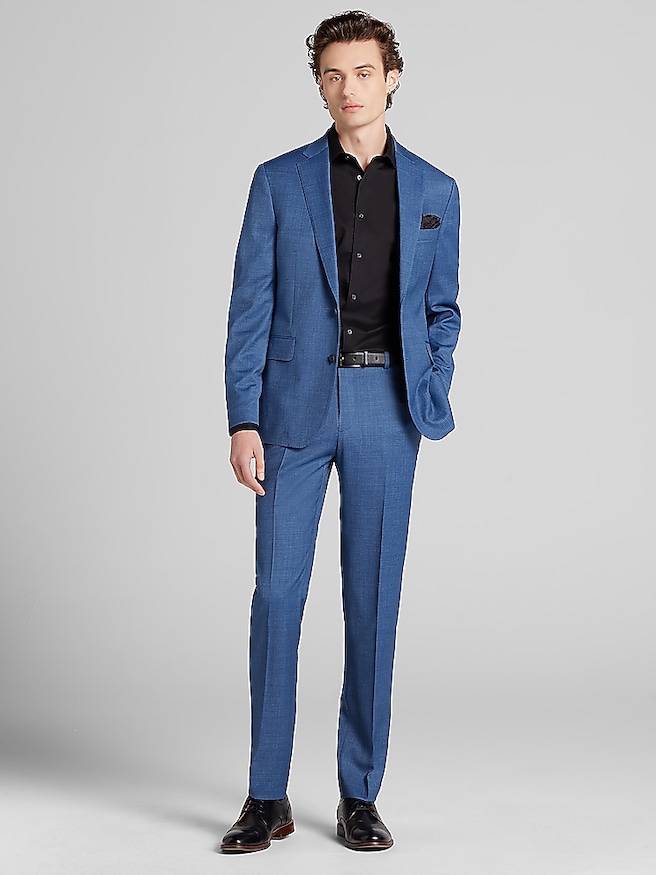
Men’s Christmas suits bring holiday color, texture, and pattern to the familiar combination of a tailored jacket and matching trousers. The look can be understated, with a dark green or burgundy suit, or more expressive, with tartan checks and Christmas-themed prints. Navy, charcoal, and black also work well for the occasion, especially when paired with a richly colored tie, a textured shirt, or a neatly folded pocket square. The right level of festivity depends on where the suit will be worn: an office reception usually calls for a more restrained approach than a themed party with friends, while a family dinner leaves room for personal touches that look good around the table and in photographs. A small-scale plaid reads differently from across a room than a large holiday motif, making pattern size just as important as color. For celebrations that call for a matching jacket and trousers, Christmas 2 Piece Suits offer a straightforward foundation without the added layer of a vest. Three-piece styles add a coordinating vest for a more layered appearance, including moments when the jacket comes off indoors. Velvet brings a soft sheen and a dressier character, although a velvet suit does not automatically meet a black-tie dress code; that distinction depends on the garment’s formal details and the event’s requirements. Christmas suits can suit hosts greeting guests, colleagues attending a company gathering, and anyone dressing for a holiday performance, worship service, or celebratory dinner. For a full day that moves from an afternoon visit to an evening party, a quieter suit with festive accessories can feel appropriate in several settings. A bold printed suit makes more sense when the celebration welcomes playful clothing and the outfit itself is part of the fun. Neither approach needs elaborate styling: a clean shirt, polished footwear, and proportions that feel comfortable do much of the work. The strongest holiday looks have a clear point of view, whether that means a single seasonal color or a deliberately cheerful allover pattern.
Fabric and fit shape how a Christmas suit feels through hours of standing, sitting, eating, and moving between conversations. Wool is a traditional suiting material because it drapes well, offers breathability, and can recover from light creasing, though its weight and weave make a substantial difference in wear. Wool blends vary according to their fiber content; some emphasize softness, while others offer added resilience or easier maintenance. Polyester-rich fabrics can hold color and resist wrinkles, but breathability and comfort still depend on the fabric’s construction and the suit’s lining. A small amount of stretch may provide extra give, although it cannot compensate for a jacket that is too tight across the back or trousers that pull at the seat. Velvet has a raised pile that catches light, giving deep colors noticeable dimension in a dining room or under party lighting. It also needs space and careful handling to avoid flattened patches. For long indoor gatherings, fabric weight matters more than an assumption that every Christmas occasion requires a heavy suit. A comfortable jacket should sit neatly at the shoulders without extending conspicuously beyond them, and the lapels should lie smoothly rather than bow away from the chest. When the jacket is buttoned while standing, strong pulling around the closure usually signals that the fit needs attention. Sleeves should allow a modest glimpse of shirt cuff, while the jacket length should balance the torso rather than look cropped by accident. Trousers need enough room through the hips and thighs to sit comfortably at a crowded dinner table, with a waistband that stays in place without being cinched excessively. A tapered leg creates a cleaner outline, but an overly narrow cut can catch at the calf and interrupt the drape. The hem should work with the shoes: a slight break gives a traditional finish, while little or no break looks sharper and more contemporary. With plaids, well-aligned pattern placement at prominent seams and pockets contributes to a considered appearance, alongside smooth stitching and a lining that does not tug during movement.
Finishing details help a Christmas suit feel intentional rather than crowded. A richly patterned suit usually benefits from a solid shirt and restrained accessories, giving the eye somewhere to rest. A plain suit allows more freedom for a tartan tie, a textured pocket square, or a vest with subtle contrast. White shirts create crisp separation against deep colors, while pale blue can soften the effect of navy or charcoal. Leather lace-ups provide a dependable dressier finish, and loafers can work for gatherings with a more relaxed dress code. Socks that relate to the trousers help maintain a continuous line when seated, especially when the suit already carries a strong pattern. For photographs, competing checks, stripes, and bright accessories can become distracting; repeating one accent color often creates a more cohesive result. Care is equally important when a suit will be worn for several celebrations. The garment’s care label should determine whether professional cleaning, washing, pressing, or steaming is appropriate, since fiber content, printed finishes, and internal construction can require different treatment. After wear, a suit benefits from airing in a ventilated space before returning to the closet. A shaped jacket hanger supports the shoulders, and properly hung trousers are less likely to develop unnecessary creases. Velvet should not be flattened under other clothing or pressed directly without suitable precautions. Stains deserve prompt attention, but rubbing a spill can spread it or disturb the surface; cleaning guidance should match the fabric. Between occasions, breathable storage helps protect the suit without trapping residual moisture. As a gift, a Christmas suit is most practical when the recipient’s measurements, preferred cut, and likely occasions are known. A familiar jacket size alone may not account for sleeve length, trouser proportions, or a preference for room through the chest. For someone who enjoys dressing up, a versatile solid or subtle plaid can serve beyond Christmas at dinners and other celebrations, while an unmistakably holiday-themed design is better suited to someone who enjoys making festive clothing part of an annual tradition.