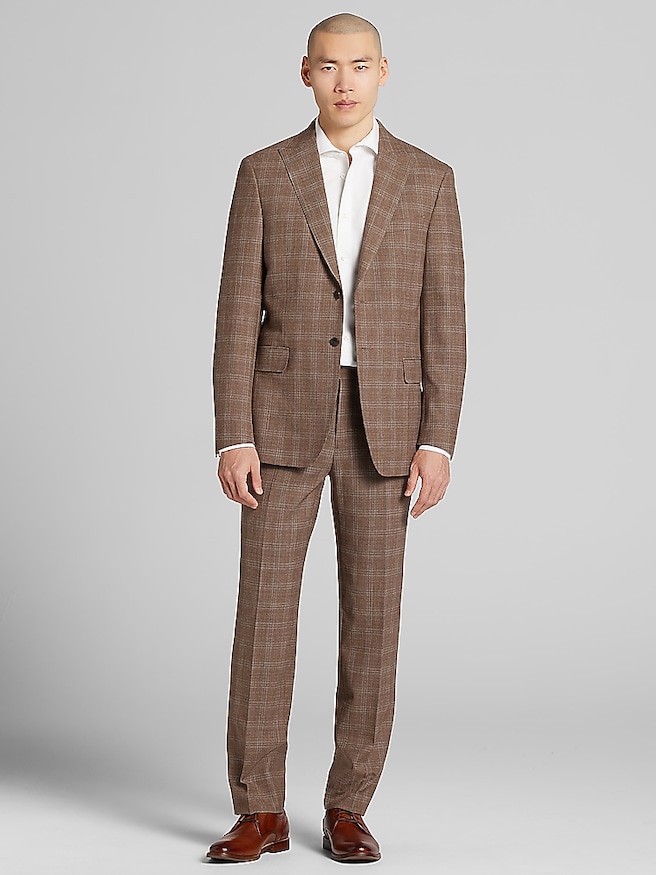
A chocolate brown suit is a rich, deep-brown alternative to navy or charcoal, bringing a distinctive look to business settings, weddings, and dressy social occasions. Its appeal comes from the balance between a familiar tailored shape and a color with more depth than a standard neutral. In smooth cloth, chocolate brown can look sleek and understated; in a textured weave, it takes on a softer, more relaxed character. The shade also changes subtly with its surroundings: next to a crisp white shirt, it appears sharply defined, while an ivory or pale blue shirt brings out its mellow undertones. That versatility makes a brown suit useful for someone who wants a polished wardrobe without repeating the same gray-and-blue combinations. For an office presentation or client dinner, a solid shirt, restrained tie, and polished leather shoes keep the impression professional. At a wedding, a textured tie and neatly folded pocket square can add personality without competing with the suit itself. Burgundy, deep green, and navy accents all sit comfortably against chocolate brown, while small-scale patterns introduce interest without overwhelming the overall look. A tie with a little contrast usually reads more clearly than one that nearly matches the jacket but misses by a shade. Dark brown shoes create an easy, cohesive finish; oxblood leather adds a richer accent. The event’s dress code still matters: a brown business suit is not a substitute for a tuxedo when black tie is specified. For occasions that call for a suit rather than formal evening attire, chocolate brown offers a confident middle ground between conventional and expressive. Its depth gives the outfit presence in photographs, yet the color remains approachable enough for a dinner table, a ceremony, or a day of meetings. A plain fabric emphasizes the silhouette, while a subtle check adds character without making accessories work harder.
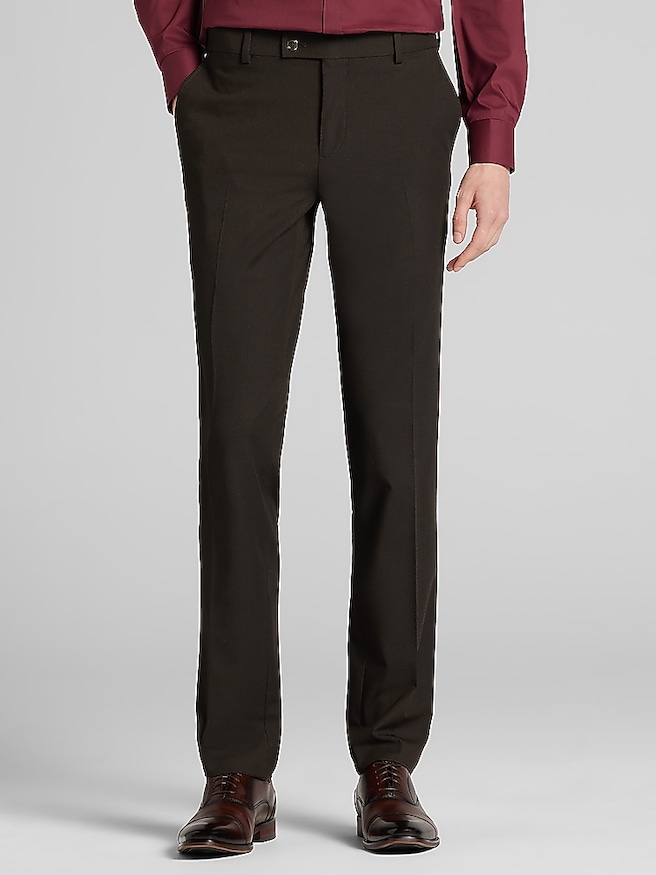
Fabric and fit determine how a chocolate brown suit looks after the first impression. Wool is valued in tailored clothing for its drape, breathability, and ability to recover from light creasing, making it a practical consideration for long stretches of sitting, standing, and moving between appointments. Wool blends can offer a balance of structure and resilience, although performance depends on the full fiber composition and construction rather than the blend label alone. A small amount of stretch may make reaching or sitting more comfortable, but it does not replace enough room through the shoulders, chest, seat, and thighs. Smooth worsted cloth gives brown a clean, defined appearance, while a more visible weave adds dimension and can make the same depth of color feel less formal. Fabric weight, lining, and jacket construction also influence how firmly the suit holds its shape and how freely it moves. A softly constructed jacket follows the body more closely; a more structured shoulder creates a stronger outline. Neither approach compensates for a poor fit. The shoulder seam should sit close to the natural shoulder, and the collar should rest neatly against the shirt without a noticeable gap. A buttoned jacket should lie smoothly rather than pull into an X across the front. Enough room to sit comfortably matters just as much as a trim appearance while standing. Sleeve length that reveals a small amount of shirt cuff gives the jacket a considered finish, and trousers should fall cleanly without pulling across the pockets or collecting in heavy folds above the shoes. A slight break looks traditional, while little or no break creates a cleaner, more contemporary line. When pairing a jacket with Chocolate Brown Pants, matching the fabric, undertone, and weave is essential for a true suit. Two pieces described with the same color name can still look noticeably mismatched together. Coordinated suit cloth creates continuity from shoulder to hem, allowing the cut and accessories to carry the outfit.
A well-chosen chocolate brown suit should feel useful beyond a single photograph or invitation. For someone who wears tailored clothing frequently, durable cloth, secure stitching, and comfortable movement help make it a dependable part of the wardrobe. For someone dressing up less often, a straightforward silhouette and restrained fabric texture offer flexibility across interviews, milestone dinners, ceremonies, and celebrations. The jacket and trousers may also work separately when their construction and finish suit the pairing. A brown jacket with contrasting trousers looks intentional when the colors are clearly distinct, rather than almost matching. The suit trousers can look equally composed with a pressed shirt or a fine-gauge knit, provided the fabric is not so formal that the combination feels disconnected. Keeping both suit pieces in a similar care routine helps them age consistently. The care label should govern cleaning and pressing, since fiber content, lining, and internal construction can call for specific treatment. Between cleanings, a gentle clothing brush can lift surface dust, and a broad, shaped hanger helps support the jacket’s shoulders. Trousers benefit from being hung neatly along their crease rather than left folded over a chair. Giving the suit time to air out after wear helps it recover before returning to the closet. Stains deserve prompt attention according to the care instructions; vigorous rubbing can spread a mark or disturb the fabric’s surface. Heavy pressing can also leave unwanted shine, particularly on areas that receive repeated friction. For travel, a garment bag and careful folding help protect the jacket’s shape, while empty pockets reduce strain and keep the silhouette clean. As a gift for a partner, graduate, or family member, a brown suit is most thoughtful when the recipient’s measurements, preferred fit, and likely occasions are known. Those practical details turn an appealing color into something comfortable, personal, and ready to wear with confidence.