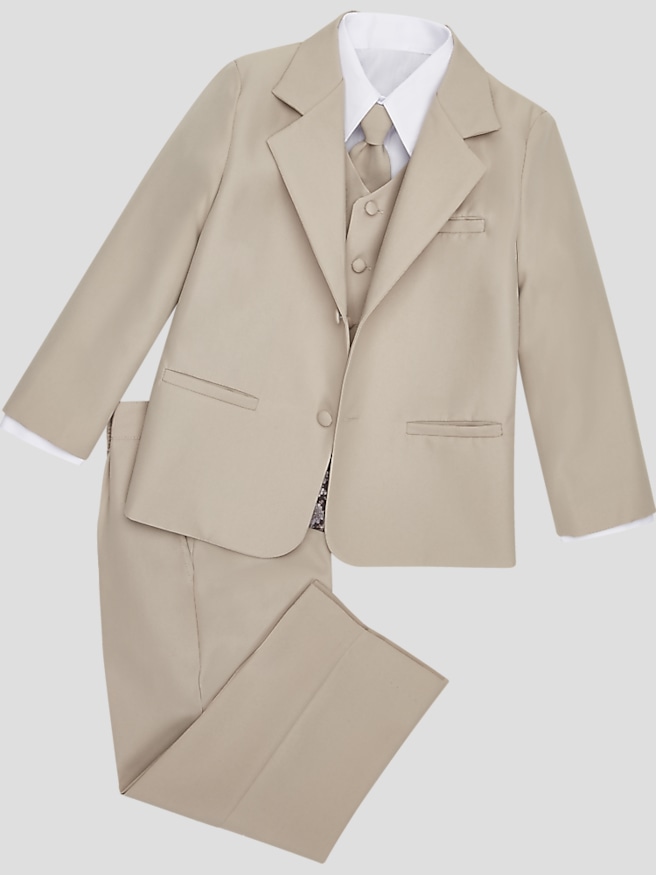
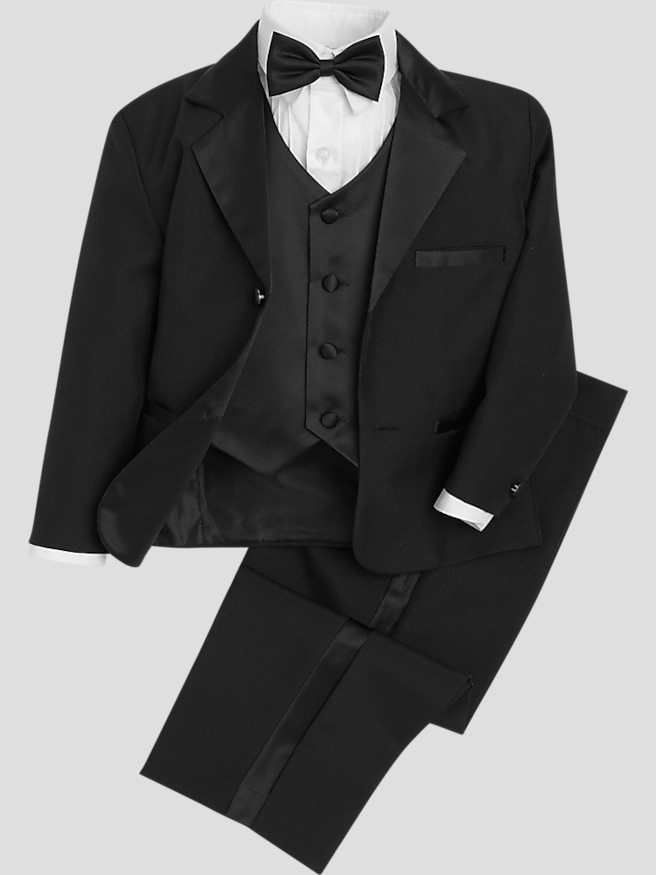
Children’s grey suits bring a polished, versatile look to weddings, family portraits, school ceremonies, and other occasions that call for more than everyday clothes. The category spans pale silver tones, medium gray, and deep charcoal, with each shade offering a distinct level of contrast against shirts, ties, and shoes. Light gray has a softer appearance in daytime photographs, while charcoal creates a more formal impression for evening celebrations. A medium gray suit sits comfortably between the two, pairing easily with white or pale blue shirts and accessories in navy, burgundy, or muted green. Two-piece suits typically consist of a jacket and matching pants; a three-piece suit adds a coordinating vest. Larger coordinated sets may include a shirt or accessories, so the number of pieces alone does not describe everything included. For a ring bearer walking down the aisle or a child stepping onto a stage for an award, the strongest choice balances a neat silhouette with enough freedom to move naturally. A vest can maintain a dressed-up appearance after the jacket comes off, especially during a long reception with dinner and dancing. Not every occasion needs that extra layer, though, and a simple jacket-and-pants combination can look just as considered. Subtle textures, such as a fine weave or a restrained check, add depth without competing with a wedding party’s colors or a photographer’s backdrop. Solid gray is particularly useful when several children need coordinated outfits without looking exactly alike. Matching the general shade and level of formality often matters more than repeating every accessory. For families comparing color palettes, Children's Blue Suits offer another direction, while gray remains an adaptable foundation for both warm and cool accent colors. Its understated character helps keep the focus on the child, whether the occasion involves carrying the rings, sharing a family milestone, or standing proudly beside siblings for a portrait.
The feel of children’s grey suits depends as much on fabric and construction as on appearance. Wool and wool-blend fabrics can provide a clean drape, breathability, and useful resilience, although weight and weave influence how warm a suit feels. Polyester blends may offer durability and resistance to wrinkling, while blends with a small amount of stretch can make sitting, reaching, and bending more comfortable. Cotton-rich fabrics often have a softer, less structured character, but they may show creases more readily. No fiber name tells the whole story: a smooth lining, comfortable waistband, and well-finished seams can make a noticeable difference during several hours of wear. During the cooler months, a medium-weight fabric can work well between outdoor photographs and a heated event space, with a separate coat providing warmth outside. Fit should leave space for a dress shirt and natural movement without making the jacket look oversized. Shoulder seams generally belong close to the edge of the shoulders, and the jacket front should lie relatively flat when buttoned rather than pull into pronounced folds. Sleeves that cover the hands or pants that gather heavily over the shoes can make even a carefully coordinated outfit look cumbersome. A slight break at the shoe offers a traditional finish, while a cleaner hem with little break creates a sharper outline. Children’s proportions vary considerably, so age-based sizing is only a starting point; chest, waist, height, and inseam measurements provide more useful context. Slim-fit tailoring does not need to feel tight, and a classic fit should not overwhelm a smaller frame. A child should be able to sit through a ceremony, climb a few steps, and lift both arms without obvious strain. Adjustable waistbands, where included, can help refine the fit as measurements change. Allowing modest room for growth is practical, but buying substantially oversized can leave the shoulders and sleeves difficult to balance, even after basic alterations.
Durability becomes especially important when a suit will appear at several celebrations or later be passed along to a sibling. Secure buttons, tidy stitching, and reinforcement at frequently stressed areas help support repeated wear, though careful handling still matters. Pant hems deserve attention because fabric that drags beneath a heel can fray quickly, and overfilled pockets can distort the jacket or pants. Care requirements vary by fabric, lining, and construction, so the sewn-in care label should determine whether a suit needs professional cleaning or can be washed at home. A washable fabric does not automatically make a fully constructed jacket machine washable. After an event, emptying the pockets and hanging the jacket on a properly sized hanger helps preserve its shape. Pants should hang neatly or fold along their crease, and all pieces benefit from airing out before being stored in a breathable garment bag. Spills are best addressed promptly by blotting gently rather than rubbing, followed by treatment appropriate to the care instructions. Any steaming or pressing should also follow the label, since excessive heat can damage some fibers or leave an unwanted shine. These small habits help a gray suit stay presentable for the next school performance, family gathering, or celebration. Styling can then shift with the setting: a white shirt and restrained tie create a traditional formal combination, while a pale blue shirt and textured accessory give the same gray base a softer feel. Black shoes bring crisp contrast, and brown shoes can complement many lighter and medium gray shades when the occasion permits. Comfortable socks and shoes that have already been worn briefly at home can make a long day easier. As a gift, a child’s suit is most useful when the giver knows the upcoming occasion and has recent measurements, with enough time allowed for a fitting before the event. The lasting value lies in a balanced combination of comfort, adaptable color, and construction that lets a child look dressed for the occasion without feeling restricted by the clothes.