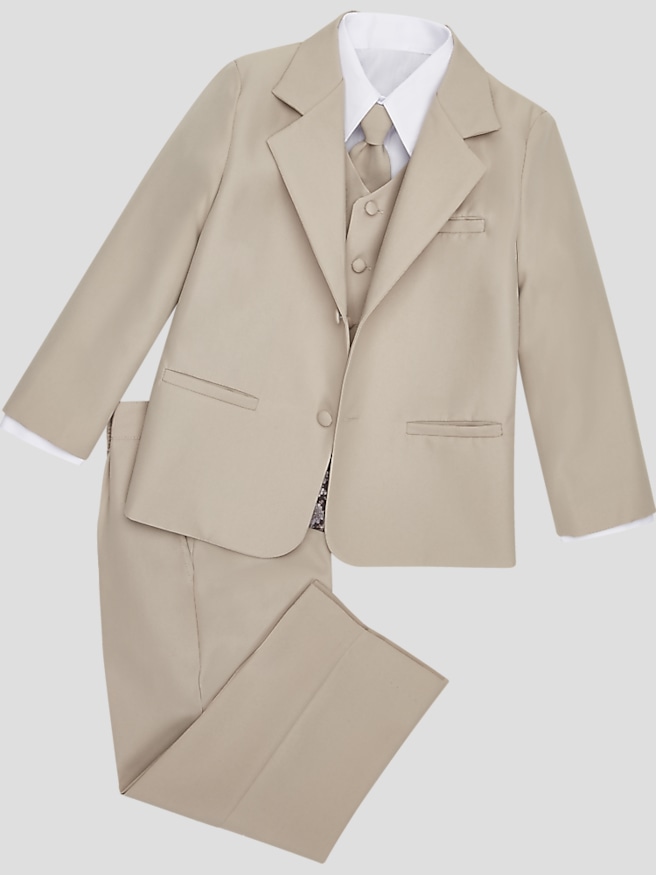
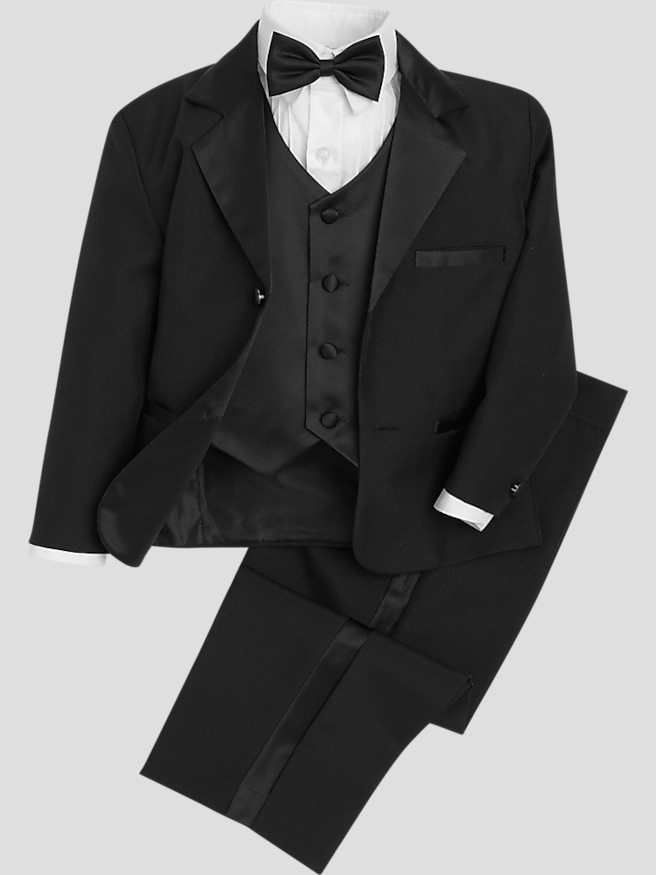
Children’s formal wear brings a sense of occasion to weddings, milestone portraits, school ceremonies, religious celebrations, and performances without losing sight of the child wearing it. A polished outfit has to look right in a photograph, but it also needs to feel comfortable during a long ceremony, a seated dinner, or an enthusiastic turn on the dance floor. Suits, tuxedos, dress shirts, and coordinating separates offer varying degrees of formality, making it possible to match the setting rather than simply dress a child like a smaller adult. A dark suit with a crisp shirt creates a classic foundation for many celebrations, while a tuxedo brings a more ceremonial look to an event with a formal dress code. Navy and charcoal are versatile choices for repeat wear, and lighter neutrals can provide a softer look when they suit the occasion. Texture makes a difference, too: a smooth fabric gives an outfit a clean, tailored appearance, while a subtle weave adds depth without competing with the rest of the ensemble. For a child taking part in a wedding ceremony, coordination can come through a shared color or a similar level of formality rather than an exact head-to-toe match with the adults. A tie that picks up a color from the celebration or a neatly folded pocket square can establish that connection without overwhelming a smaller frame. Proportion matters more than elaborate detail. Lapels, collars, and accessories should sit comfortably together, allowing the child’s expression and personality to remain the focus. The most successful children’s dress clothes feel appropriate to the moment while still looking natural on the person wearing them, whether that means a complete matching suit for a significant ceremony or tailored trousers and a dress shirt for a gathering with a less formal atmosphere. That balance helps an outfit feel celebratory rather than like a costume.
Fabric and construction shape how children’s formal clothing feels after the first few minutes of wear. Cotton dress shirts can offer a soft, breathable layer against the skin, while wool and wool-blend suiting can provide drape and a refined surface. Synthetic blends may contribute resilience, wrinkle resistance, or easier care, although the exact fabric content and care label tell more than appearance alone. A small amount of stretch can help clothing move with a child who is reaching, sitting, or bending, but it does not replace a good fit. Smooth linings, neatly finished seams, and waistbands that lie flat are especially valuable when an outfit will be worn for several hours. A jacket should rest neatly across the shoulders without pulling when the arms move forward, and the collar should stay close to the shirt rather than lifting away from the neck. Trousers need enough room through the seat and thighs for sitting comfortably, with a hem that falls cleanly instead of collecting in folds over the shoes. Buying substantially oversized clothing to account for growth can leave sleeves covering the hands and shoulders drooping beyond their intended position. A closer look at the size chart, along with chest, waist, height, and inseam measurements where applicable, offers a more useful starting point than age alone. For younger children moving beyond everyday play clothes, Toddlers' Formal Wear addresses an earlier stage of dressing up, when easy movement and simple closures can be especially important. Across age groups, a short try-on that includes sitting in a chair and walking across the room can reveal discomfort that is not obvious while standing still. Shirt cuffs should not pinch, a closed collar should not feel restrictive, and a waistband should remain comfortable after the child sits down. Those small details can determine whether a carefully chosen outfit stays neat and comfortable throughout the celebration.
Finishing touches work best when they support the outfit rather than demand constant adjustment. A tie or bow tie should be scaled to the shirt collar and jacket, and any fastening should feel secure without pressing against the neck. Dress shoes need to complement the formality of the clothing, but a stable fit and comfortable walking experience matter just as much as a polished finish. For a child carrying rings down an aisle or stepping onto a stage, secure footwear and trousers that clear the floor are practical parts of looking composed. Clothing intended for several occasions benefits from thoughtful coordination: a neutral suit can take on a fresh character with another shirt or tie, while dress trousers may also work with a simple sweater when the invitation calls for something less formal. Durability comes from both construction and care. Secure buttons, tidy stitching, and fabric that holds its shape are useful qualities in clothing that may be worn again or passed along to a younger sibling. Care requirements deserve attention before the first wear, since a washable shirt and a structured jacket may need very distinct treatment. Following each garment’s label, addressing spills promptly with a fabric-appropriate method, and avoiding unnecessary washing or cleaning can help preserve the finish. Between occasions, a shaped hanger helps support a jacket, while carefully hung trousers are less likely to develop unwanted folds. Clothing should be clean and fully dry before storage, with enough room around it to avoid crushing. Children’s formal wear can also make a thoughtful gift for a grandchild or another young family member celebrating a milestone, especially when sizing and the event’s dress expectations are known. Whether chosen for one meaningful day or several celebrations, a well-considered outfit combines an appropriate level of polish with the freedom to move, participate, and enjoy the occasion.