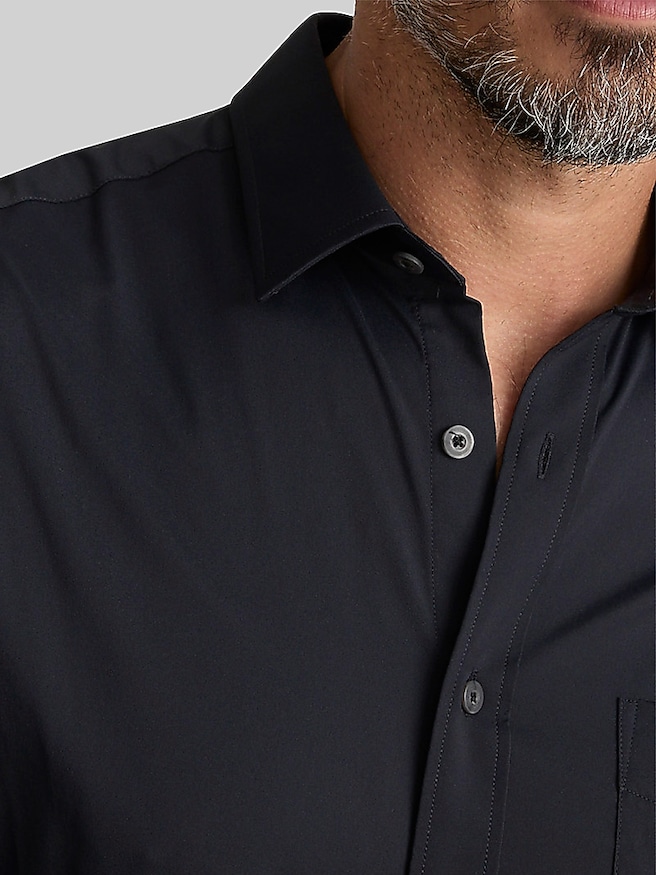
Casual holiday shirts bring festive color, pattern, and texture to relaxed gatherings without the formality of a dress shirt and tie. The category includes plaid and tartan button-downs, brushed flannel shirts, understated seasonal prints, and solid styles in shades such as burgundy, forest green, navy, and cream. Some designs make the celebration obvious through small holiday motifs; others rely on a rich color or textured weave that feels equally appropriate at Thanksgiving dinner, a Christmas gathering, or a neighborhood open house. That range makes casual holiday shirts useful for men who want to acknowledge the occasion while still feeling like themselves. A familiar plaid can look right at home beside a fireplace or around a crowded dinner table, while a fine geometric print offers a quieter option for a workplace celebration. The overall effect depends as much on scale and contrast as on the pattern itself. Broad checks and brighter combinations make a stronger statement, while small checks, muted colors, and tonal designs are easier to combine with everyday pants and layers. Festive dressing also does not have to mean red and green: deep blue, charcoal, warm brown, and soft neutral shades can create a holiday-ready look through texture and thoughtful combinations. For a family photograph, a shirt that picks up one color from the rest of the group can feel coordinated without matching every outfit exactly. For a casual New Year’s Eve dinner, a dark patterned shirt with clean lines can look polished without feeling overdressed. The most useful styles suit the actual setting, whether that means carrying dishes into the dining room, greeting guests at home, or sitting down for a long meal with friends. Comfortable construction and a natural fit help keep the focus on the occasion rather than on adjusting a collar or pulling at a tight sleeve.
Fabric plays a major role in how a holiday shirt feels, drapes, and holds up to repeated wear. Cotton is a familiar choice for its breathable feel and versatility, and cotton holiday shirts can work well on their own or beneath a sweater when the setting calls for an extra layer. A smooth cotton weave generally gives a cleaner, crisper appearance, while a brushed surface creates a softer look and feel. Flannel describes a fabric with a softly brushed finish, not a particular pattern, so a plaid shirt is not necessarily flannel, and a flannel shirt does not have to feature checks. That distinction matters when a shirt needs to look festive without feeling too warm in a busy kitchen or a crowded living room. Cotton blends may offer easier wrinkle management or added resilience, depending on their composition, while a small amount of stretch can make reaching, sitting, and moving between activities more comfortable. Fabric weight matters, too: a substantial weave can provide a satisfying drape, but a lighter shirt may be more practical beneath knitwear. Fit should leave room through the chest and upper back without creating excess fabric around the waist. Shoulder seams that sit near the edge of the shoulders help the shirt hang neatly, and sleeves should allow the elbows to bend without pulling across the back. A trim fit creates a more defined outline, while a roomier cut offers additional ease or space for a lightweight undershirt. Neither should strain between the buttons when seated. Hem shape and length affect how the shirt can be worn: a moderate hem can look intentional untucked, while a longer shirttail often sits more securely inside pants. Details such as even stitching, firmly attached buttons, and neatly finished seams also contribute to durability. A collar that lies smoothly and cuffs that fasten comfortably help a relaxed shirt retain enough structure for a gathering where photographs, dinner, and conversation all share the same evening.
A casual holiday shirt works best when the rest of the outfit gives its color and pattern room to stand out. Dark jeans create an easy foundation for plaid, while chinos in navy, tan, or olive can bring a slightly more polished feel to a seasonal print. Corduroy adds texture without needing another bold pattern, and a solid sweater can soften the effect of a brighter shirt while leaving the collar and cuffs visible. When the shirt already carries a noticeable motif, simple pants and understated shoes usually create a more balanced result than several competing patterns. Clean leather sneakers suit an informal get-together, while loafers or boots can make the same shirt feel more dressed for dinner. A relaxed workplace celebration may call for a shirt tucked into chinos beneath an unstructured jacket; a gathering at home may feel more natural with an untucked hem and sleeves worn down or neatly rolled. Care requirements deserve just as much attention as styling, especially for a shirt intended to return for more than one holiday season. The garment’s care label should determine washing, drying, and ironing methods, since fiber blends, finishes, and decorative details can require distinct treatment. Separating deeper colors from light fabrics, addressing food marks promptly, and avoiding unnecessary heat can help preserve the shirt’s appearance. Prompt removal from the dryer may reduce creasing when tumble drying is permitted, while a hanger with enough shoulder support can help maintain its shape between wears. For gifting, familiar colors and a pattern close to the recipient’s everyday style are often more useful than an especially bold novelty design. Knowing his usual size, preferred fit, and tolerance for ironing can make the gift feel considered rather than merely seasonal. A subtle plaid or textured solid may continue into ordinary dinners and weekend plans, while an unmistakably festive print can become a familiar part of annual celebrations. In either case, the appeal comes from a shirt that feels comfortable, suits the person wearing it, and brings a little character to time spent together.