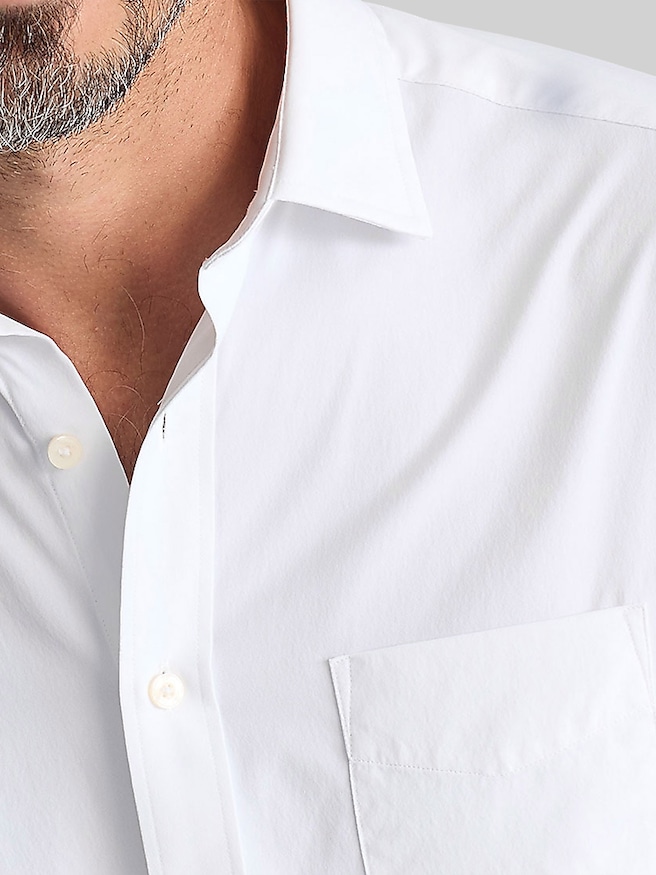
Casual button-down shirts worn untucked bring a finished look to everyday outfits without the formality of a shirt tucked into trousers. The key is proportion: an untucked shirt generally looks balanced when its front hem falls around the middle to lower portion of the fly and its back hem lands around the back pockets rather than completely covering the seat. Those landmarks are a starting point, not a fixed measurement, since torso length and the rise of the pants affect where a shirt sits. A shorter body and a straight or gently curved hem help the fabric rest neatly outside the waistband. Long, pronounced shirttails, by contrast, are usually intended to stay tucked and can leave too much fabric hanging below a casual jacket. Shoulder seams should sit close to the edge of the shoulders, while the chest should have enough room for reaching, sitting, and moving without pulling between the buttons. A slim fit creates a closer outline through the torso; a classic or relaxed fit leaves more breathing room and can accommodate an undershirt. Neither should feel restrictive across the upper back or gather into a large fold above the hips. Sleeve length matters, too: a long sleeve should finish near the wrist, with a cuff that stays in place rather than slipping over the hand. For a quick sense of the overall fit, picture sitting down to dinner, reaching for a bag, or putting on a lightweight jacket. The shirt should move comfortably, settle back into place, and keep the waistband covered during ordinary movement. This balance makes untucked button-down shirts useful for casual offices, weekend lunches, neighborhood gatherings, and evenings when a T-shirt feels too informal. Their appeal is straightforward: a collar supplies structure, while the shorter hem keeps the outfit easygoing. A button-down collar, with its points secured by small buttons, adds another practical detail by helping the collar stay orderly as the shirt is worn on its own or beneath a sweater.
Fabric gives an untucked shirt much of its character, influencing how it drapes, feels against the skin, and holds up through repeated wear. Cotton is a familiar choice for its breathable feel, although weight and weave can make one cotton shirt feel crisp and another soft and substantial. Oxford cloth has a textured basket weave that brings a sturdy, casual appearance to solid colors and subtle patterns. Poplin is generally smoother and lighter, making it comfortable beneath layers without adding much bulk around the waist. Twill has a diagonal weave and often a softer drape, while chambray offers a denim-like visual texture that can be lighter in weight than denim itself. Brushed cotton and flannel provide a soft surface that feels especially inviting during cooler weather, whether the day includes a walk to a coffee shop or an evening around a backyard fire. Linen has an airy feel and a naturally rumpled appearance; linen blends can temper that texture while preserving some of its lightness. Fabric blends that include stretch may make reaching and bending more comfortable, but the fiber label alone does not determine how flexible a finished shirt will feel. Weave, fabric weight, and cut all contribute. For frequent wear, useful construction details include even stitching, firmly attached buttons, and cleanly finished seams. Reinforcement at stress points can also support durability, especially around areas that receive regular pulling or friction. Care should follow the garment’s label rather than a single rule for every button-down. Some fabrics tolerate machine washing, while others need gentler handling or a particular drying method. Excessive dryer heat can shrink certain fabrics and alter the carefully chosen hem length, so the recommended temperature deserves attention. Promptly removing a shirt after drying can reduce set-in wrinkles, and smoothing the collar, cuffs, and front placket before hanging helps preserve a neat appearance. A steamer or an iron at the appropriate setting can finish the look when needed. Easy-care finishes may reduce upkeep, but they do not eliminate the need to wash, dry, and store the shirt as directed.
Color, pattern, and the shape of the surrounding outfit determine how casual an untucked button-down feels. A small check or narrow stripe introduces interest without taking over, while a larger plaid has a more relaxed presence. Solid shades put the focus on fabric texture and fit, making them especially useful when a jacket, sweater, or pair of pants already has a noticeable pattern. With dark jeans, a softly textured shirt and clean sneakers create an outfit that works for a casual dinner or an afternoon spent visiting friends. Chinos and leather loafers sharpen the same basic silhouette without requiring the shirt to be tucked. The pants do not have to be narrow, but their volume should feel balanced with the shirt: a very loose top over equally roomy pants creates a much fuller outline than a straight-cut shirt over straight-leg chinos. Layering introduces another proportion to consider during cooler months. A jacket should close comfortably over the shirt without bunching at the waist, and a sweater should have enough room through the body to avoid gripping the fabric underneath. A small amount of shirt hem showing below knitwear can look relaxed; a long curtain of fabric tends to compete with the shorter layer above it. For occasions that call for a smoother, more polished interpretation, Men’s Untucked Fit Dress Shirts offer a related direction while keeping the outside-the-waistband silhouette. Workplace expectations still matter, since some offices welcome an untucked collared shirt and others require more formal attire. These shirts can also make thoughtful gifts for someone whose routine moves between a desk, family dinners, and weekends away. Familiar collar preferences, usual sleeve length, and an existing shirt that fits well are more helpful reference points than guessing from height alone. The most useful choice suits both the wearer’s proportions and everyday habits, with a hem that sits naturally, fabric that feels comfortable, and care requirements that fit into a regular laundry routine.