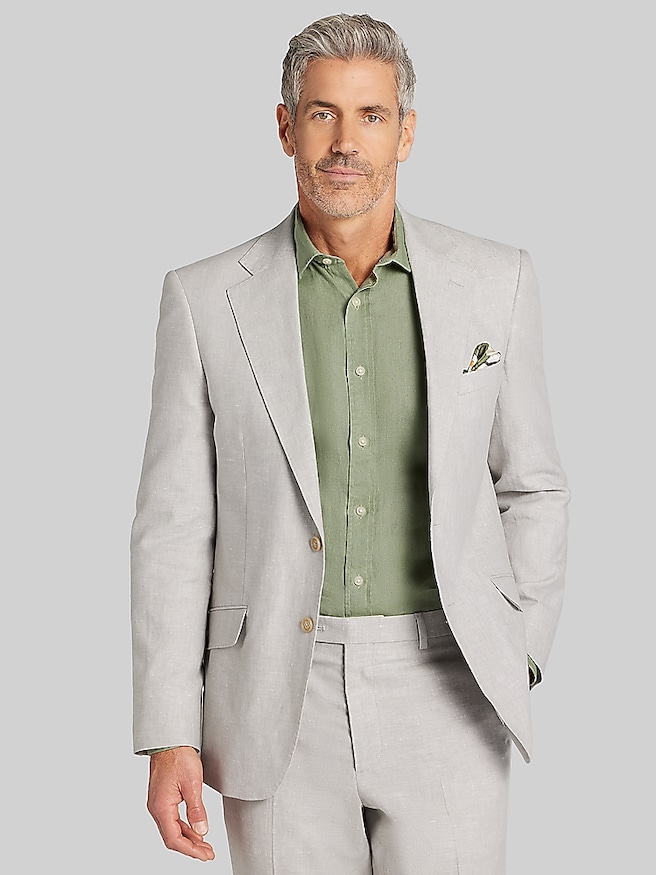
A camel suit is a men's suit in a warm, golden-brown shade, with color variations ranging from sandy tan to deeper caramel. The name describes the color rather than the material, so a camel-colored suit does not necessarily contain camel hair. Its distinctive appeal comes from the balance between a familiar neutral and a shade with more personality than navy or charcoal. Camel suits can look polished at a daytime wedding, a graduation ceremony, a networking event, or a business gathering where the dress code allows some individual expression. Against a crisp white shirt, the color looks clean and defined; with pale blue, it takes on a softer, understated character. A dark brown tie adds depth without pulling attention away from the suit, while a navy tie creates a sharper contrast. Subtle patterns, such as a small dot or restrained stripe, add interest without competing with the golden-brown fabric. Shoes help establish the mood: dark brown leather oxfords give the outfit a dressier finish, while brown loafers can work for a less formal setting. Black shoes create a stronger contrast and tend to feel more deliberate when another dark accent connects the outfit. The result depends as much on the setting as on the accessories. Camel is an expressive choice for a wedding guest or a groom whose celebration calls for a tailored suit, but it is not a substitute for a tuxedo when an invitation specifies black tie. For an interview in a highly conservative field, navy or charcoal may be the more conventional choice. In workplaces with flexible tailoring standards, however, a camel suit can offer a distinctive alternative while retaining the familiar structure of a two-piece suit. The color works particularly well when the shirt, tie, and pocket square stay restrained, allowing the fabric and silhouette to carry the look rather than surrounding them with several competing statements.
Fabric and fit determine how a camel suit feels in use and how well it holds its shape. Wool is valued in tailoring for its drape, breathability, and natural resilience; a well-made wool fabric can recover from ordinary creasing when given time to rest between wears. Wool blends may combine those qualities with fibers selected for added strength, stretch, or easier maintenance, although the exact balance depends on the fabric composition and construction. Linen introduces visible texture and a relaxed character, including the creases that are part of its appearance. Cotton often has a more casual surface and can develop noticeable folds through the elbows and lap. Synthetic blends vary considerably, making the fabric label and care instructions more useful than assumptions based on appearance alone. In camel, texture is especially noticeable because light catches the golden-brown surface: a smooth worsted finish reads more crisply, while a brushed or subtly woven finish gives the color greater depth. Fit should support that fabric rather than fight it. Jacket shoulders should follow the natural shoulder line without pronounced overhang, and the collar should rest close to the shirt collar rather than pulling away. With the jacket buttoned, the front should lie smoothly instead of forming a tight X around the button. Enough room through the chest and upper back allows comfortable movement when reaching across a desk or greeting someone. Slim fits sit closer to the body, while roomier cuts provide more space through the torso, seat, and thighs; neither description replaces checking the actual proportions. Trousers should sit securely at the intended waist position without depending on a tightly cinched belt. A clean line through the thigh and knee matters more than an aggressively narrow leg, especially for someone who spends much of an event seated. The trouser hem can finish with little or no break for a crisp outline, or a modest break for a more traditional appearance, with the final length judged alongside the shoes intended for the outfit.
Camel also lends itself to combinations beyond a fully matched suit. A suit jacket with compatible construction and texture can sometimes work over dark trousers, while the color of Camel Dress Pants pairs naturally with navy knitwear, white shirts, and brown leather accessories. A matched suit still requires more than a similar color name: fabric, weave, shade, and finish need to agree, since two golden-brown pieces can look noticeably unrelated when worn together. Keeping the jacket and trousers together for cleaning helps maintain a consistent appearance over time. Between professional cleanings, a broad, shaped hanger supports the jacket's shoulders, and trousers benefit from hanging neatly rather than remaining folded over a chair. A clothing brush can lift surface dust, and airing the suit after wear helps it recover before returning to the closet. Care labels should govern cleaning and pressing, particularly when the fabric contains blended fibers, stretch components, or a delicate finish. Spot treatment also deserves caution because aggressive rubbing or an unsuitable cleaner can leave a visible mark on a light neutral surface. Repeated pressure and friction affect any tailored garment, so emptying pockets before hanging the suit and avoiding an overfilled wallet can help preserve its outline. Durability depends on the relationship between fabric quality, construction, fit, and care; a suit that strains across the seat or elbows is under more stress than one with comfortable movement built in. For someone building a tailored wardrobe, camel can complement darker foundational suits rather than duplicate their role. It can also make a thoughtful gift for a graduate, a partner celebrating a milestone, or someone who enjoys dressing for special events, provided sizing and personal taste are known. Measurements, preferred trouser rise, jacket proportions, and plans for alterations matter more than guessing from a shirt size. With those details considered, a camel suit offers a recognizable golden-brown palette that can feel composed, personal, and easy to coordinate across a range of dress occasions.