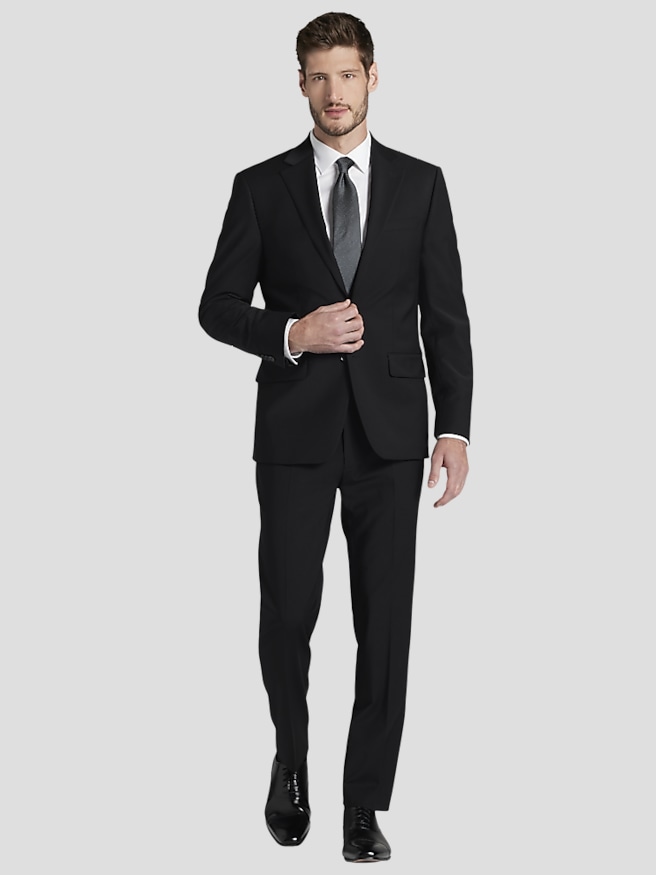
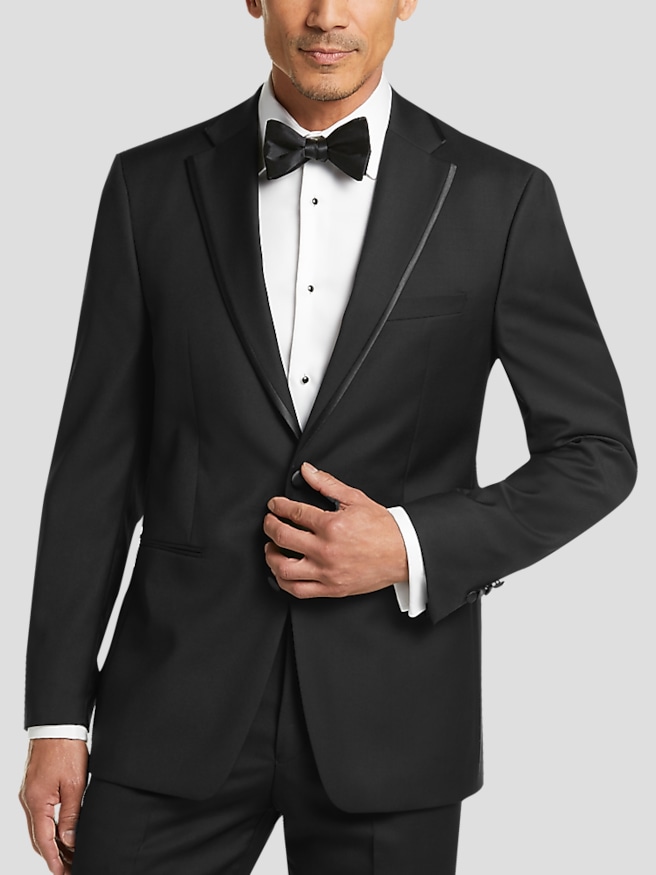
Formal black tuxedos stand apart from black suits in the details: satin or grosgrain on the lapels, covered buttons on many jackets, and a narrow stripe along the outer seam of traditional tuxedo trousers. Those details are subtle from across a ballroom but show up clearly when the light catches a lapel in a photograph. A shawl collar traces a smooth, unbroken curve from the neck to the button, while a peak lapel points upward and gives the jacket a more defined shoulder line. A satin-edged notch lapel has a shape familiar from suit jackets, with enough contrast at the edges to distinguish it from everyday tailoring. A single-breasted jacket keeps the front simple and pairs naturally with flat-front trousers, letting the lapels provide most of the visual interest. A tuxedo is the customary choice for a black-tie wedding, awards dinner, or gala. A white formal shirt, a black bow tie, and polished black dress shoes keep the focus on the cut of the jacket and the contrast between the shirt and lapels. A low-cut waistcoat or cummerbund can cover the waistband so that a wedge of white shirt doesn’t show below the jacket button when standing. For a groom or wedding party, coordinating the lapel shape and finish can bring a group together in portraits without requiring everyone to wear the same cut. An invitation that says “formal” rather than “black tie” may leave more room for interpretation; the host’s guidance matters more than the venue alone. The Calvin Klein Black Pantsuit collection offers another approach to tailored black attire for occasions that allow a broader dress code.
The fit of a black tuxedo is most apparent during ordinary moments: reaching across a dinner table, sitting through a ceremony, or raising an arm for a toast. The jacket collar should rest against the shirt collar without a gap, and the shoulders should lie flat rather than dip or bunch at the sleeve seam. When the jacket is buttoned, diagonal lines pulling away from the button usually signal that the chest or waist needs more room. A little shirt cuff showing at the wrist gives the sleeves a clean finish when the arms are at rest. A modern fit generally leaves more room through the body and legs than a slim fit, while an extra-slim cut sits closer and has a narrower leg opening. Those labels are starting points, not substitutes for checking how a jacket sits through the shoulders or how the trousers feel when seated. Flat-front trousers should fall smoothly from the waist without the pockets pulling open, and a plain hem with little or no break keeps the fabric from bunching over the shoe. Trying on the trousers with the shoes intended for the event makes the hem easier to judge, since the shape of the shoe can change where the fabric lands. Fabric plays a part in that clean line, too. Fine wool drapes smoothly, breathes well, and can recover from light wrinkles after hanging. Wool blends vary in feel and resilience depending on the other fibers and the weave. A designation such as Super 100s refers to the fineness of the wool fibers, not the weight of the cloth or how long it will wear. A matte or softly textured wool body gives satin trim a clear contrast, while a fabric with more body can help the trousers hold a sharper crease. For someone who expects to wear a tuxedo for weddings, charity dinners, or formal performances over several years, a comfortable cut and classic proportions matter more than a sharply tapered silhouette.
Good care preserves both the shape of the tuxedo and the contrast between the main fabric and the trim. After an event, emptying the pockets and hanging the jacket on a broad, shaped hanger helps the shoulders settle without creasing. Trousers hung along their existing creases are less likely to need pressing before the next outing, and a breathable garment bag keeps dust off without trapping moisture during storage. The care label is the best reference for cleaning, especially when the shell, lining, and lapel trim are made from separate materials. Wool often needs only an airing and a light pass with a soft garment brush between wears, while a visible spill is better handled promptly by a professional familiar with formalwear. Rubbing at a spot on a satin lapel can change its sheen, and direct heat from an iron can leave a shiny mark on wool or flatten the texture of the trim. For travel, a garment bag with room for the shoulders and the fewest possible folds helps the jacket arrive in better shape. Hanging it up after unpacking gives small wrinkles a chance to relax before dressing. Durability also comes down to fit: fabric under constant tension at the elbows, seat, or thighs shows wear sooner, and trousers that brush the floor can fray at the hem. A tailor can usually refine trouser length or make a modest waist adjustment more readily than reshape a jacket shoulder, so it makes sense to get the shoulders and chest right from the start. That matters when a tuxedo is a gift for a groom, a musician who performs in formal dress, or someone marking a milestone with a first black-tie event. Leaving the final fitting until the recipient can try on the full outfit allows the shirt, shoes, jacket, and trousers to be judged together. A well-fitted black tuxedo can serve through years of occasions where the invitation calls for more than a suit, with the same clean line at a reception as it has in a formal portrait.