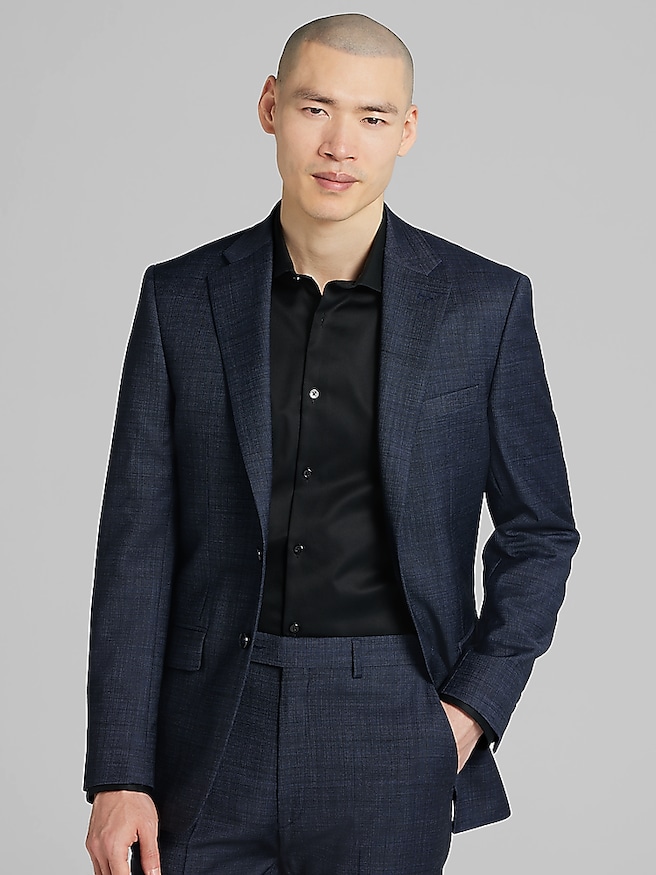
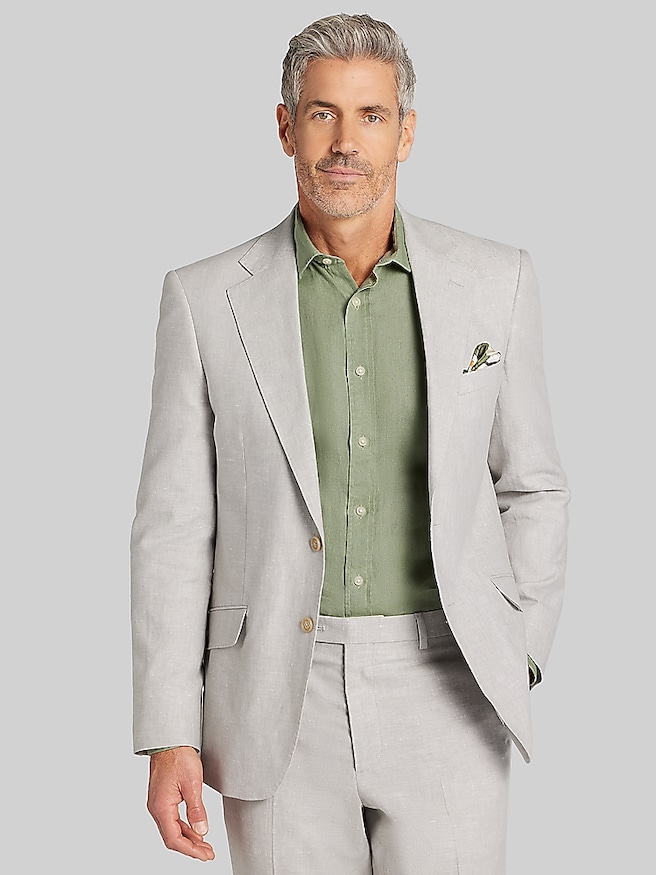
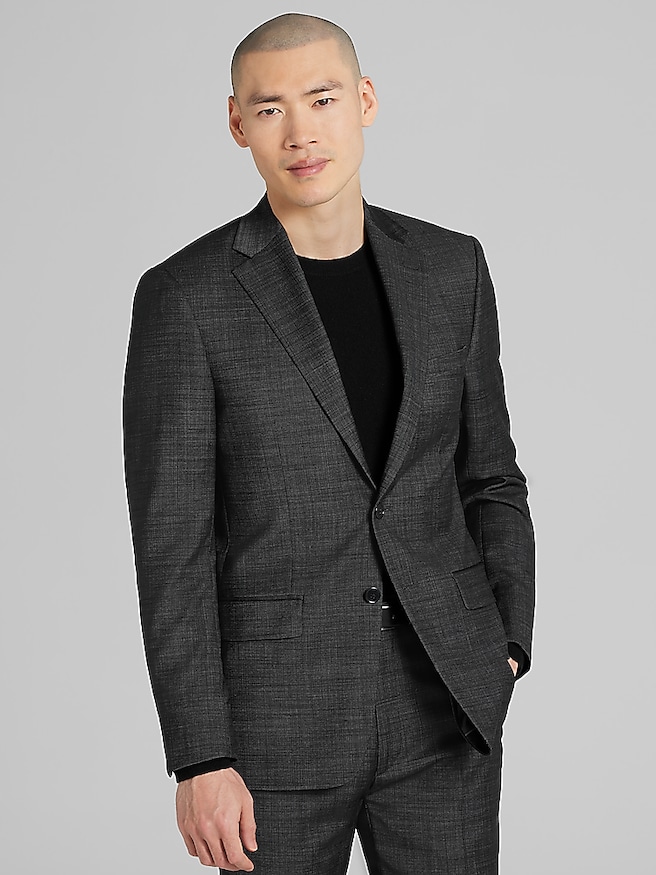
A charcoal suit brings depth and definition to a tailored wardrobe without the stark contrast of black. Its dark gray color works naturally in professional settings, at wedding celebrations, and for evening occasions where a polished appearance matters. Against a white shirt, charcoal looks crisp and understated; with pale blue, it takes on a softer character that feels equally appropriate for a client meeting or a dinner reservation. The shade also provides a versatile backdrop for burgundy, navy, forest green, and subtle patterned ties, allowing accessories to add personality without overwhelming the suit itself. Charcoal belongs to the broader gray color family, but its deeper tone generally creates a more reserved impression than light gray. For a look across that tonal range, Men's Calvin Klein Gray Suits offers a related perspective on gray tailoring. The appeal of charcoal extends beyond color coordination: it can anchor a compact wardrobe for someone starting a new role, traveling for business, or attending several dressy occasions throughout the cooler months. A smooth, finely woven fabric tends to look clean and formal, while a subtle texture gives the surface more dimension under natural light. The same dark gray can appear almost black in a dim dining room and distinctly gray beside a window, making the fabric's texture and undertone part of its character. Black leather shoes reinforce its more formal side, while dark brown shoes can bring warmth to business and social outfits when the dress code allows. A restrained pocket square or textured tie adds interest without competing with the tailoring. For someone choosing a first suit, charcoal provides a practical foundation rather than a look tied to one celebration. For someone with an established wardrobe, it offers a familiar color with room for variation in weave, silhouette, and styling. Its strength is that balance: serious enough for an important introduction, but adaptable enough to feel comfortable at a family gathering or an evening reception.
Fabric and fit shape how a charcoal suit feels over a full day, from the first commute to the last conversation after dinner. Wool is a traditional suiting material because it can drape smoothly, breathe well, and recover from some light creasing with time between wears. Wool blends may introduce other qualities, including added stretch or greater resistance to abrasion, depending on their composition and construction. A stretch component can help a closely shaped suit move more comfortably, but it does not replace adequate room through the shoulders, seat, and thighs. Fabric weight matters as well. A lighter cloth may suit heated offices and frequent indoor events, while a more substantial weave can feel reassuring during the cooler months and create a firmer outline. The fiber label and care instructions provide a more useful picture than color alone, since two charcoal fabrics can have noticeably distinct textures, weights, and maintenance needs. Fit begins with the jacket's shoulders, which should follow the body's shape without extending awkwardly or pulling across the upper back. A clean chest and smoothly resting lapels help the jacket look composed when buttoned, while enough ease through the middle allows for sitting, reaching, and a natural breath. Slim silhouettes sit closer to the body; roomier cuts offer more space without necessarily looking oversized. Neither is automatically more polished, because proportion matters more than the fit name. Trousers should rest securely at the waist and fall cleanly through the leg, with sufficient space to sit comfortably through a ceremony or a long presentation. Hem length changes the overall impression: a slight break creates a traditional finish, while little or no break gives the trouser line a sharper appearance. Sleeve length, trouser hems, and modest waist adjustments can often be refined through tailoring, although the scope depends on seam allowance and construction. A balanced fit is visible in motion as much as in a mirror: the jacket stays settled during a handshake, and the trousers remain comfortable when taking a seat.
A charcoal suit earns its place through repeated use, and thoughtful care helps preserve both its appearance and its structure. A broad, shaped hanger supports the jacket's shoulders, while hanging trousers neatly helps limit deep folds between wears. Allowing the suit to air in a ventilated space before putting it away gives moisture time to dissipate, especially after a crowded reception or a full day of travel. A clothing brush suitable for the fabric can lift surface dust and lint without the repeated tugging of aggressive cleaning methods. Care should follow the garment label, with professional cleaning used as appropriate for soil, odors, and the fabric's requirements rather than automatically after every wear. Excessive heat and careless pressing can leave shine on dark cloth, so a careful approach matters around lapels, seams, and trouser creases. Durability also depends on everyday habits: overfilled pockets distort the silhouette, constant friction can wear the seat and inner thighs, and repeated wear without a rest period gives fabric less opportunity to recover. Rotating suits when possible and addressing loose buttons or small seam issues promptly can help keep tailoring looking composed. For travel, gentle folds, minimal compression, and hanging the suit upon arrival can reduce the work needed before an event. These practical details make charcoal especially useful for professionals, wedding guests, graduates entering the workplace, and anyone whose calendar calls for dependable dress clothing. It can also be a meaningful gift for a major career milestone, particularly when the recipient's measurements, preferred silhouette, and tailoring needs are part of the choice. Occasion still determines the finishing touches. A conservative tie and polished shoes suit an interview, while a richer tie texture and a neatly folded pocket square can bring character to a celebration. For an invitation specifying black tie, a standard charcoal business suit is generally not a substitute for the requested evening attire. Within business and dressy social settings, however, dark gray tailoring offers a composed foundation that can feel personal through careful proportions, comfortable fabric, and well-chosen details.