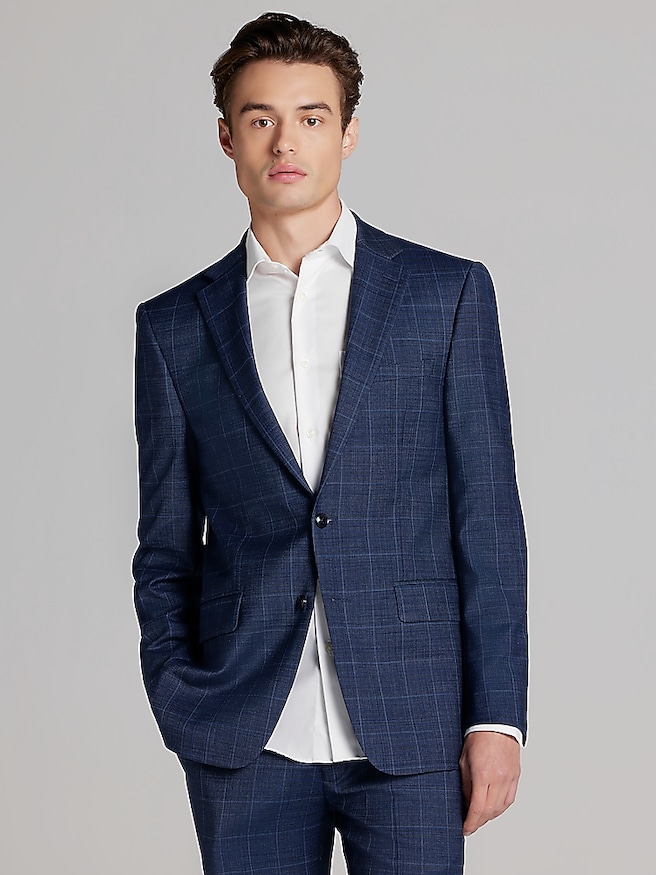
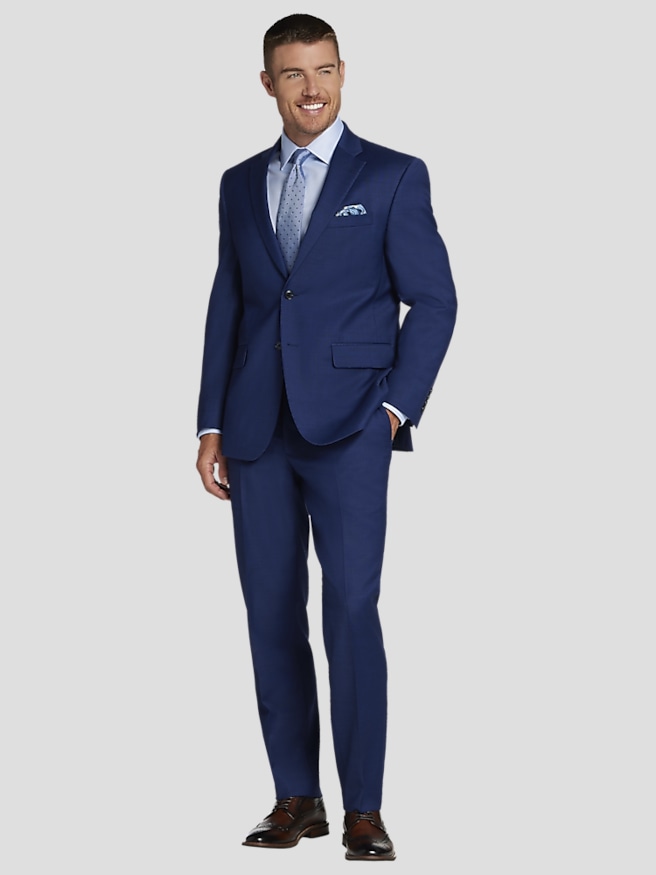
Blue suit jackets bring a tailored look to business clothing, wedding attire, and outfits for occasions that call for more polish than a shirt alone. Their appeal starts with color: navy has the quiet formality suited to a client presentation or an evening reception, while medium blue gives tailoring a more expressive character without overpowering the rest of an outfit. A blue suit jacket is generally designed to be worn with matching suit trousers, with the same fabric, shade, and finish creating a continuous line from shoulder to shoe. That distinction matters because two blue fabrics can look close on a hanger yet noticeably mismatched when worn together. Suit separates allow jacket and trouser sizes to be selected independently, but a coordinated suit still depends on matching the fabric rather than simply choosing similar colors. For someone whose chest and waist measurements do not align with standard paired sizing, that flexibility can make a substantial difference in the finished fit. Blue also works with familiar wardrobe foundations: a white dress shirt provides crisp contrast, pale blue creates a softer combination, and a restrained patterned tie adds depth. Burgundy, dark green, and muted gold accents can complement blue without competing with it. Dark brown leather shoes lend richness to many blue suits, while black shoes create a more formal impression, especially with navy. For interviews, graduation ceremonies, important presentations, and wedding celebrations, the result can feel considered without being showy. A jacket with clean lapels, balanced proportions, and an understated surface leaves room for the wearer’s personality rather than making the clothing the center of attention. Subtle texture can add interest at close range, while a smooth finish emphasizes the simplicity of the silhouette. The most useful shade is often the one that works naturally with shirts, trousers, and shoes already in the wardrobe, making the jacket part of a coherent outfit rather than an isolated purchase.
Fabric and construction shape how a blue suit jacket looks in motion, feels across the shoulders, and holds its appearance through repeated wear. Wool is a traditional tailoring material because it drapes well, responds to pressing, and has natural resilience that helps light creases relax between wears. A fine, smooth wool fabric produces a crisp outline, while a more textured weave gives the surface added dimension. Wool blends vary considerably: the other fibers in the composition can influence softness, abrasion resistance, wrinkle recovery, and the way the fabric hangs. Stretch may come from the fabric’s construction or from an added elastic fiber, so the fiber label and product description provide more useful information than the word “stretch” alone. A little flexibility can make reaching for a briefcase or sitting through a long meeting more comfortable, but it does not compensate for a jacket that is too small. Lining also affects the wearing experience by helping the jacket slide over a shirt and covering interior seams. Beyond fabric, a good fit begins at the shoulders, where the jacket should follow the body without extending into a pronounced ledge or pulling into visible dents. With the appropriate front button fastened, the chest and waist should lie smoothly rather than forming tight diagonal creases. Slim cuts usually sit closer through the torso and sleeves; roomier cuts provide more ease, though fit names are not standardized across tailoring. Neither silhouette should restrict ordinary movement. Sitting, shaking hands, and reaching forward reveal comfort issues that standing still in front of a mirror can miss. Sleeve length should allow a small amount of shirt cuff to show, and jacket length should balance the torso and cover the seat in a conventional tailored fit. Sleeve and waist refinements may be possible through alterations, while substantial shoulder changes are more involved. Starting with the right shoulder shape and overall proportions gives a tailor a stronger foundation for smaller adjustments.
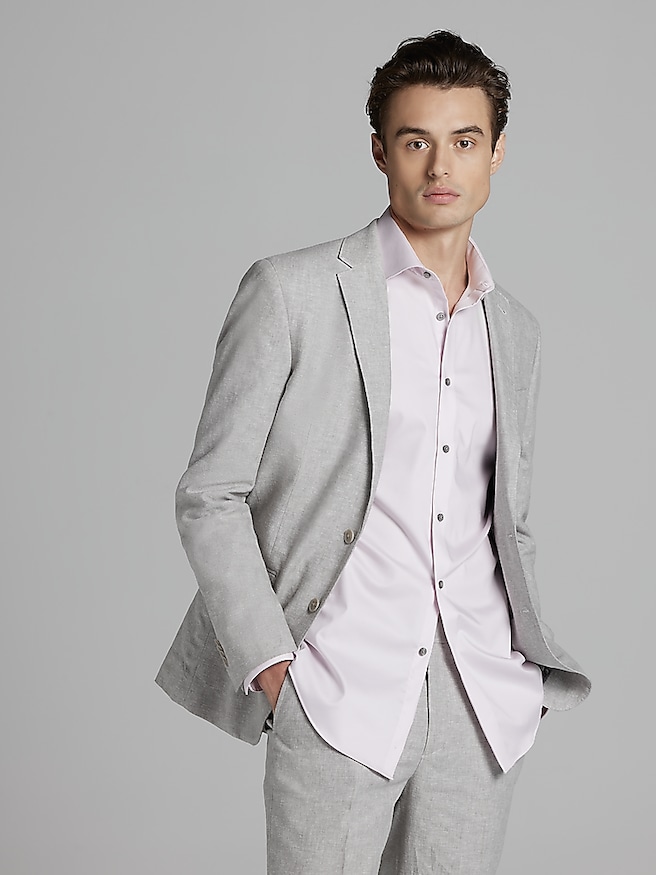
The intended use of a blue suit jacket helps determine which details deserve the most attention. For frequent office wear, an understated weave, comfortable armholes, and a shape that stays neat when seated can matter more than an unusual design detail. For a wedding guest or someone marking a professional milestone, a precise fit and carefully coordinated accessories often make the strongest impression. A simple pocket square can brighten the chest pocket without needing to match the tie exactly, and a belt that relates to the shoes helps the outfit feel resolved. Not every suit jacket works equally well with casual trousers: smooth, formal fabrics and closely structured shapes often look best with their matching suit pants. More textured tailoring may be easier to combine with contrasting trousers, provided the contrast looks deliberate. For a related category designed around separate-jacket dressing, Men's Calvin Klein Blue Sport Coats offers another direction to consider. Keeping a suit jacket looking sharp is largely a matter of consistent, gentle care. The sewn-in care label should determine the cleaning method, and professional cleaning is appropriate when specified or when soil and odors require it. Unnecessary cleaning can add wear, so airing the jacket after use and carefully brushing away surface dust can help maintain its appearance between cleanings. A broad, shaped hanger supports the shoulders better than a thin wire hanger, while enough space in the closet keeps the lapels and sleeves from being compressed. Emptying pockets after wear helps prevent stretched fabric and distorted lines; a heavily packed inside pocket can also interrupt the drape across the chest. Matching suit pieces benefit from being cleaned together when cleaning is needed, helping their appearance remain consistent. For travel, a garment bag and careful packing reduce crushing, though persistent wrinkles may still need professional attention. As a gift for a graduate, a new professional, or someone celebrating a career achievement, a blue suit jacket has lasting practical value when sizing and personal taste are known. Accurate measurements and room for fitting adjustments make that gesture more personal, supporting a garment that feels comfortable as well as polished.