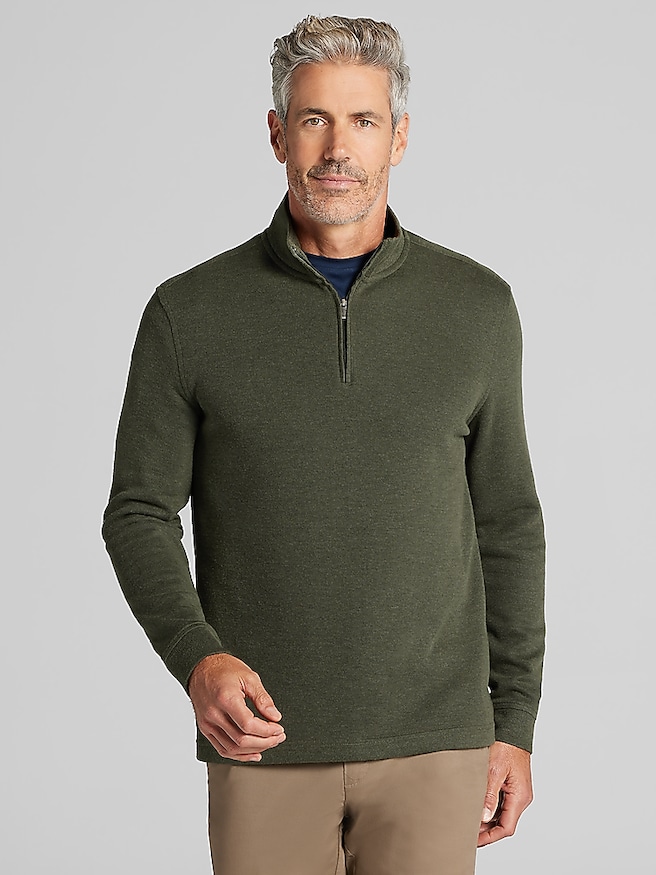
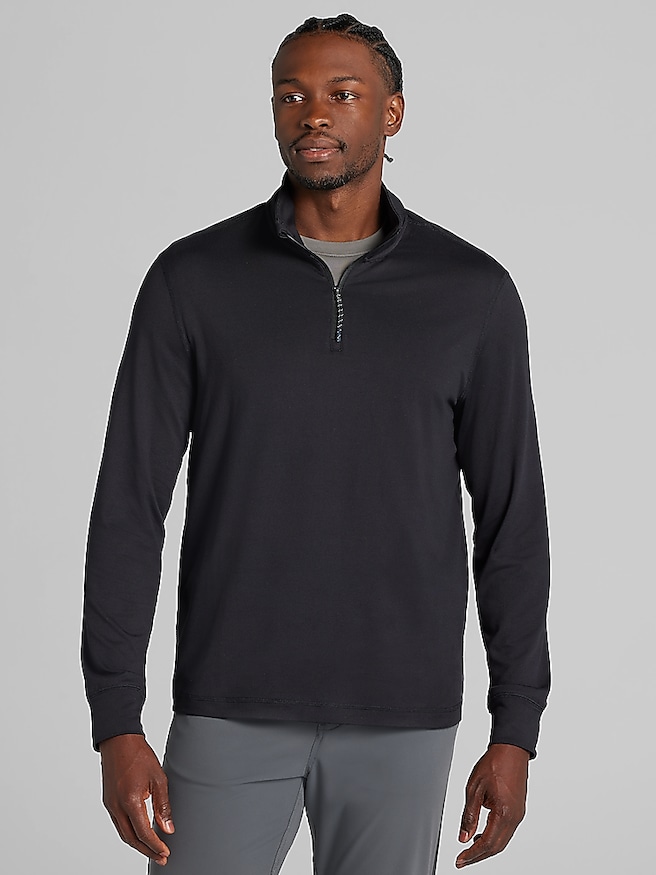
A business casual quarter zip is a pullover with a short zipper at the neckline that brings more structure to an outfit than a sweatshirt while feeling less formal than a suit jacket. In workplaces that allow knitwear, a refined quarter-zip pullover pairs naturally with a collared shirt, chinos, or tailored dress pants. Its appeal comes from that middle ground: a defined collar frames the face, a smooth knit keeps the overall look tidy, and the zip opening accommodates a shirt underneath without the formality of a tie. For a typical office day, a navy pullover over a light blue button-down works well with gray trousers and leather loafers. A charcoal version with tan chinos creates a similarly balanced combination for team meetings, desk work, and lunch with colleagues. Solid colors and subtle textures are especially useful because they complement patterned shirts without competing with them. Minimal detailing, neat seams, and a zipper that sits flat help keep the appearance professional rather than athletic. A partially open neckline allows the shirt collar to remain visible; a higher zipper position creates a more contained look. Dark, even-wash denim can also work where the dress code permits it, though chinos and dress trousers are the more dependable choices for a business casual setting. Under a sport coat, a fine-gauge quarter zip adds another layer of texture without overwhelming the jacket’s shape. The result should still allow comfortable movement through the shoulders and arms. This style suits professionals building a flexible work wardrobe, commuters moving between appointments, and anyone who wants a presentable option for a casual client lunch. It is not a replacement for required business formal attire, and expectations vary by workplace. Where polished separates are appropriate, however, a quarter zip offers a straightforward way to look put together without dressing more formally than the occasion calls for.
Fabric and construction make a noticeable difference in how a business casual quarter-zip pullover looks, feels, and holds its shape. Fine cotton knits tend to have a soft, familiar feel and a matte surface that works well with both Oxford cloth shirts and smooth dress shirts. Merino wool can provide a finer texture and fluid drape, while cashmere is known for its particularly soft hand. Wool blends and cotton blends may combine those characteristics with other fibers for stretch, resilience, or simpler care, depending on the composition. Synthetic fibers are not automatically out of place in office clothing; a smooth, understated blend can look more appropriate than a heavily textured natural-fiber knit with an oversized fit. The overall finish matters more than the fiber name alone. Shiny surfaces, large graphics, and strongly athletic details generally move the appearance away from traditional business casual. Fine-gauge knitting produces smaller, closer stitches and usually layers more easily beneath tailoring, while a more substantial knit creates a fuller silhouette. Ribbed cuffs and hems can help define the shape, but they should rest comfortably rather than grip tightly or cause the body to bunch. Fit is especially important when a shirt is part of the outfit. Shoulder seams should sit near the natural shoulder, sleeves should reach the wrist without gathering heavily, and the body should leave enough room for the shirt without ballooning at the waist. A slim fit can create a closer outline, while a regular fit generally allows more ease; the label alone does not establish how a garment will fit a particular build. Checking chest, shoulder, sleeve, and body measurements gives a more useful picture. The hem should cover the waistband during ordinary movement without extending so far that it visually shortens the legs. Seated comfort matters, too: fabric pulling across the chest or a zipper that bows outward can signal that more room is needed. A well-proportioned quarter zip stays composed when standing, sitting at a desk, or reaching for a bag.
Thoughtful care helps preserve the details that make a quarter zip suitable for work. The care label is the starting point because cotton, wool, cashmere, and blended fabrics can require different handling even when their appearance is similar. Some garments allow machine washing, while others call for hand washing or professional cleaning. Following the stated method helps limit shrinkage, distortion, and unnecessary wear. Closing the zipper before washing can reduce snagging, and keeping knitwear away from rough fasteners helps protect the surface. For pieces that specify flat drying, gently reshaping the body, sleeves, and collar helps maintain the intended proportions. Folded storage is often useful for knits that could stretch on a hanger, particularly through the shoulders. Friction from a shoulder bag, chair arm, or repeated contact at the underarms can contribute to pilling; a fabric comb or shaver used carefully according to its instructions can help restore a smoother appearance. Durability also depends on construction, including consistent stitching, secure seams, and a zipper that moves smoothly without catching the surrounding fabric. A practical work wardrobe benefits from colors that connect with clothing already in regular rotation. Navy, charcoal, medium gray, and muted earth tones can coordinate with several trouser and shirt combinations, making repeat wear feel intentional rather than repetitive. For someone starting a new office role, a quarter zip can become a useful part of a small rotation of polished separates. It can also make a thoughtful gift for a partner, father, brother, or recent graduate when the recipient’s measurements, preferred fit, and care habits are known. For celebration-focused dressing, Holiday Quarter Zip Pullovers offer a related approach to this familiar silhouette. Across everyday work outfits and less formal gatherings, the strongest choice is one that fits comfortably, complements the wearer’s existing clothes, and retains its neat appearance with realistic, repeatable care.