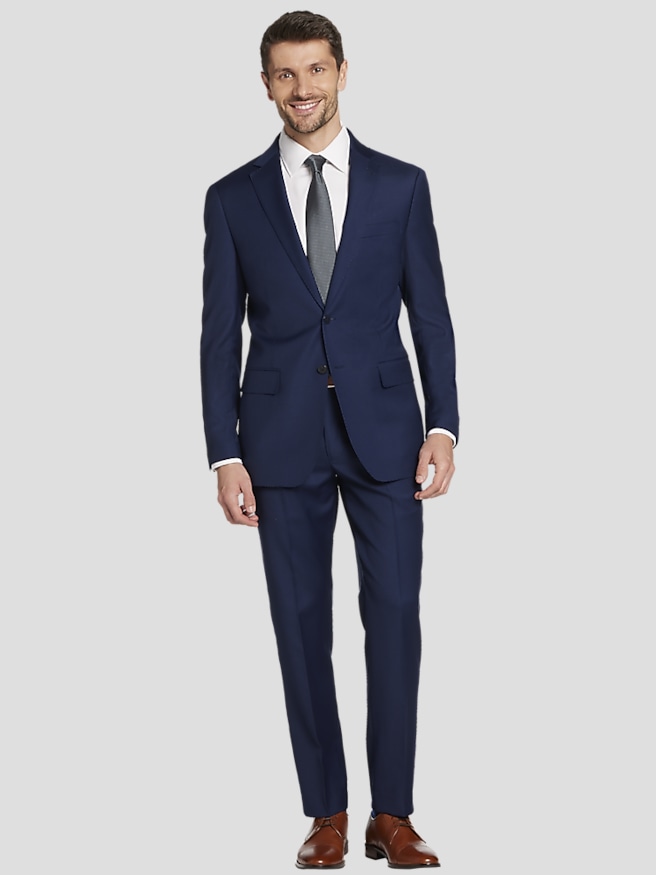
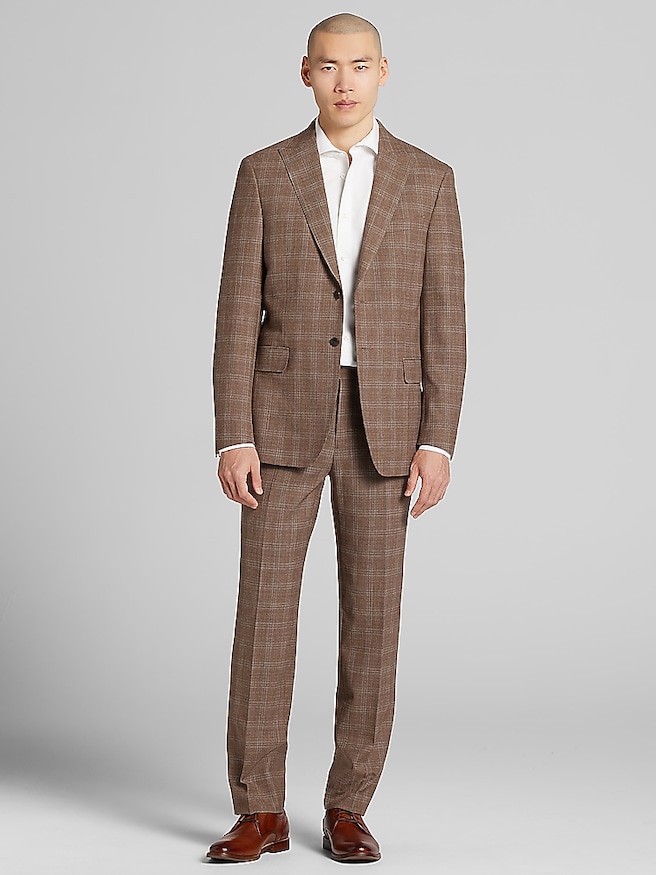
A brown wool suit combines wool’s natural resilience with an earthy color that brings depth to tailored clothing. It can feel polished enough for a business meeting, relaxed enough for a dinner reservation, and distinctive enough for a wedding without relying on a bold pattern. The shade makes a substantial difference: light tan and camel have a softer appearance, medium brown highlights the fabric’s texture, and deep chocolate or espresso can provide a darker alternative to familiar navy and charcoal. Brown also works well with subtle patterning, including fine checks, understated stripes, and small-scale woven designs that become more noticeable up close. Wool contributes more than texture. Its fibers have natural crimp, which helps fabric retain shape and recover from everyday creasing, although performance varies with the weave, weight, and construction. Smooth worsted wool has a clean surface and a crisp drape that suits professional settings and dressier events. Brushed finishes and more pronounced weaves create a softer, more tactile impression. A wool blend may introduce other qualities, such as stretch or added abrasion resistance, depending on the accompanying fibers and their proportions. The fabric label provides a clearer picture than appearance alone; a smooth finish does not necessarily mean a lightweight cloth, and a textured surface does not automatically indicate greater durability. Compared with a Brown Linen Suit, a wool version generally has more natural recovery from creasing, while linen is known for its characteristic rumpled texture. Neither finish is inherently more refined; each creates a distinct impression. For someone building a tailored wardrobe beyond the basics, brown offers considerable flexibility while still feeling intentional. A matching jacket and trousers in the same fabric establish a cohesive foundation, allowing shirts, shoes, and accessories to change the overall effect without competing with the suit itself. The result can be understated or expressive, depending on the details around it.
Fit determines whether that fabric looks composed through a full day of sitting, standing, and moving. A well-fitting jacket rests neatly across the shoulders, with sleeves that fall cleanly rather than twisting or forming pronounced ridges. The collar should sit close to the shirt collar, and the buttoned front should not pull into a sharp X across the middle. A trim silhouette can look streamlined without feeling restrictive; a roomier cut can look equally sharp when the shoulders, jacket length, and trouser proportions are balanced. Jacket length affects how the upper and lower halves work together, particularly on taller or shorter frames. Trousers should sit securely at the intended waist position, with enough room through the seat and thighs for comfortable movement. Flat-front designs offer a clean line, while pleats can provide additional room and a fuller drape. A slight break over the shoe creates a traditional finish; little or no break produces a cleaner ankle line. These details matter more than choosing a fit label alone, since the same description can sit differently on different builds. Alterations can refine sleeve length, trouser hems, and some waist shaping, but substantial shoulder or overall length problems are harder to resolve. Once the proportions are right, brown is straightforward to coordinate. A white shirt and dark brown leather shoes create a clear, polished combination for a presentation or ceremony. Pale blue adds gentle contrast, while cream softens the transition between shirt and jacket. Navy ties provide definition against brown fabric, and muted burgundy or forest green can add color without overwhelming it. With a patterned suit, a solid shirt gives the eye somewhere to rest. For a less formal dinner or office setting, a fine-gauge knit can replace the shirt and tie when the dress code allows. Brown wool tailoring is versatile, but it does not replace a tuxedo when an invitation specifies black tie. Its strongest role is in settings that call for thoughtful tailoring without the requirements of formal evening dress.
Construction and care help a brown wool suit maintain its appearance beyond the first few wears. Lining influences how easily the jacket moves over a shirt, while internal structure affects the shape of the chest and lapels. A softly constructed jacket may follow the body more closely; a more structured one creates a defined outline. Neither approach guarantees better quality on its own. Consistent stitching, smooth seams, a lining that does not pull, and trousers that hang evenly are useful signs of considered construction. Durability also depends on how the suit is worn. Frequent friction at the seat, inner thighs, or elbows can wear fabric over time, especially when the fit is too tight. Allowing the suit to rest between wears gives minor creases time to relax and helps avoid concentrating wear through constant use. A broad, shaped hanger supports the jacket’s shoulders, and trousers benefit from hanging neatly along their crease or from an appropriate trouser hanger. Empty pockets before storage so keys, a phone, or a wallet do not distort the fabric. Gentle brushing with a clothing brush can remove surface dust, while spills are best blotted rather than rubbed. Cleaning and pressing should follow the sewn-in care label; excessive heat or poorly controlled pressing can flatten texture or leave shine on wool. Professional attention is especially helpful for persistent stains or a crease that needs restoring. For travel, a garment bag and careful folding can limit unnecessary crushing, and promptly hanging the suit after unpacking helps preserve its shape. A brown wool suit can also be a thoughtful gift for a graduate entering a professional role, a partner preparing for an important event, or someone refreshing a tailored wardrobe, provided measurements and fit preferences are known. With comfortable proportions, suitable fabric, and consistent care, it can become a dependable choice for interviews, celebrations, client dinners, and the occasions that deserve more than everyday casual clothing.