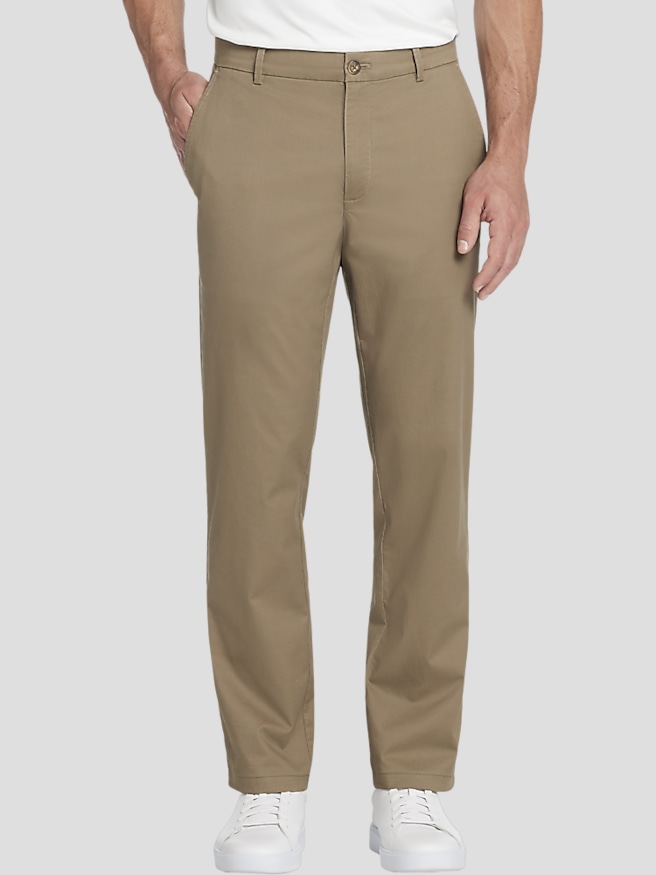
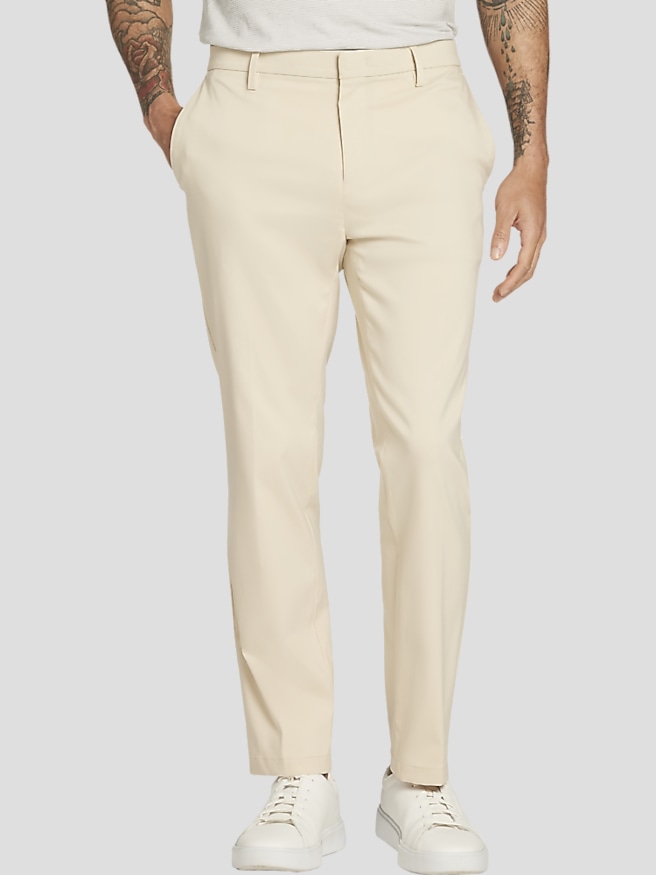
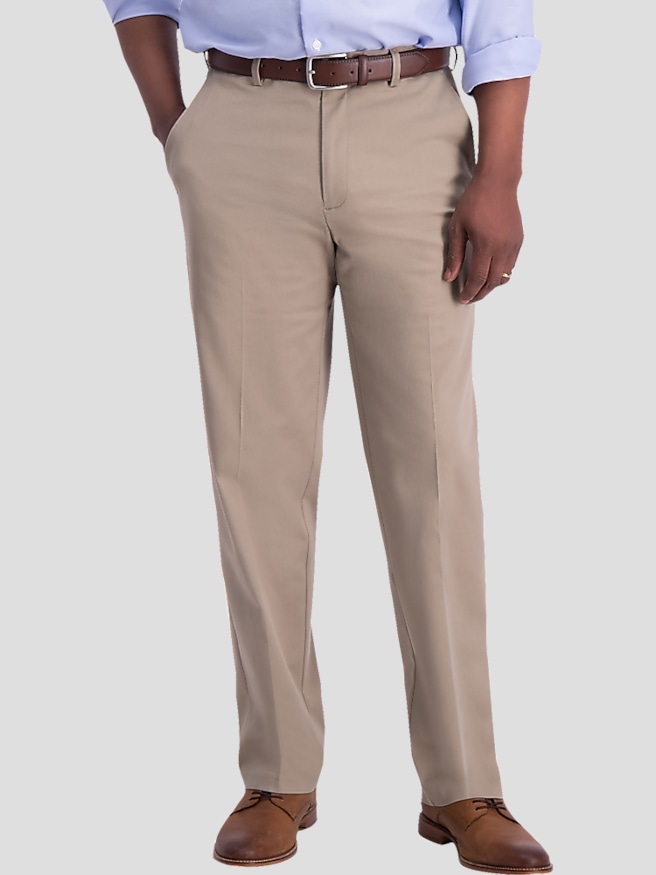
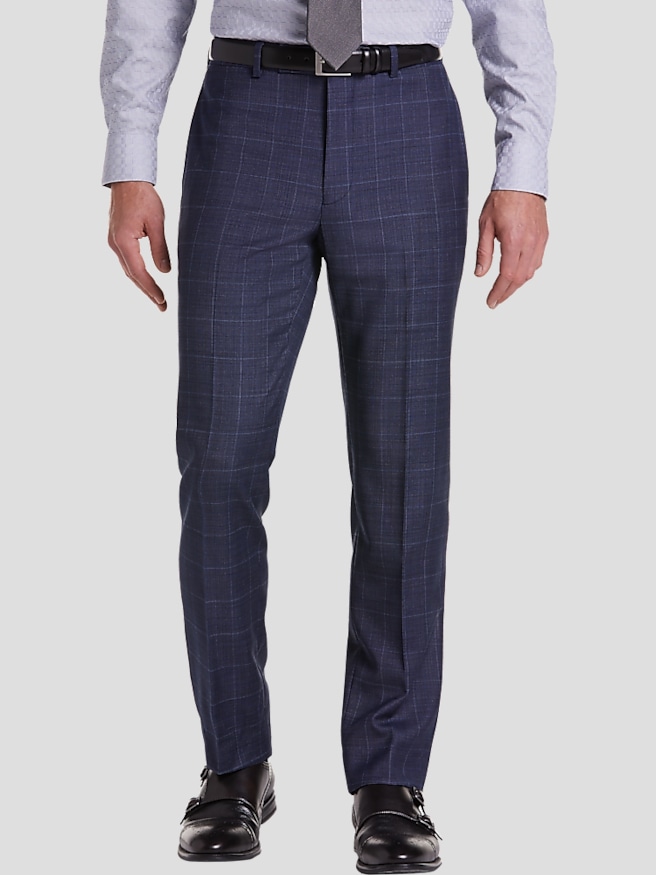
Brown slim trousers bring a tailored shape and an earthy neutral color to a men's wardrobe, with enough versatility for office outfits, dinner plans, and occasions that call for more polish than jeans. A slim fit generally sits close through the seat and thighs, then narrows toward the ankle without the body-hugging feel associated with skinny pants. The exact shape depends on the cut: some trousers have a relatively straight line below the knee, while others have a more pronounced taper. Brown also covers a broad range of shades. Light tan and medium brown create a softer contrast with navy, cream, and pale blue, while chocolate and espresso shades provide a deeper foundation for dress shirts and tailored jackets. The right combination of shade, fabric, and construction determines whether the overall effect feels relaxed or more formal. A flat front keeps the waist area visually clean, and a pressed crease gives the leg a sharper line. Fit matters more than the label alone. The waistband should stay comfortably in place without needing a tightly cinched belt, and the pockets should lie flat rather than pull open. Across the front, visible horizontal tension or a fly that does not sit smoothly can signal that the fit needs more room. Sitting down, climbing stairs, and reaching into a pocket should feel natural; a narrow silhouette should not limit ordinary movement. Rise is another important consideration because it affects where the waistband sits and how neatly a tucked shirt stays in place. At the hem, a slight break offers a familiar dress-pant finish, while little or no break emphasizes a tapered leg and gives footwear a cleaner outline. A hem that catches on the calf or bunches heavily over a shoe can interrupt that line. For someone who likes the definition of slim trousers but needs extra room through the thighs, a cut with a fuller upper leg and a tapered lower leg may be more comfortable than simply increasing the waist size.
Fabric plays a large part in how brown slim trousers look, move, and hold their shape. Cotton twill has a recognizable diagonal weave and a comparatively relaxed character, making it a natural choice for chinos and less formal trousers. It pairs easily with an Oxford shirt or a fine-gauge knit, and its surface can develop a softer feel with repeated wear and proper care. Wool offers a different effect: it often drapes more fluidly and takes a crisp crease well, which suits dressier outfits and tailored separates. The weight and weave matter as much as the fiber name, so two pairs described as wool trousers can feel quite different in the hand and on the body. Blended fabrics may combine polyester, rayon, wool, cotton, or stretch fibers to balance structure, softness, and ease of movement. A small amount of elastane can add give when sitting at a desk or stepping into a car, but stretch does not replace a well-proportioned fit. Fabric recovery matters, too; trousers should return toward their original shape rather than remain stretched at the knees after wear. Construction details deserve attention alongside fiber content. Even seams, securely attached buttons, neatly finished hems, and smooth pocket openings all contribute to a garment that feels considered in everyday use. Pocket placement also affects the silhouette, particularly when a phone or wallet adds bulk beneath a close-fitting fabric. Keeping those pockets lightly filled helps preserve the intended line. Care should follow the garment's label rather than a general rule for all brown pants. Some cotton and synthetic blends can be machine washed, while certain tailored fabrics require professional cleaning. When washing is permitted, turning trousers inside out and following the recommended temperature and drying method can help protect the finish. Excessive heat may affect stretch fibers or cause shrinkage. For pressing, use the setting appropriate to the fabric and a pressing cloth when needed to reduce shine. Hanging trousers neatly between wears helps limit unnecessary wrinkles and keeps the crease from becoming distorted.
The appeal of brown slim trousers is how easily they connect familiar pieces without making every outfit look the same. For a business-casual office, medium brown trousers with a light blue button-down and dark brown loafers create a balanced combination that feels professional without requiring a matching suit jacket. A navy blazer adds definition for a presentation or client lunch, while an unstructured jacket makes the same trousers feel less formal. Deep brown can also work with a white dress shirt and polished lace-up shoes for a dinner reservation or a celebration where tailored separates suit the dress code. For less formal plans, a knit polo or a simple crewneck sweater keeps the narrow leg from feeling overly dressy. Texture helps distinguish an outfit built around similar shades: a smooth trouser fabric against a textured jacket or knit creates depth without relying on a strong pattern. Shoes influence the final proportions as well. A slim loafer or streamlined derby tends to continue the line of the leg, while a very bulky shoe can make a narrow hem look out of balance. Leather accessories do not need to match the trousers exactly; coordinating their level of formality usually matters more than finding an identical brown. The same attention to comfort, construction, and an appropriate finish applies to Brown Work Pants, particularly when a typical day includes long stretches seated at a desk followed by meetings away from it. Brown slim trousers can also make a useful gift for someone starting an office role, refreshing a professional wardrobe, or moving beyond a daily rotation of denim. Waist measurement alone does not establish fit, so knowing the recipient's preferred rise, inseam, and room through the thighs makes the choice more personal and practical. For regular wear, the strongest foundation is a pair that coordinates with shirts and shoes already in the wardrobe, feels comfortable through a full day, and has care requirements that fit the wearer's routine.