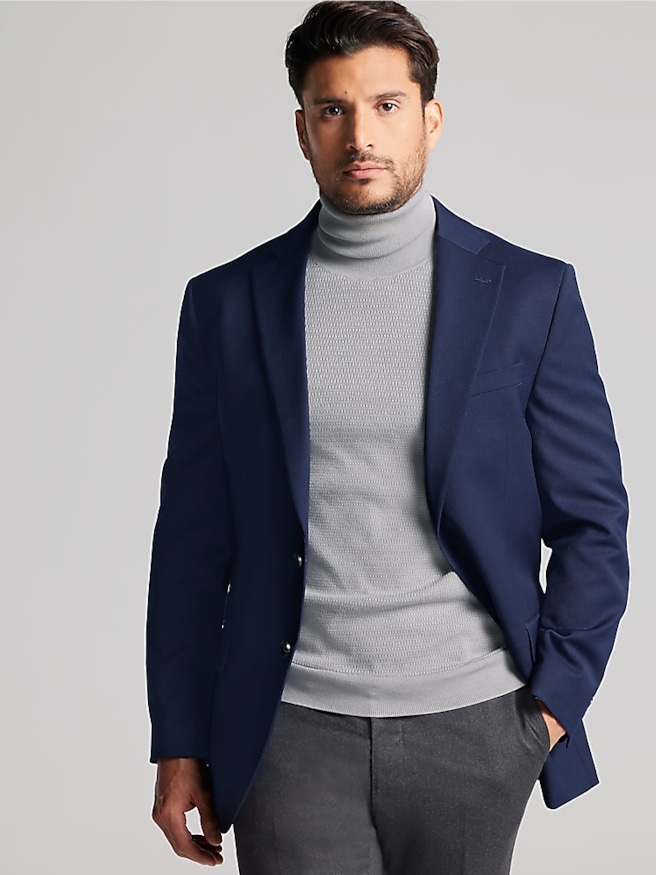
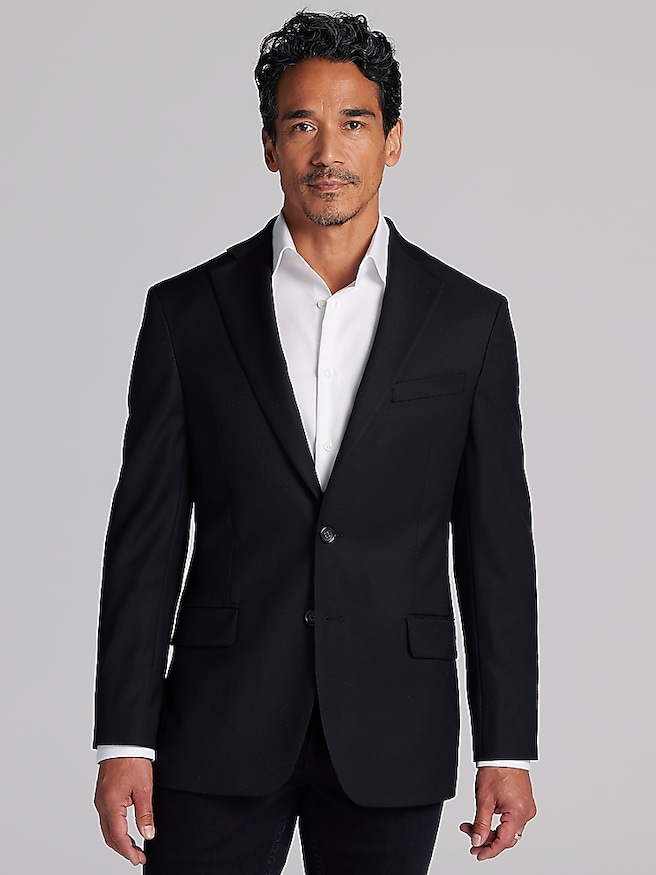
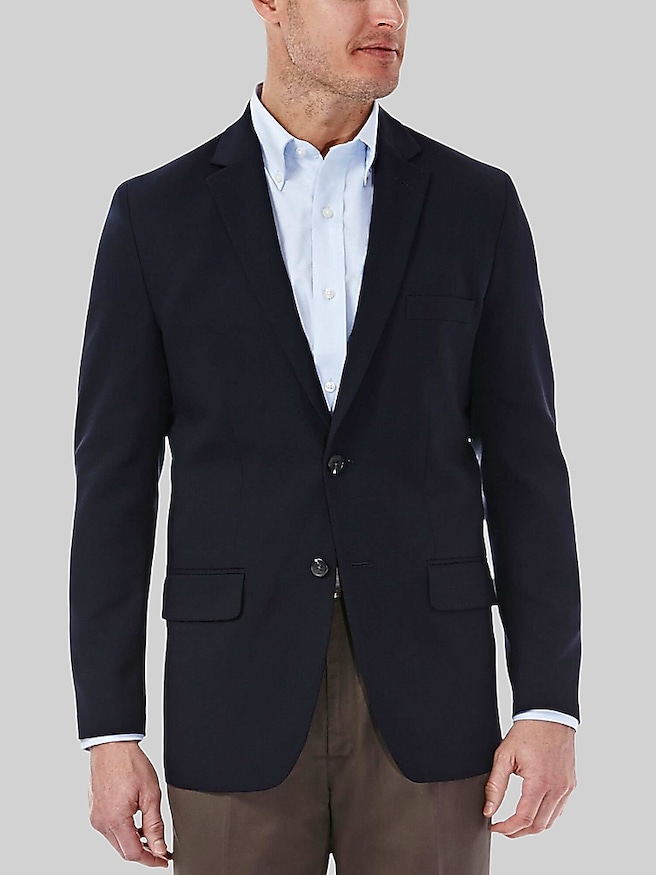
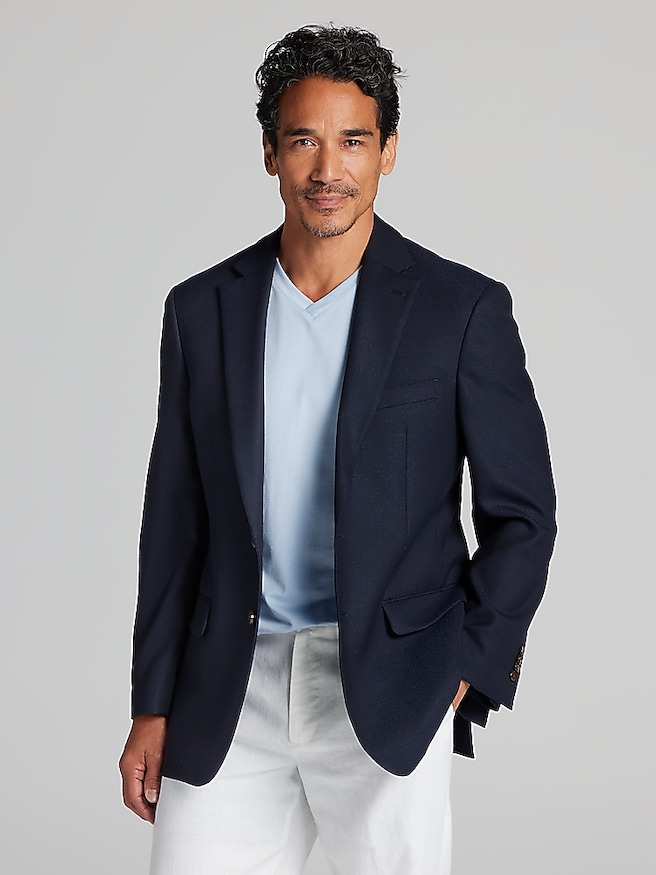
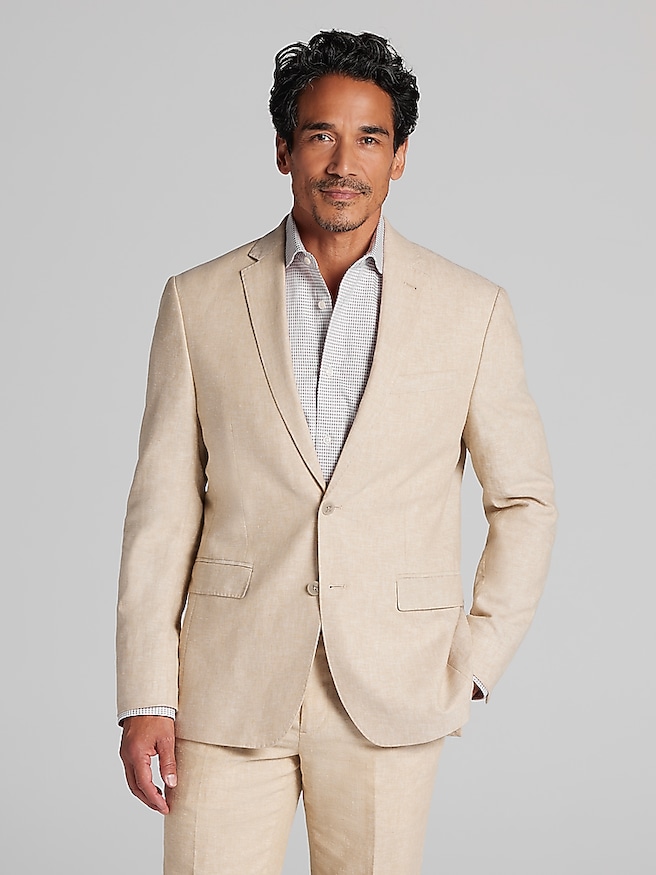
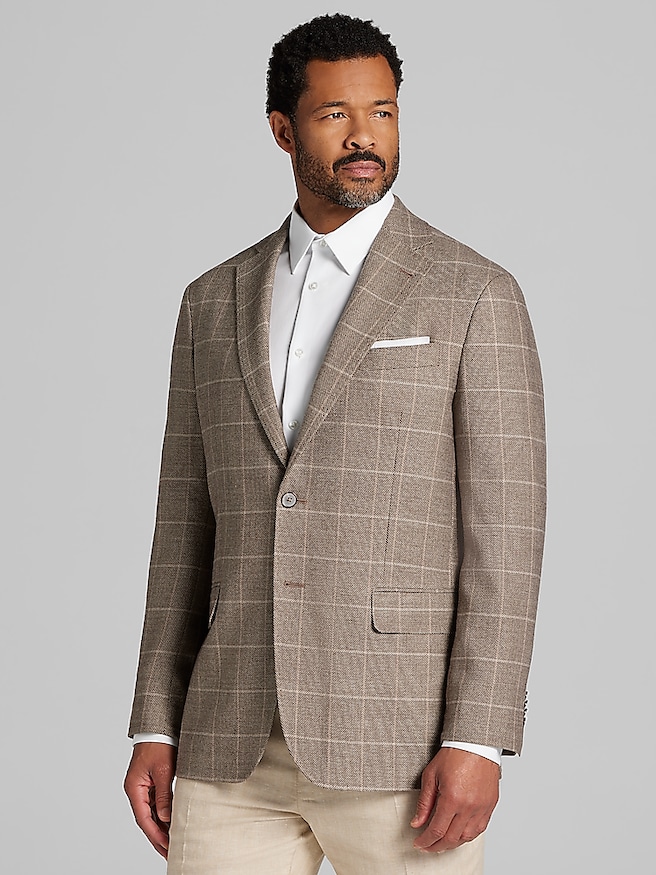
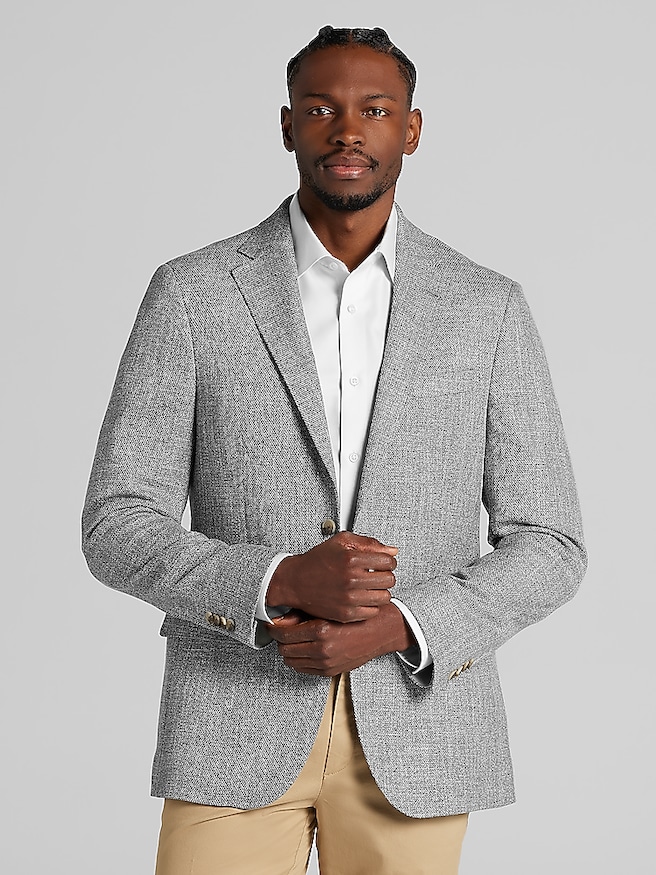
A breathable sport coat combines the shape of a tailored jacket with fabric and construction that allow air and moisture vapor to move through more easily. It brings a finished look to dress trousers, chinos, or dark denim without requiring a matching pair of pants. Breathability depends on more than fabric weight: the openness of the weave, the amount of lining, and the space between the jacket and the body all contribute to how it feels through a full day of wear. A lightweight fabric with a tight weave may allow less airflow than a slightly heavier cloth with a more open structure. Linen is a familiar choice for its airy feel, moisture absorption, and distinctive texture. Its natural creasing gives a sport coat a relaxed character, especially when paired with an Oxford shirt and cotton trousers. Linen blends can soften that rumpled appearance, though their feel and wrinkle resistance depend on the other fibers and the way the cloth is made. Cotton offers a familiar hand and an approachable look, while seersucker uses a puckered surface that holds portions of the fabric away from the body. Open-weave wool, including certain hopsack fabrics, offers another route to breathable tailoring, with a textured surface and a drape that can look polished in professional settings. Wool also helps manage moisture vapor, although a densely woven or heavily lined wool jacket will feel different from an airy, lightly constructed version. Performance blends and knit sport coats may add stretch, wrinkle resistance, or moisture-wicking properties, but those features are not interchangeable with breathability. Stretch supports movement; moisture-wicking treatments help move perspiration along the fabric; an open structure supports airflow. For a breathable sport coat intended for frequent wear, the most useful combination is one that balances those qualities with a pleasing drape, comfortable seams, and enough structure to keep the collar and lapels looking crisp.
The inside of a breathable sport coat matters as much as the cloth visible on the outside. An unlined body reduces the layers between the wearer and the outer fabric, while partial lining can provide a smoother feel across the shoulders or upper back without covering the entire interior. Even a jacket described as unlined may have lined sleeves to help it slide over a shirt. Full lining is not automatically uncomfortable, but its fiber content and construction affect how readily moisture can pass through. Minimal shoulder padding and lighter internal structure often create an easygoing silhouette, whereas firmer tailoring produces a more defined shoulder and chest. Neither approach replaces a good fit. Shoulder seams should sit near the natural shoulder edge, and the collar should rest close to the shirt collar rather than stand away from it. With the jacket buttoned as intended, the front should lie relatively smooth, without pronounced pulling across the button or lapels bowing away from the chest. A slim fit can still be comfortable when it follows the body without gripping it; a roomier cut should provide ease without leaving excess fabric bunching beneath the arms. Sitting at a conference table, reaching for a carry-on, or bringing a glass to the mouth should not make the upper sleeves feel restrictive. Side or center vents help the hem move as the wearer sits and walks, though they do not substitute for breathable fabric. Sleeve length and jacket length also influence the overall impression, keeping a softly constructed coat from looking oversized. A small amount of visible shirt cuff creates a clean finish with a long-sleeve dress shirt. Beneath the jacket, a breathable shirt or fine-gauge knit helps preserve the benefit of an airy outer layer; a bulky or tightly fitted base can make the whole outfit feel less comfortable. Lightweight pocket contents matter, too: an overfilled phone pocket or thick wallet can distort the front and interrupt the coat’s natural line.
A breathable sport coat fits occasions that call for polish without the uniformity of a full suit. For a client lunch, a textured navy or gray jacket over a pale shirt creates a composed look with tailored trousers and leather shoes. For a dinner reservation, an unstructured coat with a knit polo and clean chinos feels considered without becoming stiff. Subtle patterns add depth to simple separates, while solid fabrics make it easier to repeat a jacket with several shirts and trouser colors. More pronounced linen texture or a visible open weave generally reads as relaxed; finer surfaces and a defined silhouette can look dressier. Wedding guests should still follow the stated dress code, since a sport coat is not a substitute for formal attire when that is requested. Frequent travelers, office commuters, and anyone moving between meetings and social plans may appreciate the combination of mobility and a presentable shape. Coordinating layers from Breathable Clothing For Men can help carry that comfortable approach through the rest of an outfit. Long-term appearance depends on matching the fabric to the routine as well as caring for it properly. Very open weaves may catch on rough surfaces, and persistent friction from a heavily loaded shoulder bag can wear fabric at the shoulder. Linen’s creases are part of its character, while recovery from wrinkling in wool or blended fabrics varies with construction. The care label should determine cleaning methods: a performance fabric is not necessarily machine washable, and the jacket’s lining, interfacing, and trim may require different handling from the outer cloth alone. Between wears, a broad, shaped hanger supports the shoulders, and space in the closet helps prevent crushing. Emptying pockets and letting the coat air out before storage can reduce unnecessary cleaning. Pressing and steaming should follow fabric-specific guidance to protect texture and shape. As a gift for a partner, parent, or graduate, a breathable sport coat is most useful when the recipient’s measurements, preferred fit, and everyday dress habits are known. A versatile color and comfortable cut make it easier to incorporate into an established wardrobe, whether the next occasion is a presentation, a family celebration, or an evening out.