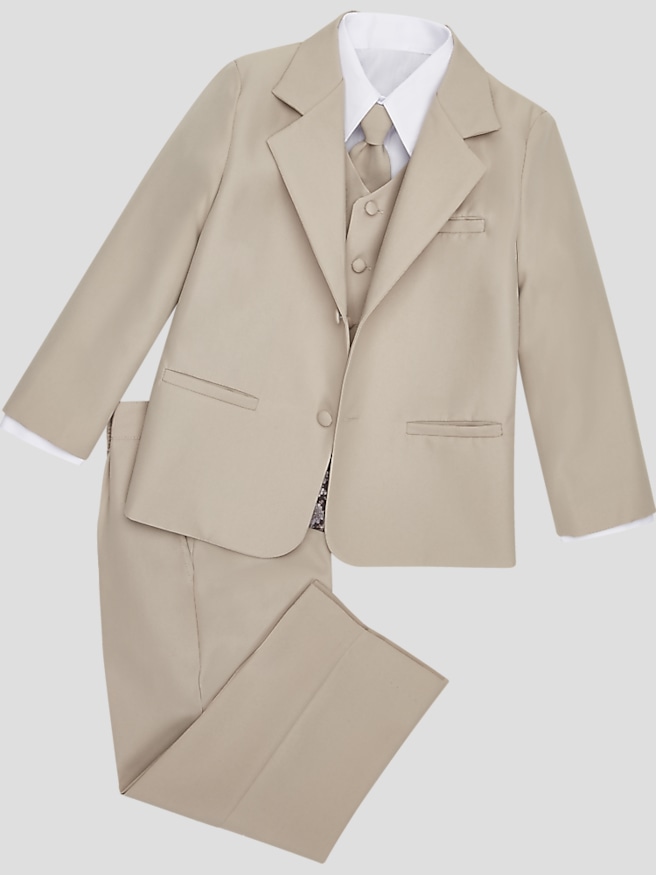
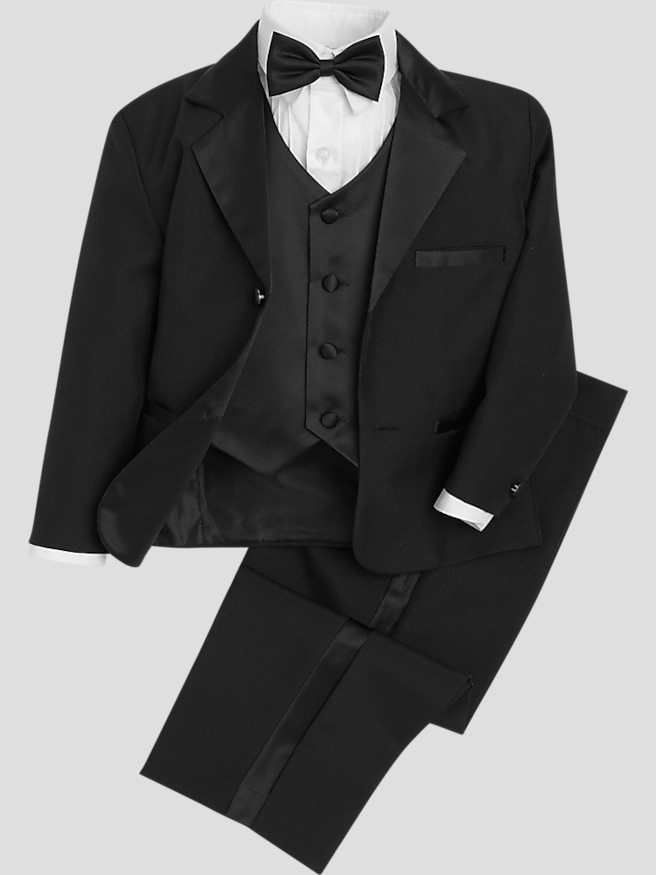
A boys suit set brings coordinated dress clothing together for occasions that call for a polished look, from weddings and religious ceremonies to school performances and family portraits. A two-piece set typically consists of a matching jacket and pants, while larger sets may add a vest, dress shirt, tie, or another accessory. Piece counts alone do not establish what is included, so the listed components matter when comparing sets. Matching fabric and color give the jacket and pants a consistent appearance, making a set a straightforward foundation for an outfit without having to coordinate separates. A vest adds another layer of formality and helps preserve a dressed-up look when the jacket comes off at a reception. For a ring bearer walking down the aisle, a young musician stepping onto a stage, or a child joining a milestone celebration, the most useful suit balances the occasion’s expectations with the freedom to move naturally. Navy, charcoal, and medium gray are versatile starting points because they pair easily with white or light blue shirts and a range of tie colors. Black has a more formal appearance, though a black suit is not automatically a substitute for a tuxedo when an invitation specifies black tie. Subtle checks and textured weaves can bring depth to photographs without making the outfit feel busy. The broader Childrens Suits category provides context for considering coordinated sets alongside other suit styles. For a family portrait, repeating one color from the rest of the group often looks more natural than matching every accessory exactly. For a wedding party, the requested shade, level of formality, and accessory choices take priority. A coordinated set can also make a thoughtful gift for a child approaching a meaningful ceremony or achievement, especially when the recipient’s measurements and the event’s clothing expectations are known in advance.
Fabric and construction influence how a boys suit set feels during the parts of an event that photographs do not capture: sitting through a ceremony, climbing stairs to a stage, or leaning across a table at dinner. Wool is valued for its drape and resilience, while wool blends combine those qualities with the characteristics of other fibers. Polyester blends often resist wrinkling and hold their shape well, although softness, breathability, and care requirements vary with the full fabric composition and weave. Cotton can give tailoring a softer, less formal character, and a small amount of elastane may provide useful stretch. Stretch content does not replace correct sizing; a jacket still needs enough room across the shoulders and upper back for comfortable movement. A smooth lining can help a jacket slide over a dress shirt, while bulky seams or a stiff collar may become distracting over a long day. Fit begins with actual measurements rather than age alone, since children of the same age can have very different proportions. The jacket’s shoulders should sit close to the natural shoulder line, and the front should button without pronounced pulling or an X-shaped crease around the closure. Sleeves should leave the hands free, with a little shirt cuff showing when the outfit’s proportions allow. Pants need enough room through the seat and thighs for sitting comfortably, with a waistband that stays in place without pinching. An adjustable waistband can fine-tune the fit as a child grows, but it cannot correct pants that are too long or overly loose throughout. Slim, tailored, and classic fit labels describe general silhouettes rather than universal measurements. Trying the complete outfit with its intended shirt and shoes makes sleeve length, trouser length, and overall balance easier to assess. A short walk, a seated pause, and a gentle reach forward can reveal restrictions that are not obvious while standing still.
The lasting usefulness of a boys suit set depends on thoughtful finishing details and care as much as its first appearance. Secure buttons, neat stitching, smooth pocket openings, and well-finished interior seams are useful signs to examine, particularly when the suit will be worn for several occasions or passed along to a younger sibling. Extra fabric at a trouser hem may allow a future length adjustment, but alteration possibilities depend on construction and should not be assumed. Buying substantially oversized clothing for growth often leaves a jacket with drooping shoulders and sleeves that interfere with the hands; modest room to move usually looks and feels better than excessive fabric. Accessories should follow the same sense of proportion. A tie scaled to a child’s frame sits more comfortably within the jacket opening, and a shirt collar should close without pressing tightly against the neck. Dress shoes need to accommodate walking and standing, not simply complete the photograph, while socks long enough to cover the ankle maintain a neat line when seated. After wear, emptying pockets and placing the jacket on a supportive hanger helps preserve its shape. Pants can hang neatly along their crease or fold over a suitable hanger without bunching. Every component needs its own care check: a washable shirt does not mean the matching jacket, vest, or pants can go into the same load. Follow each care label for washing, drying, ironing, or professional cleaning, and avoid applying high heat without confirming the fabric’s requirements. Prompt attention to spills, without aggressive rubbing, can help prevent a small mishap from becoming a lasting mark. When professional cleaning is needed, keeping matching pieces on a consistent cleaning schedule can help limit differences in appearance. Stored clean and dry with room to hang freely, a well-chosen set can be ready for another ceremony, performance, or celebration, with a fresh shirt or different tie giving the familiar outfit a distinct look.