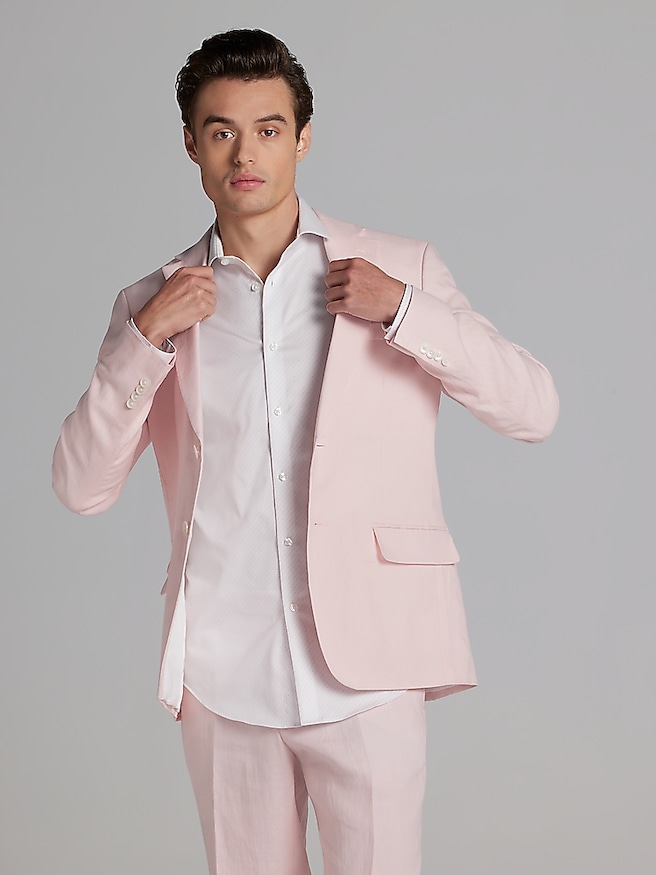
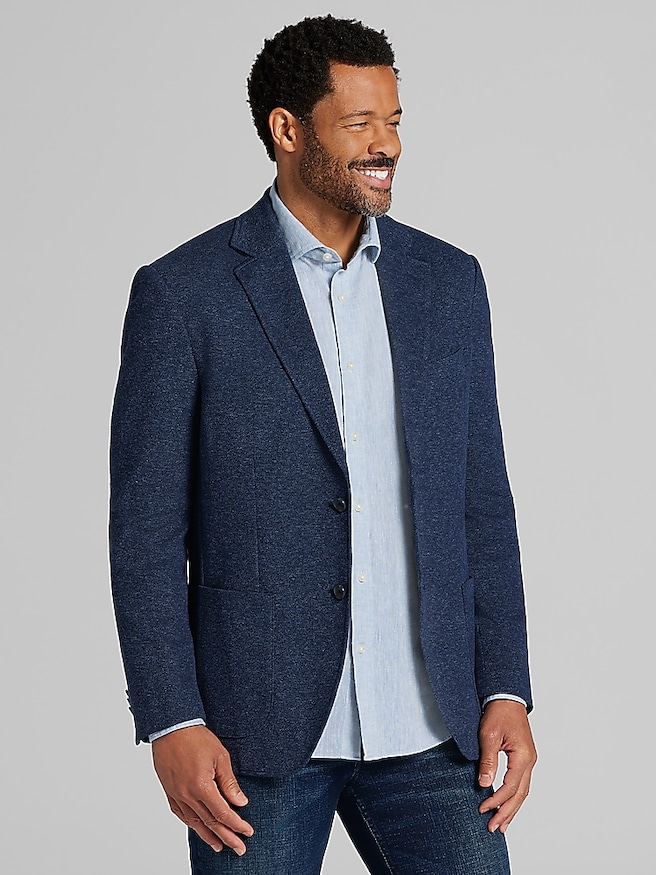
Blush formal wear brings a soft, muted pink into occasion dressing, offering a distinctive alternative to an entirely neutral outfit without relying on a bright color. In men’s formalwear, blush can appear as the main color of a tailored suit or as a quieter detail in a dress shirt, vest, tie, bow tie, or pocket square. The effect depends as much on the surrounding colors and fabric finish as on the shade itself. A matte blush tie against a charcoal suit feels restrained, while a blush jacket with dark trousers creates a more visible contrast. Navy gives pale pink a crisp backdrop; light gray creates a softer combination; black adds definition. Blush shades also vary, ranging from pink with a peach undertone to cooler, dusty rose tones, so pieces with the same color name may not look identical together. For weddings and coordinated group portraits, comparing fabric swatches under the same lighting can help establish a consistent palette without requiring every accessory to match exactly. Blush formal wear suits a range of celebrations, including proms, weddings, milestone anniversaries, and evening receptions, provided the outfit follows the event’s dress code. A pale pink suit can feel appropriate for a celebration that calls for a suit, but color alone does not make an outfit suitable for black tie. That distinction comes from the garment’s construction and details, such as a tuxedo’s contrasting lapels and the accompanying shirt, trousers, and accessories. At a black-tie event, blush is generally easier to incorporate as a restrained accent while preserving the expected formal foundation. For a groom, wedding attendant, graduate, or guest, the appeal is often the same: a recognizable tailored silhouette with a softer color story. A blush accent can connect an outfit to a celebration’s palette while still leaving room for individual preferences in fit, texture, and styling.
Fabric has a noticeable influence on how blush looks and how formal clothing feels over several hours of wear. Wool and wool-blend tailoring can provide drape and shape, helping a pale-colored jacket look structured rather than flat. A fine, smooth weave gives the color a clean appearance, while a subtly textured weave adds depth without needing a pattern. Cotton dress shirts offer a familiar feel against the skin, and blends containing stretch can provide additional ease through the shoulders and arms, depending on their construction. A tightly woven pale shirt may also provide better coverage than a very lightweight fabric, an important consideration when the jacket comes off for dinner or dancing. Satin accessories reflect light and can make blush appear more luminous; matte finishes keep the same shade quieter. Silk ties often bring subtle variation in sheen, while textured woven accessories give an outfit a less glossy finish. Fiber content, weave, lining, and construction all contribute to performance, so a fabric’s name alone does not establish its comfort or durability. Fit is equally important because light colors can make pulling, bunching, and uneven lines easier to notice. A jacket should sit cleanly across the shoulders, with lapels lying flat and enough room through the chest to button without pronounced tension. Sleeves should allow an intentional glimpse of shirt cuff, and trousers should hang smoothly rather than gather heavily over the shoes. A slim silhouette can look sharp without restricting movement, while a roomier cut can still look precise when the shoulders, sleeves, and trouser length are proportioned well. Sitting through a ceremony, reaching across a dinner table, and moving on a dance floor all place different demands on formal clothing. Comfortable tailoring accommodates those ordinary movements without requiring constant adjustments. For an outfit intended for repeated use, balanced proportions and dependable construction usually matter more than an especially narrow cut or an exaggerated detail.
The strongest blush combinations give the color a clear role instead of repeating it across every part of the outfit. With a blush suit, a white shirt and a restrained dark tie can establish a clean focal point; with a navy or charcoal suit, a blush shirt or accessory can supply the defining color. A prom outfit built around Blush Pink Prom Shirts can use a solid dark jacket and a tie with enough contrast to remain distinct from the shirt. A pocket square does not need to duplicate the tie: white linen, a subtle pattern, or a small blush detail can create a more considered result than several identical accessories. Shoes and belts should support the formality of the outfit, with polished leather and coordinated finishes keeping attention on the tailoring. When dressing alongside a partner or a wedding party, a shared blush accent can create a visual connection without making every outfit identical. Ties, bow ties, and pocket squares can also make thoughtful gifts for someone preparing for a celebration, especially when the recipient’s preferred colors and event dress code are known; fitted garments require more precise measurements. Care helps preserve both the pale color and the garment’s shape. The care label should determine whether a piece is washable, suitable for professional cleaning, or subject to special handling. Blush fabric can show food marks, makeup transfer, and discoloration around collars, so prompt attention matters, but rubbing a spot aggressively may spread it or damage the surface. Structured jackets benefit from supportive hangers, space in the closet, and airing between wears rather than unnecessary cleaning after every outing. Shirts should be pressed according to their fabric requirements, and ties are best stored without tight knots that can leave lasting creases. Before a special event, checking hems, buttons, seams, and accessory condition allows time for small repairs. With thoughtful coordination and appropriate care, blush formal wear can remain useful beyond a single celebration, bringing a recognizable touch of color to different outfits while maintaining the polished finish the occasion deserves.