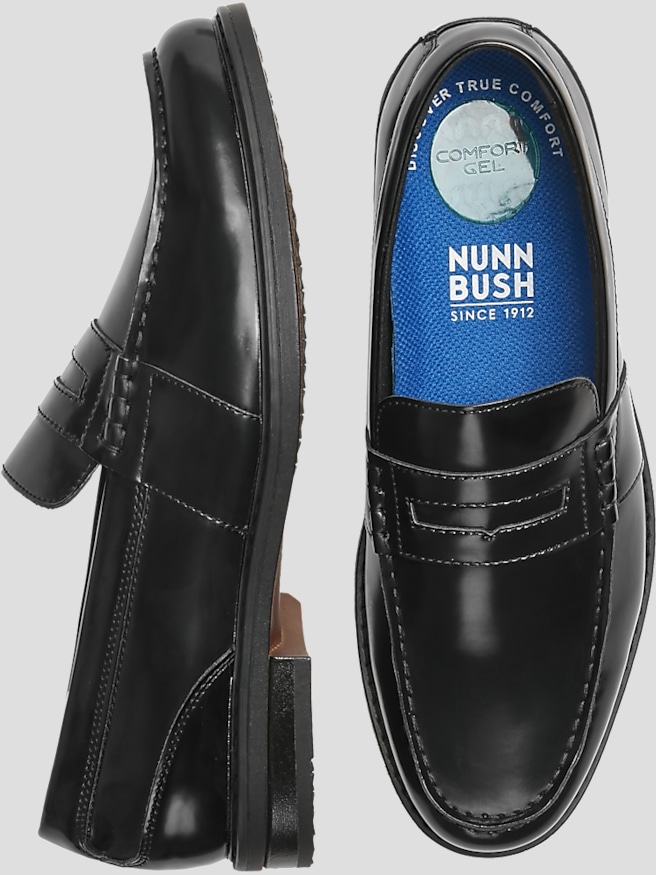
Blue penny loafers are slip-on shoes defined by a low-cut profile, a moccasin-style toe, and a leather strap across the instep with the small opening that gives the penny loafer its name. Blue brings a distinctive alternative to traditional neutral footwear without changing the familiar shape. Deep navy can look understated beneath tailored trousers, while brighter cobalt and burnished blue finishes put more emphasis on the shoes themselves. The difference is especially noticeable in the material: smooth leather reflects light and gives the color a sharper outline, while suede softens it with a textured, matte surface. That combination of recognizable design and expressive color makes blue penny loafers well suited to men who want footwear that moves between polished casual outfits and less formal tailoring. Navy suede works naturally with beige chinos, gray trousers, or dark denim; smooth blue leather can provide a clean finish beneath a light gray suit or a navy blazer with contrasting pants. Keeping the surrounding colors simple allows the shoes to look intentional rather than competing with the rest of the outfit. A white Oxford shirt, a textured knit polo, or a neatly fitted sport coat each brings out a slightly different side of the same silhouette. Trouser length matters, too: a modest break keeps the front of the loafer visible, while an overly long hem can obscure its shape. For an office with a business-casual dress code, understated navy leather offers personality without demanding attention. For dinner, a graduation celebration, or a wedding where the dress code permits loafers, a richer blue finish can add interest to otherwise restrained tailoring. Penny loafers are not interchangeable with every formal shoe, however. Their relaxed, slip-on construction makes them more appropriate for smart-casual and many business settings than for occasions that require traditional black-tie footwear. The appeal lies in that middle ground: more structured than a sneaker, less severe than a lace-up dress shoe, and easy to coordinate with clothing already in a well-rounded wardrobe.
Materials and construction influence how blue penny loafers feel, wear, and hold their shape as much as their appearance does. Smooth leather generally offers a defined silhouette and a surface that can be conditioned and polished with suitable care products. Calfskin is valued for its fine grain and flexibility, although leather quality, thickness, lining, and construction all contribute to the finished shoe. Suede has a softer visual character and a nap that gives navy and medium-blue shades subtle depth. It benefits from material-specific cleaning rather than the creams and waxes used on smooth leather. Synthetic uppers have their own care requirements and do not respond to conditioning in the same way as natural leather. Inside the shoe, a smooth lining can reduce friction, while footbed cushioning and support affect comfort during time spent standing or walking. Outsole material also changes the experience: leather soles have a traditional appearance and may feel firmer underfoot, while rubber soles can add flexibility and traction, depending on the tread and compound. Neither appearance alone nor a thick sole guarantees long-term comfort. A well-balanced loafer should bend where the foot naturally flexes without feeling unstable through the heel and arch. Fit deserves particular attention because there are no laces to adjust the opening or hold the foot in place. The heel should remain reasonably secure during a normal stride, the toes should have room to rest without crowding, and the strap should not create a painful pressure point across the instep. Slight initial movement at the heel can occur with a firm new sole, but repeated slipping or lifting out of the shoe suggests a fit problem. Leather may soften with wear, yet a shoe that pinches sharply should not be expected to become comfortable through stretching alone. Width, instep height, and the shape of the toe box can make two loafers in the same labeled size feel noticeably different. Trying them with the socks intended for regular use provides a more realistic sense of fit than relying on size alone.
Thoughtful care helps preserve both the blue color and the clean outline that make these loafers distinctive. Dust and surface grit should be removed before applying any treatment, since rubbing debris into the upper can dull a finish or disturb suede fibers. Smooth leather benefits from gentle cleaning and occasional conditioning with products appropriate to its finish; blue or neutral polish should be tested in an inconspicuous area before broader use. Too much polish can leave buildup around the strap and stitching, so a light application usually produces a cleaner result. Suede calls for a dedicated brush and, when needed, a suitable suede cleaner, with gentle brushing to lift the nap rather than flatten it. Any protective treatment should be compatible with the material and tested first, since some formulas can darken lighter blues. Letting shoes dry naturally after moisture exposure, away from direct heat, helps protect the upper and adhesives. Properly sized shoe trees can support the shape between wears, and allowing the interior to air out helps limit lingering dampness. Repeated wear without rest can accelerate creasing and interior wear, particularly when the shoes are used for long days. Even a durable loafer benefits from attention to the heel and outsole before wear becomes severe enough to affect the upper. For everyday styling, fine-gauge socks in navy, charcoal, or a muted coordinating shade maintain a continuous line beneath trousers. Low-profile socks can create a bare-ankle appearance while providing a layer between foot and shoe. For a more traditional neutral alongside blue footwear, Black Penny Loafers offer a familiar counterpart for darker outfits. Blue loafers can also make a thoughtful gift for a father, partner, brother, or recent graduate who enjoys polished clothing but prefers a little color over an entirely neutral wardrobe. Knowing the recipient’s usual size, width, preferred materials, and everyday dress code makes the choice more personal and practical. The most useful pair is one that complements familiar outfits and feels comfortable enough to become part of a regular routine.