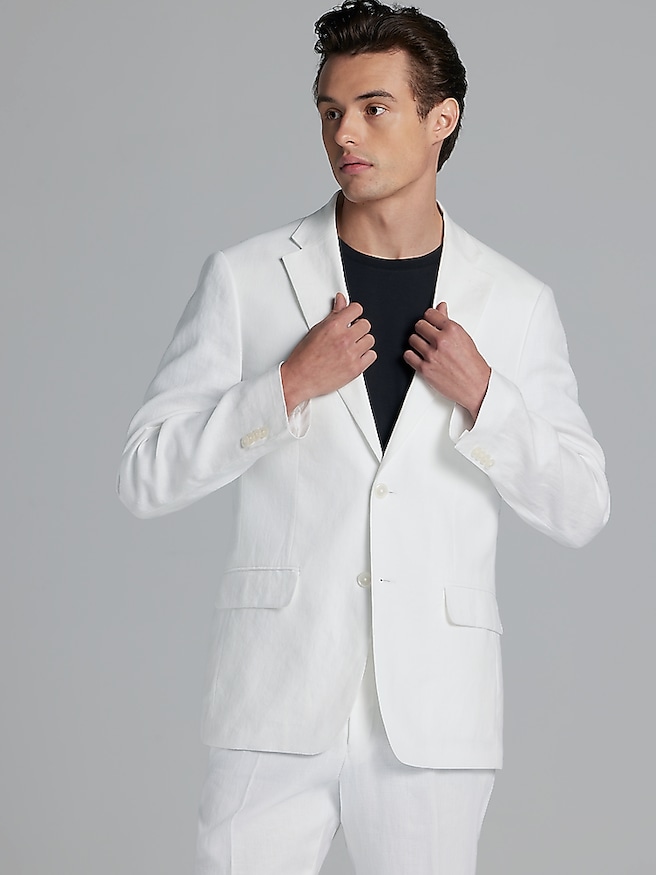
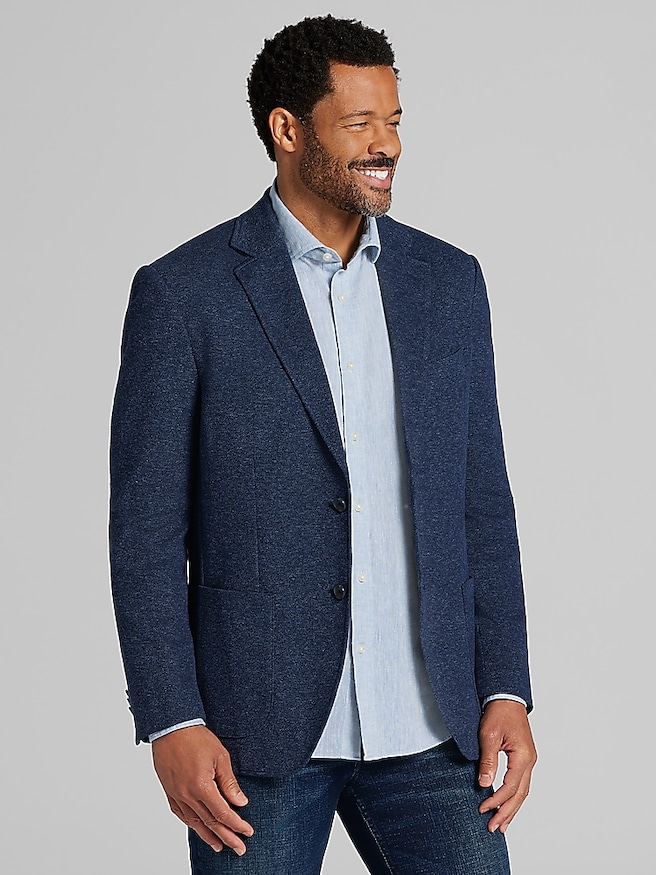
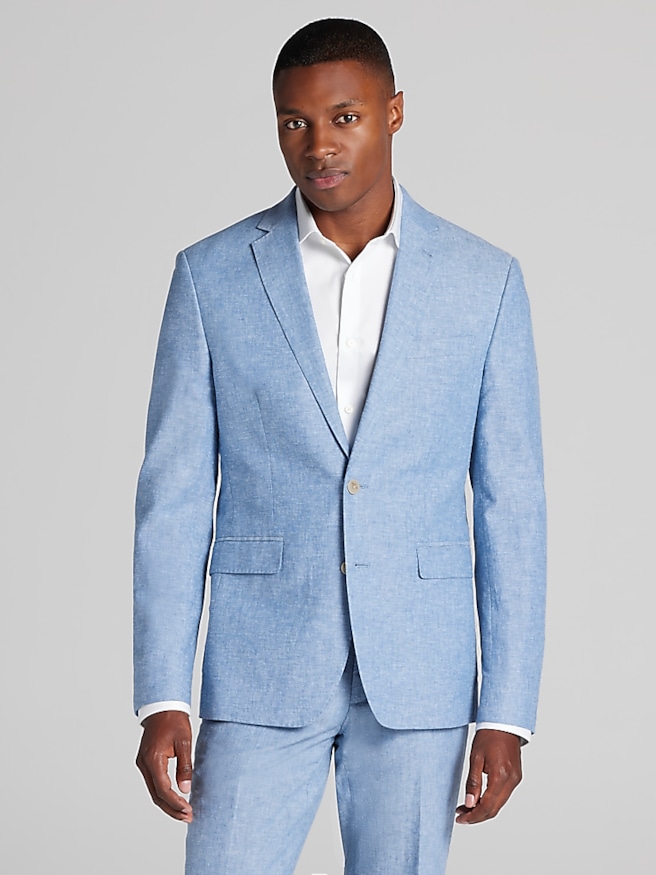
Blue linen blazers for men pair the easy texture of linen with the defined shape of a tailored jacket. The result sits comfortably between a full suit and a casual shirt, making these blazers useful for business-casual offices, daytime wedding receptions, restaurant dinners, and gatherings where a little polish feels appropriate. Blue gives that textured fabric a versatile foundation: pale blue creates a softer contrast with neutral trousers, medium blue brings more visible color, and navy offers a deeper tone that works with a broad range of shirts and accessories. Linen is made from flax fibers and is valued for its breathable feel, distinctive surface, and relaxed drape. Small variations in the yarn can give the fabric subtle visual depth, although the amount of texture depends on the weave and finish. Pure linen typically develops noticeable creases with wear, an expected part of its character rather than a sign that the jacket fits poorly. For a variation in feel and drape, Linen Blend Mens Blazers combine linen with other fibers. Cotton, wool, or manufactured fibers can influence softness, structure, stretch, and wrinkle recovery, depending on the proportions and fabric construction. Composition alone does not tell the whole story, either. An unstructured blazer generally has less internal reinforcement and a more relaxed outline, while a more structured version provides additional definition through the shoulders and chest. Lining also matters: an unlined or partially lined jacket may feel less substantial, while a fully lined design can slide more smoothly over a shirt. These details help explain why two blue linen blazers can look similar on a hanger but feel quite distinct when worn. A softly constructed option can complement an open-collar shirt and chinos; a more defined silhouette may feel better suited to dress trousers and a collared shirt. Neither approach requires the formality of a matching suit, which is part of the appeal of a separate blue jacket.
Fit gives a linen blazer its shape without taking away the fabric’s natural ease. Across the shoulders, a traditional tailored fit follows the body without pronounced overhang or tight pulling. The chest should allow the jacket to close comfortably, with lapels resting smoothly rather than lifting away from the shirt. Strong horizontal pulling around the fastening point can indicate that the body is too snug, while excess fabric through the waist can obscure the intended silhouette. Slim, tailored, and classic fit descriptions provide a useful starting point, but their proportions vary, so measurements and the actual cut matter more than the label alone. Sleeve length deserves similar attention: a small amount of shirt cuff can create a clean finish, provided the sleeves do not restrict movement. Sitting at a dinner table, reaching forward, and bending the elbows reveal more about comfort than standing still in front of a mirror. Linen’s relaxed appearance does not mean the jacket needs to be oversized; enough room for natural movement usually looks more deliberate than excess volume. Styling can remain straightforward. A navy linen blazer with a white Oxford shirt and stone-colored chinos creates a crisp combination for an office gathering or dinner reservation. A lighter blue jacket with gray trousers offers a gentler contrast, while cream trousers can bring out the depth of a medium-blue weave. Jacket and trouser colors do not have to match, and a clear contrast often looks more intentional than two blues that almost form a suit. A fine-knit polo can soften the tailored outline for a social lunch, while a dress shirt and restrained tie add definition for a celebration with a more polished dress code. Smooth leather loafers, lace-up dress shoes, or clean, minimal sneakers each shift the mood, with the setting determining which feels appropriate. Pattern and texture deserve balance as well: when the linen has a pronounced weave, a quieter shirt lets that detail remain visible. For formal invitations, the stated dress code takes priority, since a separate blazer does not replace a required suit or tuxedo.
Long-term wear depends on fabric quality, construction, fit, and care working together. Linen fibers are strong, but a jacket still benefits from careful handling around pocket edges, seams, and areas exposed to repeated friction. Overfilled pockets can distort the front, and a fit that strains across the back or elbows puts unnecessary pressure on the fabric. Consistent stitching, securely attached buttons, and a lining that sits comfortably inside the jacket are useful details to consider alongside color and silhouette. Care begins with the garment label, because the outer fabric, lining, internal structure, and trims may require a particular cleaning method. A linen fiber content does not automatically mean a tailored blazer can go into a washing machine. When professional cleaning is specified, following that direction helps protect the jacket’s shape and finish. Between cleanings, a broad, supportive hanger helps maintain the shoulder line, and space in the closet keeps the fabric from being compressed. Allowing the blazer to air after wear can help it feel fresher before storage. Steaming or pressing should follow the care instructions; excessive heat or pressure can affect finishes and leave unwanted marks. Some creasing will return with normal movement, especially at the elbows and waist, so a completely crease-free appearance is not a realistic expectation for every linen fabric. For travel, minimizing tight folds and hanging the jacket after unpacking can reduce unnecessary compression. These considerations also make a blue linen blazer a thoughtful gift for someone who regularly wears tailored separates, attends celebrations, or enjoys dressing up a simple shirt-and-trouser combination. Accurate chest and sleeve measurements, along with knowledge of the recipient’s preferred fit, are more useful than guessing from another garment’s size label. The most wearable choice often connects with clothing already in that person’s wardrobe: a familiar shade of blue, a comfortable shoulder shape, and a fabric texture that suits their everyday style. Together, those details give a linen blazer a practical place among both polished and more relaxed outfits.