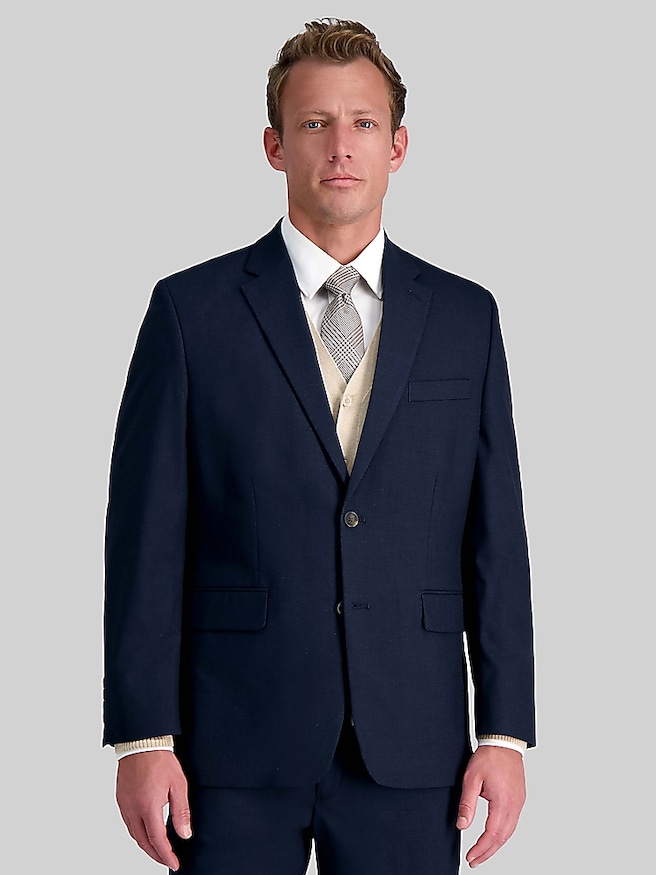
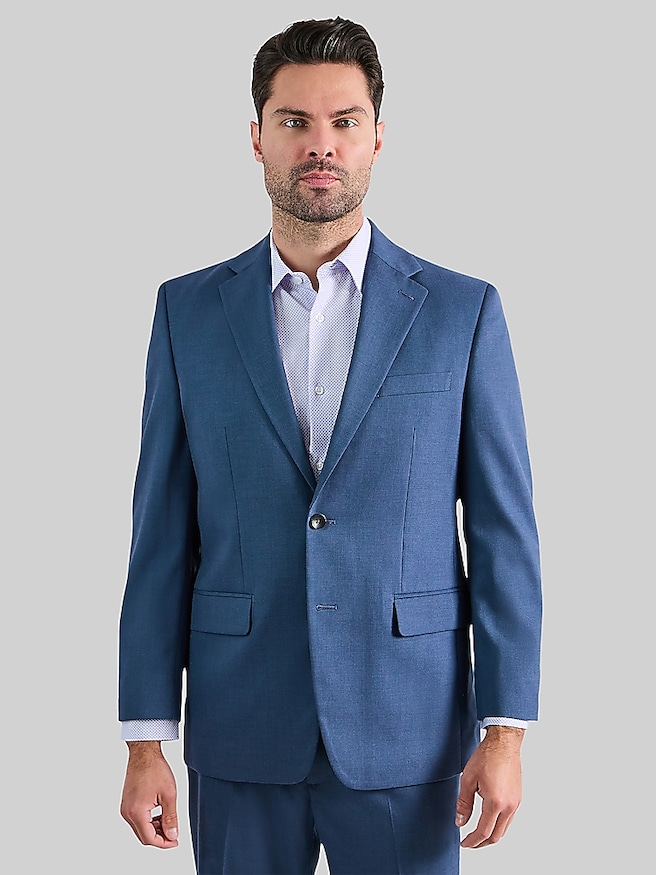
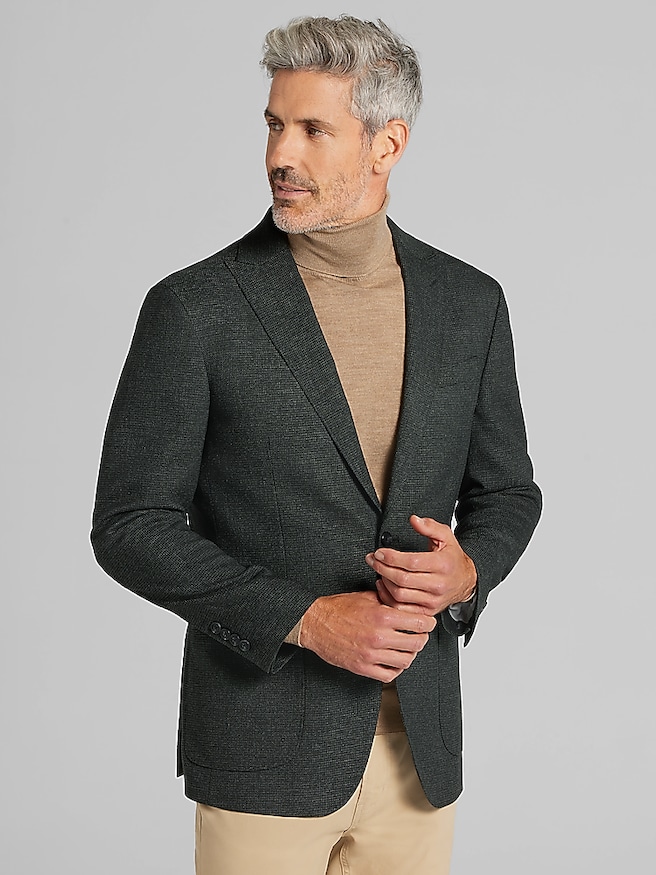
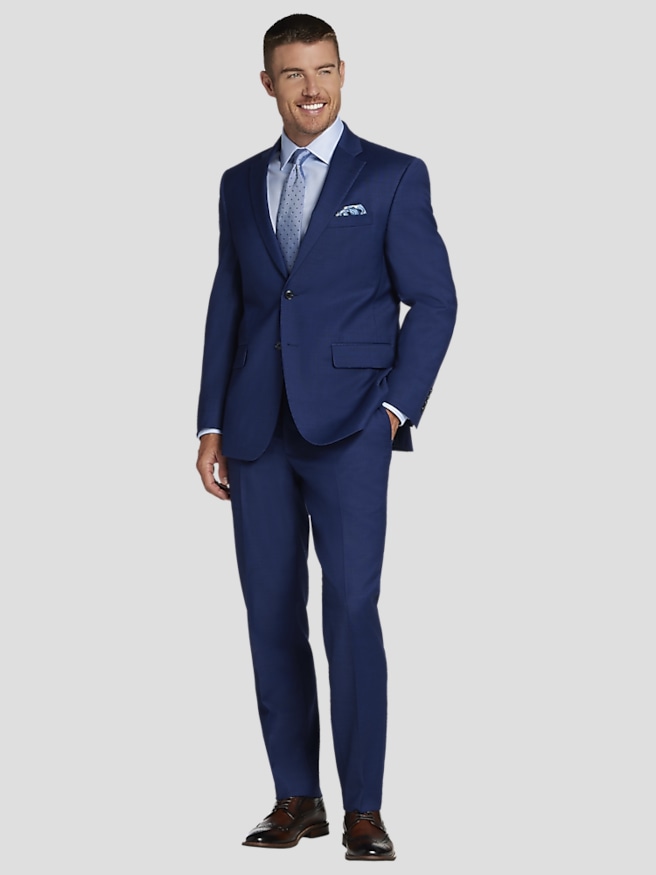
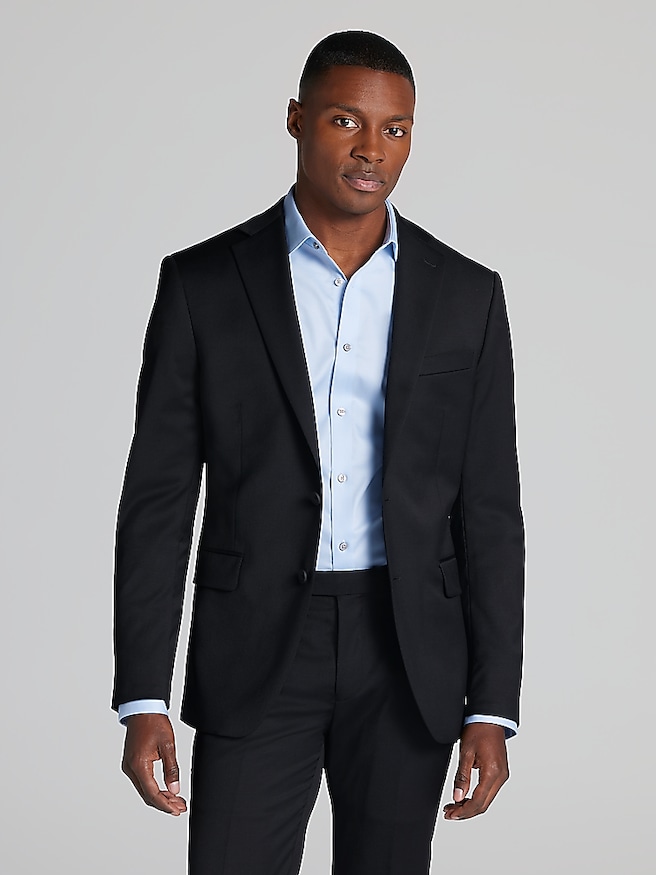
Blue jackets for men bring a versatile color palette to everyday outerwear and tailored dressing, with shades that range from deep navy and inky indigo to brighter cobalt and muted slate. Navy has a quiet, polished character that works with charcoal trousers, brown leather shoes, and a crisp white shirt, while a lighter blue jacket can soften the contrast of dark denim and a fine-gauge sweater. The shape of the jacket matters just as much as its color. A blue sport coat adds structure for an office presentation or dinner reservation; a bomber offers a shorter, relaxed silhouette for casual plans; and a quilted jacket provides an extra layer for a chilly commute. Denim jackets have a more rugged character, especially as the fabric develops natural fading along seams and cuffs. For occasions that call for a coordinated appearance without a full suit, a navy tailored jacket with gray trousers is a dependable combination. Texture helps keep blue-on-blue outfits from looking flat: a softly brushed jacket over a smooth cotton shirt creates subtle contrast, and an indigo outer layer looks distinct against jeans in a noticeably lighter wash. When combining a tailored jacket with blue trousers, either choose pieces intended to form a suit or make the contrast in shade and texture deliberate. Near-matching fabrics can look less cohesive than clearly separate pieces. During the cooler months, deeper blues sit comfortably alongside burgundy knits, olive chinos, cream sweaters, and dark brown accessories. Blue also makes a practical foundation for someone building a compact wardrobe, since one thoughtfully chosen jacket can support several settings through changes in shirts, pants, and footwear. Exploring Stylish Men's Jackets can help put those silhouettes in context, whether the preference is for clean tailoring, an athletic outline, or a casual layer with room for a sweater. The strongest choice is usually the one that matches how the jacket will actually be worn, from regular office days to relaxed weekends.
Fabric and construction shape the warmth, movement, and overall feel of a blue jacket. Wool and wool blends are common choices for tailored styles because they offer structure, natural texture, and useful warmth without necessarily feeling bulky. A tightly woven wool cloth generally has a smoother appearance, while a textured weave can make a jacket feel more relaxed. Cotton twill and denim suit casual settings, with fabric weight influencing how substantial the jacket feels and how easily it layers. Nylon and polyester shells can provide lightweight protection from wind or light moisture, but performance depends on the fabric, finish, and construction rather than the fiber name alone. Water-resistant fabric can help with a brief drizzle; sustained rain calls for a jacket specifically labeled waterproof, with construction features such as sealed seams where appropriate. Insulated and quilted styles add warmth, though the amount and type of insulation matter more than the stitching pattern. A lining can help a jacket slide smoothly over sleeves, while a partially lined or unlined tailored style may feel lighter indoors. Fit should account for the clothing underneath. A jacket that feels comfortable over a T-shirt may pull across the upper back when worn over a substantial knit. Shoulder seams should generally sit near the natural shoulder on a traditionally fitted style, and the chest should close without pronounced pulling or an X-shaped crease around the fastening. Reaching forward, sitting down, and bending the elbows should feel manageable rather than restrictive. Tailored jackets usually need enough length to balance the torso and trousers, while bombers and trucker styles are intentionally shorter. Sleeves on outerwear should cover the wrist comfortably; tailored sleeves can allow a small amount of shirt cuff to show. For someone who spends time driving, a shorter jacket may be easier to sit in, while a longer cut can provide more coverage on a walk. Secure pockets, easy-to-grip fastenings, and comfortable collar construction can make a meaningful difference in daily use.
Durability depends on choosing a jacket suited to its routine and caring for it according to the sewn-in label. A sturdy cotton weave may handle frequent casual wear well, while a finely textured tailored fabric benefits from a little more attention around shoulder bags, rough surfaces, and crowded coat hooks. Check for even stitching, neatly finished seams, firmly attached buttons, and a zipper that moves smoothly without catching the lining. High-contact areas such as cuffs, pocket edges, and elbows often show wear first, so their construction deserves a close look. Blue fabrics can also change in appearance over time: indigo denim may develop fading that adds character, while a dark tailored jacket generally looks best when its color remains consistent. Washing requirements vary widely, and a jacket should not be machine washed simply because its outer fabric seems familiar. Linings, internal structure, trims, and finishes all affect the appropriate care method. When washing is permitted, follow the specified temperature and drying directions, and wash dark colors with compatible shades. Some indigo fabrics may transfer color, particularly when new or damp, so heed any label warnings before pairing them with pale upholstery or light clothing. A shaped hanger supports the shoulders of a tailored jacket, and allowing it to air out between wears can reduce lingering odors. Brush wool gently with a suitable garment brush, address marks promptly using the recommended method, and avoid storing a jacket while it is damp. Technical outerwear may require specialized cleaning to preserve its protective finish. These practical details matter whether the jacket is for a daily commuter, a frequent traveler, or someone dressing up for family celebrations. A blue jacket can also be a thoughtful gift for a graduate beginning an office role or someone whose wardrobe leans heavily on neutral separates. Accurate sizing, familiar styling preferences, and the recipient’s usual layers are more useful than guessing from appearance alone. With the right balance of fabric, fit, and function, a blue jacket can become a familiar part of getting dressed rather than a piece reserved for a single occasion.