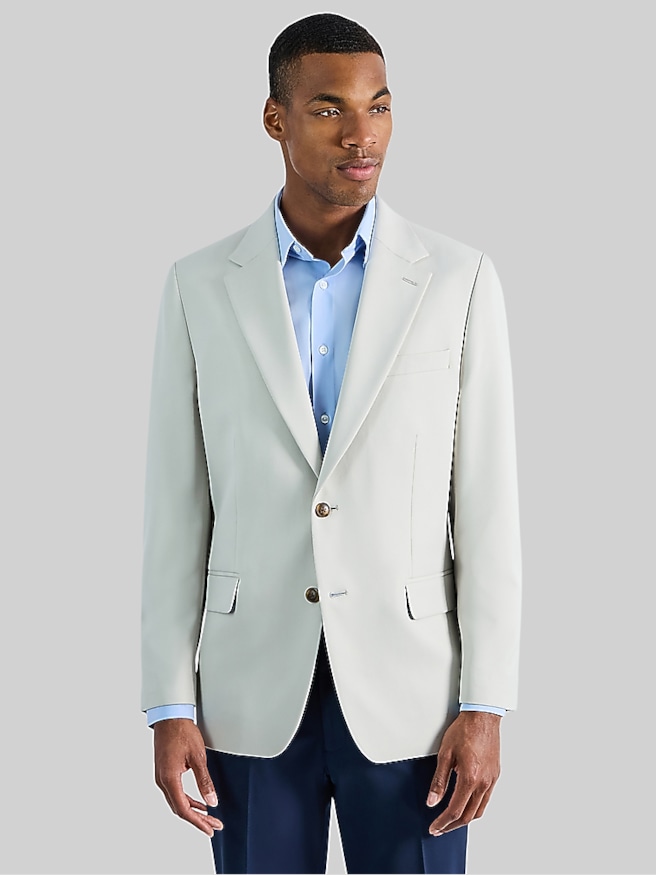
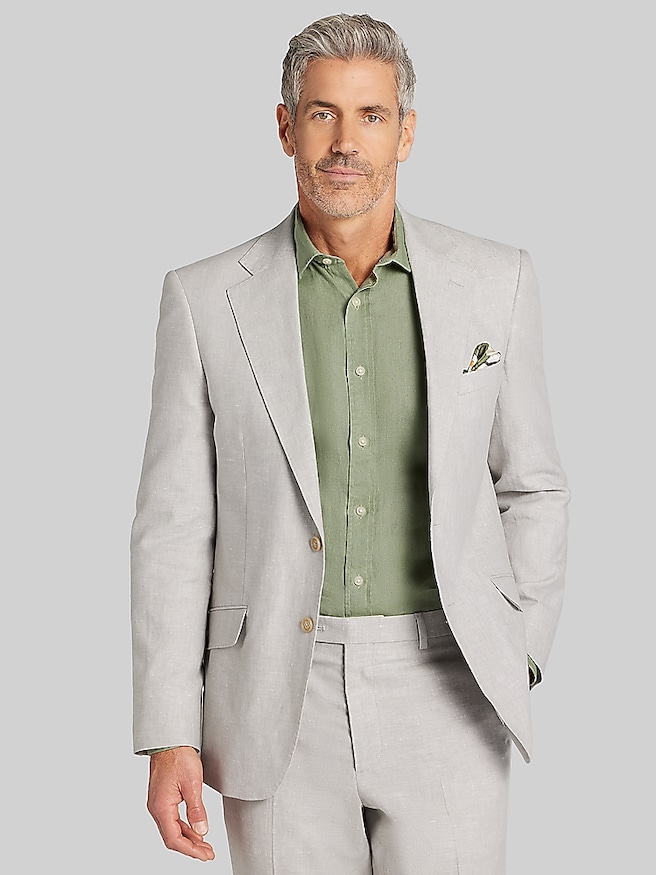
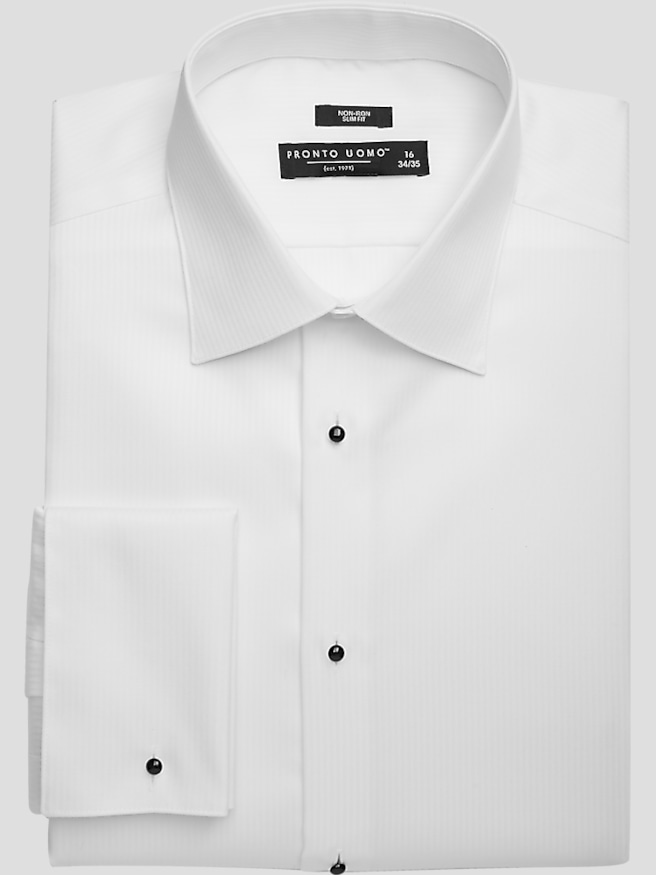
Black and white suits create a sharp, high-contrast look for weddings, proms, galas, and other occasions that call for polished tailoring. The combination can feel understated or expressive, depending on how the two colors are balanced. A black suit with a white dress shirt has a clean, familiar appearance, while a white jacket paired with black trousers puts more emphasis on contrast. A coordinated white suit creates a brighter statement, with black accessories adding definition at the collar, waist, and shoes. Matching suit separates share a fabric and finish; contrasting formal separates intentionally use differences in color or texture to build the outfit. That distinction helps explain why two black-and-white looks can have very different levels of formality. For an invitation specifying black tie, details such as a dinner jacket, formal trousers, and the appropriate shirt matter—a standard black business suit does not automatically meet that dress code. At a less formal celebration, a tailored suit with a restrained tie can look equally considered without feeling overly ceremonial. The appeal of a black and white wedding suit lies in its ability to look distinctive while coordinating with a wide range of ceremony settings and wedding party attire. Grooms and wedding party members may favor a consistent color balance for group photographs, while guests should follow the invitation and any guidance from the couple, particularly before choosing an all-white outfit. Prom attendees can use the same palette for a classic tuxedo-inspired appearance or a more contemporary suit combination. The strongest results usually come from a clear visual focus: a bright jacket, a crisp shirtfront, or a defined lapel, rather than several competing details. Against this simple palette, small choices become noticeable, including the width of a tie, the shape of a pocket square, and the finish of a shoe. Keeping those elements intentional lets the contrast feel confident rather than busy, whether the setting is a ballroom, a ceremony space, or a formal dinner.
Fabric and fit give black and white tailoring much of its character. Wool is valued for its natural resilience, breathability, and drape, making it a useful foundation for structured jackets and trousers. Wool blends can combine those qualities with other characteristics, such as added stretch or resistance to wrinkling, although performance depends on the fabric’s composition and construction. Cotton-rich fabrics often have a more matte, relaxed appearance and may show creases more readily. Linen has a distinctive texture and naturally develops wrinkles, which makes it better suited to occasions where a less rigid finish is welcome. Smooth cloth emphasizes the clean division between black and white, while a subtle weave adds depth without introducing another color. With white tailoring, fabric density and lining deserve particular attention because lighter cloth may reveal pocket bags, underlayers, or sharp color differences beneath it. Black fabrics also vary: a deep matte finish looks different from cloth with noticeable sheen, especially under bright indoor lighting or a camera flash. Fit brings these details together. Jacket shoulders should sit close to the natural shoulder line without extending into a pronounced overhang, and the collar should rest against the shirt rather than lifting away. A buttoned jacket should lie smoothly through the chest and waist, without strong pulling lines around the closure. Slim silhouettes sit closer to the body, while roomier cuts allow more ease through the torso, seat, and thigh; neither should restrict ordinary movement. Sitting through a ceremony, reaching across a dinner table, and walking onto a dance floor all call for comfort as well as a neat outline. Trouser length also changes the impression, from a clean, minimal break to a slightly fuller drape over the shoe. Proper alterations can refine sleeve length, the waist, and hems, but a sound fit through the shoulders and body provides the essential starting point. These proportions matter especially in black and white, where a clear contrast makes an uneven hem or a pulling jacket more apparent.
Accessories and care help preserve the clean appearance that makes black and white suits so effective. A white dress shirt can sharpen a black jacket, while a black tie or bow tie repeats the darker tone without adding visual clutter. A pocket square offers another small area of contrast; a simple fold keeps attention on the tailoring, and a softer fold creates a less rigid finish. Black leather shoes provide a straightforward foundation, with the level of shine helping establish the mood. Highly polished formal footwear has a different presence from a matte leather lace-up, so the shoe should suit both the outfit and the occasion. Consistency matters when pairing separate black pieces, since undertones, texture, and fading can make two fabrics look unexpectedly mismatched. White and ivory also read differently next to each other, which is worth considering when coordinating shirts, jackets, and wedding attire. After wear, a broad, shaped hanger supports the jacket’s shoulders, while properly hung trousers are less likely to develop unwanted folds. Allowing garments to air before placing them in a breathable garment bag helps keep them fresh between occasions. A clothing brush can remove surface dust from suitable fabrics, and a lint roller used carefully is useful for visible fibers on black cloth. Spills on white fabric deserve prompt attention, but rubbing or experimenting with household cleaners can spread a mark or damage the finish. The care label should determine the cleaning method, with professional attention for garments that require it. Cleaning coordinated pieces together when needed can also help maintain a consistent appearance over time. Durability depends on more than fabric alone: comfortable ease reduces strain at seams, careful storage protects the shape, and appropriate pressing keeps lapels and trouser creases defined. For someone attending several formal occasions, these practical details support repeated wear without sacrificing the crisp effect. Whether chosen for a milestone celebration or an established formal wardrobe, black and white tailoring rewards a thoughtful balance of proportion, texture, and upkeep.