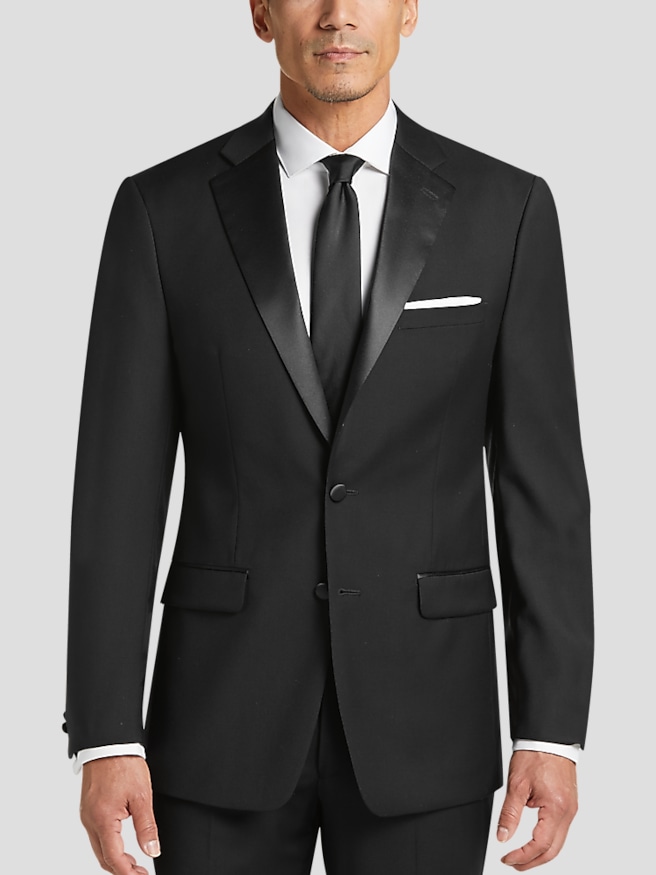
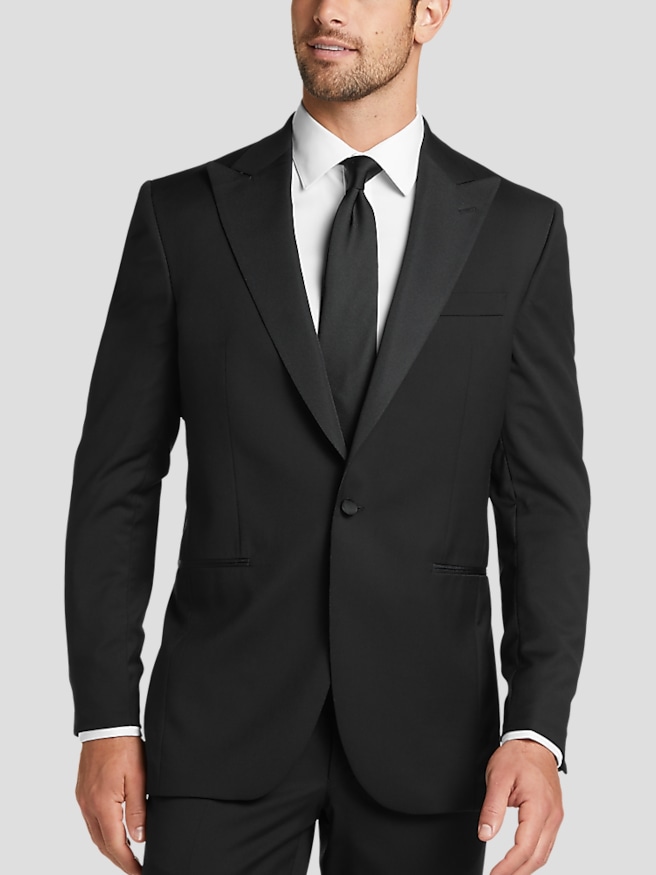
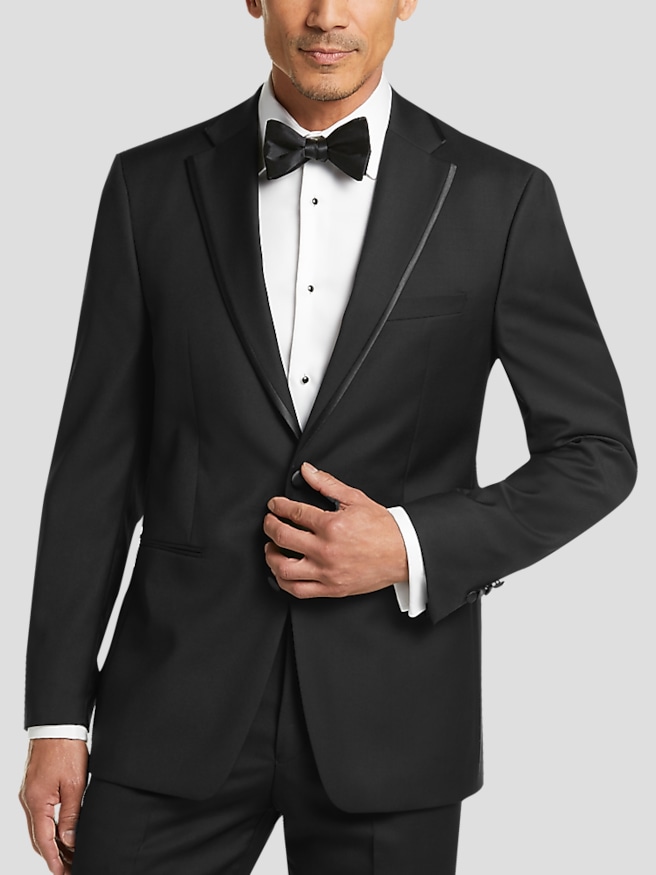
A black tuxedo is a standard, appropriate choice for a corporate gala with a black-tie dress code, bringing a clear sense of formality to an evening centered on professional achievement, company milestones, or charitable support. Its appeal comes from the contrast between a dark, tailored silhouette and crisp formal details: a white dress shirt, a black bow tie, and lapels with a subtle sheen or textured finish. Unlike a black business suit, a tuxedo traditionally features satin or grosgrain facings on the lapels, with coordinating details that may appear on the buttons and along the outside of the trouser legs. Those distinctions help the outfit look intentional in a ballroom, at an awards presentation, or beside colleagues in an event photograph. A Black Tuxedo Jacket establishes that formal character, while trousers in a matching fabric create a cohesive appearance from shoulder to shoe. Peak lapels bring a defined, angular line to the chest and shoulders; a shawl collar offers a continuous curve with a softer visual effect. Both are established choices for black-tie occasions. A single-breasted jacket creates a clean front that works naturally with a low-cut formal vest or cummerbund, while a double-breasted style adds overlap and a more substantial shape through the torso. The right expression depends on personal taste and the invitation rather than job title. An executive accepting an award, a team member attending a company celebration, and a guest joining a fundraising dinner can all wear black formalwear without looking out of place. For events described only as formal or black-tie optional, the host’s stated expectations remain important, since not every corporate gala requires a tuxedo. When black tie is specified, the traditional black tuxedo provides a dependable foundation that keeps the focus on the occasion and the person wearing it.
Fabric and construction influence how a tuxedo looks through the full course of an event, from the first handshake to a seated dinner and a final group photograph. Wool is a traditional suiting material because it can provide a smooth drape, breathability, and natural resilience, although its performance varies with the weave, weight, and finishing. Wool blends can balance those qualities with other characteristics, so the fiber content and care label offer more useful information than appearance alone. A restrained surface lets the lapel facings supply contrast without making the entire outfit look glossy under overhead lighting. Satin has a smooth, reflective face, while grosgrain adds fine ribbing and a more muted texture. Neither finish needs elaborate accessories to establish formality. Inside the jacket, the lining, shoulder construction, and chest support contribute to how comfortably the garment moves and how well it holds its intended shape. Fit is equally important: the shoulder line should sit cleanly, the collar should rest close to the shirt collar, and the lapels should lie flat rather than bow away from the chest. A slim fit offers a closer outline, while a roomier cut allows more ease through the chest, waist, and legs. Neither should feel restrictive when reaching across a table or sitting through a presentation. Jacket sleeves that leave a modest glimpse of shirt cuff create a deliberate finish, and trousers with a clean drape help maintain an uninterrupted line. A shorter trouser break looks crisp and contemporary; a slight break gives a more traditional appearance without excess fabric gathering at the shoes. Alterations can refine sleeve length, trouser length, and waist shaping, but a jacket that already fits well through the shoulders provides a stronger starting point. These details matter most in ordinary moments, such as taking a seat, greeting a colleague, or standing comfortably during a reception.
Accessories complete a black tuxedo for a corporate gala without needing to compete with it. A white formal shirt creates the clearest contrast, with a collar that supports the bow tie and a front suited to the level of formality. A turndown collar offers a familiar, understated frame, while pleats, a textured bib, or discreet studs can add detail without introducing a distracting pattern. A black silk bow tie echoes traditional lapel finishes, and a white pocket square supplies a small point of brightness at the chest. Cuff links and shirt studs look cohesive when their finishes relate to each other, but they do not need to draw attention across the room. A cummerbund or low-cut formal vest can cover the waistband in a traditional single-breasted ensemble; properly fitted formal trousers often use side adjusters or suspenders rather than a visible belt. Polished black formal shoes, whether patent leather or another suitable dress finish, maintain the clean line of the outfit, and dark dress socks prevent a distracting gap when seated. Comfort deserves the same attention as appearance when an evening includes standing conversations, a lengthy dinner, and time on the dance floor. The lasting value of formalwear also depends on thoughtful care between occasions. After wear, a tuxedo benefits from airing out on a broad, supportive hanger before being placed in a breathable garment bag. A gentle clothing brush can lift surface dust where appropriate for the fabric, while spills and noticeable stains call for prompt attention according to the garment’s care instructions. Professional cleaning should follow the label and the condition of the clothing rather than becoming an automatic step after every brief wear. Direct heat and pressure can leave unwanted shine on dark tailoring or damage decorative facings, making careful pressing especially important. Stored with trousers hanging neatly and jacket pockets emptied, a well-maintained black tuxedo can remain a dependable part of a formal wardrobe for corporate celebrations, recognition dinners, and other occasions that call for black tie.