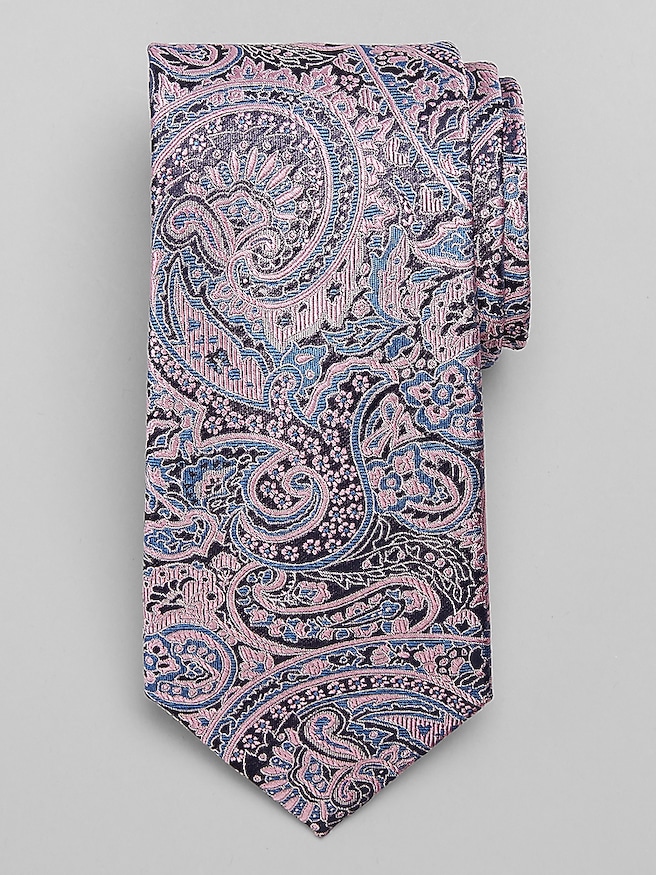
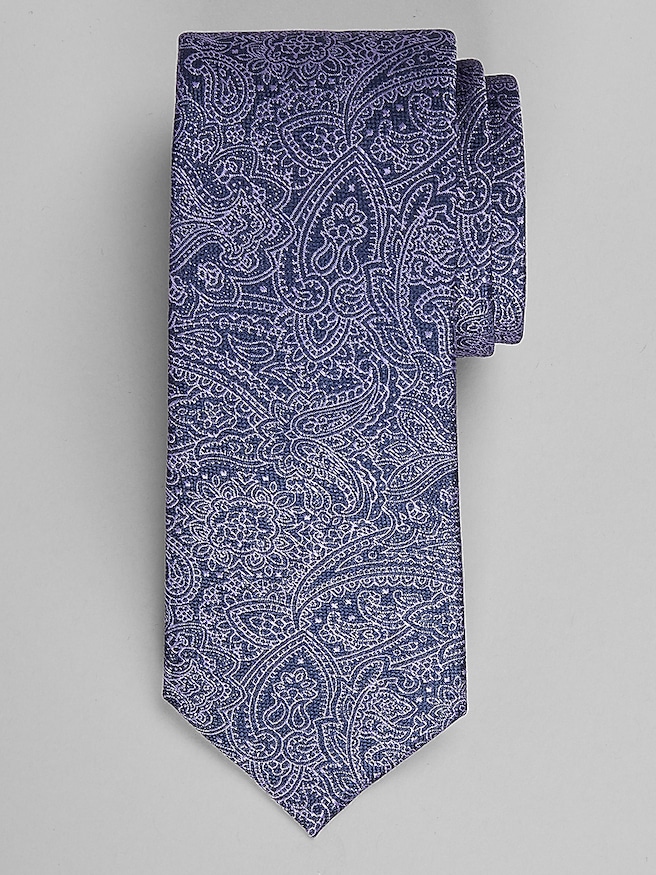
Black paisley ties bring intricate pattern to a dark, versatile accessory, adding depth to wedding attire, business suits, and polished evening looks. The signature curved, teardrop-shaped motif has roots in Persian and South Asian textile traditions, while its familiar English name comes from the Scottish town associated with producing patterned shawls. On a necktie, those flowing shapes create a softer visual rhythm than stripes or geometric repeats. A black background keeps the overall effect grounded, whether the pattern appears in subtle charcoal threads or more distinct silver, ivory, or jewel-toned accents. Tonal black paisley can look almost solid from across a room, revealing its detail when light catches the surface; a high-contrast design makes the tie a more noticeable part of the outfit. That distinction matters for someone dressing for a client presentation versus a wedding reception. A restrained pattern works comfortably with a charcoal suit and a crisp white shirt, while a larger motif can add personality to a dark suit worn for a celebration. Black, charcoal, and dark gray suits are especially straightforward companions, and a light blue dress shirt introduces gentle contrast without crowding the pattern. Navy can also work well when the tie’s lighter details create separation between the two dark colors. With patterned shirts or jackets, the scale of each design matters more than matching every color exactly: a small, closely spaced shirt stripe gives a broad paisley motif room to stand out. Solid shirts remain the simplest backdrop when the tie has elaborate borders, multiple accent colors, or a pronounced sheen. For weddings, prom, anniversary dinners, and events calling for a suit and tie, black paisley offers decoration without requiring a bright color. A stated black-tie dress code generally calls for a bow tie with a tuxedo, so the event’s requirements should take precedence over the appeal of a patterned necktie. The result is strongest when the tie supports the formality of the outfit rather than trying to establish it alone.
Material, construction, and proportions shape how a black paisley tie looks once it is knotted. Silk is valued for its fluid drape and ability to reflect light, qualities that can give dark paisley patterns a rich, dimensional appearance. A woven jacquard creates the design through the arrangement of threads, often producing visible texture and shifts between matte and lustrous areas. A printed pattern applies the design to the fabric’s surface and can allow finely drawn curves and detailed color transitions. Neither approach alone determines quality; the fabric, stitching, lining, and finishing all contribute to performance. Polyester and blended fabrics can offer resilience and help resist wrinkles, although their feel, sheen, and care requirements vary. Some ties have a smooth, luminous finish that suits dressier settings, while others have a quieter surface that feels more understated with everyday tailoring. The internal lining influences body and recovery, helping the tie form a knot and hang cleanly against the shirt. Excessively bulky construction can make a large knot feel crowded under a narrow collar, while very light construction may produce a smaller knot than expected. Width is most harmonious when considered alongside jacket lapels, shirt collar, and overall build. A narrower blade tends to suit slim lapels; a fuller blade usually balances broader lapels and more substantial tailoring. Length matters just as much, particularly for taller wearers or anyone who prefers a knot that uses more fabric. With trousers worn at their intended waist position, the front tip should generally finish near the waistband or belt buckle rather than well above or below it. A four-in-hand knot gives paisley an easy, slightly asymmetric shape, while a half-Windsor creates a more centered triangle with additional presence. A small dimple beneath the knot introduces depth without obscuring the design. Once tied, the blade should hang without twisting, and the narrow end should sit discreetly behind it. Those seemingly small details let the pattern read clearly and keep the entire outfit looking composed.
The most effective accessories around a black paisley tie usually repeat a color or finish without duplicating every detail. A white pocket square creates a clean break against a dark jacket, especially when the tie contains silver or ivory accents. A solid pocket square drawn from a muted accent in the paisley can look equally cohesive, while a second busy pattern may pull attention away from the tie. Matching the pocket square and tie exactly is not necessary; a little contrast makes the combination feel more considered. Simple cufflinks, a restrained watch, and polished shoes leave room for the curved motif to do its work. Someone drawn to the same pattern with a more colorful foundation may also appreciate men's purple paisley ties, particularly when coordinating with plum, lavender, or other purple accents. As a gift, a black paisley tie can suit a graduate building a professional wardrobe, a partner who enjoys dressing for dinner, or a family member preparing for a milestone celebration. Familiarity with the recipient’s usual tie width, height, shirt collars, and preference for subtle or expressive patterns helps make the choice personal. Long-term appearance depends on care as well as construction. The care label should determine the cleaning method, since silk, synthetic fibers, linings, and decorative finishes may require distinct treatment. After wearing, undo the knot gently by reversing the tying steps instead of pulling the narrow end through a tightened knot. Letting the tie rest unknotted helps the fabric relax and reduces persistent creasing. Smooth ties can be stored hanging on a suitable rack or loosely rolled without compressing the blade. Overfilled drawers, sharp clips, and prolonged exposure to direct sunlight can compromise their finish. If a spill occurs, gentle blotting is preferable to rubbing, and delicate fabrics may need professional cleaning. Avoiding repeated friction at the knot and checking for loose stitching also help preserve a neat appearance. With appropriate proportions and thoughtful care, a black paisley tie can remain a distinctive, dependable part of a tailored wardrobe.