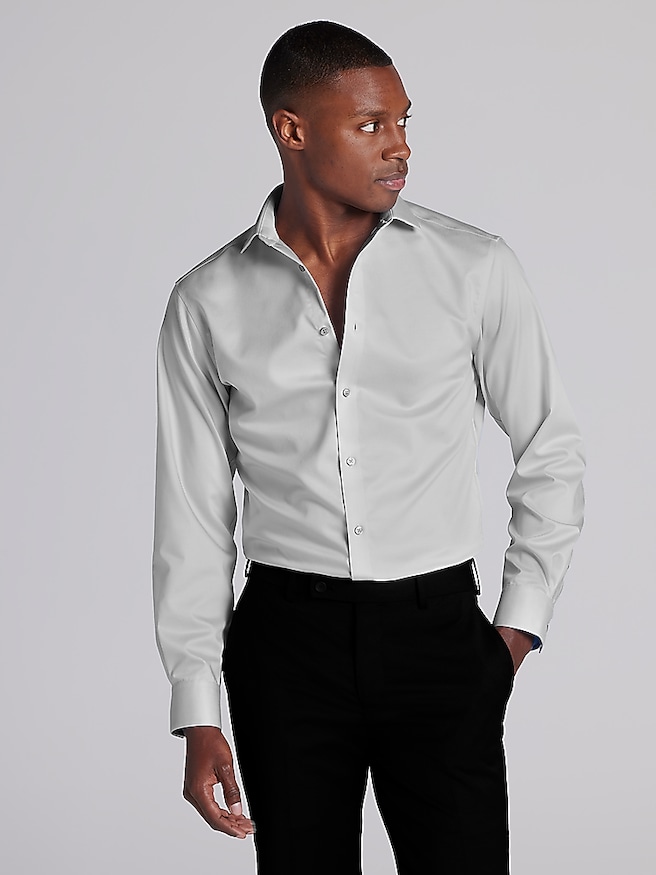
Men's black shirts include casual T-shirts, polos, Oxford-cloth button-downs, and dress shirts, giving the same deep color a range of uses from everyday dressing to more polished occasions. The distinction comes from the fabric, construction, collar, and fit rather than the color alone. A black crewneck has a straightforward, relaxed character with jeans or chinos, while a black polo adds the definition of a collar without the structure of a dress shirt. A smooth woven shirt with a crisp collar creates a sharper line beneath a blazer or suit jacket. Black can anchor an outfit without competing with patterned trousers, textured jackets, or distinctive accessories, and it works equally well as the main feature of a simple combination. With gray trousers, a black shirt creates clear contrast; with dark denim, it produces a more understated look. Wearing black from collar to shoes can also feel cohesive, especially when the fabrics have enough variation to keep the outfit from looking flat. A matte cotton shirt against a subtly textured jacket, for example, gives an all-black combination some depth without adding another color. For an office dinner, an open-collar black dress shirt and tailored trousers can strike a balance between businesslike and relaxed when the setting permits. For a concert or an evening out, a black knit shirt offers a less structured alternative. Weddings and formal events require closer attention to the stated dress code: a black shirt can suit some celebrations, but its dark color does not automatically make it appropriate for every level of formality. Collar shape also affects the overall impression. A button-down collar tends to feel more casual, while a structured point or spread collar gives a dress shirt a more tailored appearance. When a tie is part of the outfit, the collar should accommodate the knot comfortably. Without a tie, a collar that sits neatly against the neckline helps the shirt look finished rather than incomplete.
Fabric and fit determine how a black shirt feels throughout the day and how cleanly it sits on the body. Cotton is a familiar choice for its soft feel and breathability, but the weave changes its character considerably. Poplin typically has a smooth, relatively crisp surface, twill introduces a subtle diagonal texture, and Oxford cloth has a more pronounced woven appearance. Jersey knits provide the easy drape associated with T-shirts, while piqué gives many polos their lightly textured surface. Linen has visible texture and a tendency to crease, making its relaxed appearance part of the appeal rather than a flaw. Blended fabrics can balance softness, shape retention, stretch, or wrinkle resistance, depending on their composition and finish. A small amount of stretch may make reaching, sitting, and moving easier, though it does not replace a well-proportioned fit. Shoulder seams should generally sit near the shoulder's natural edge, and a button-front shirt should close without pulling into visible gaps across the chest or stomach. A slim fit follows the torso more closely, while a classic or roomier cut leaves additional ease; neither should restrict ordinary movement. Sitting at a desk, reaching for a steering wheel, and bending to tie a shoe are useful tests of whether the shirt has enough room. Sleeves should allow the elbows to bend comfortably, and dress-shirt cuffs should sit neatly at the wrist without swallowing the hand. For shirts worn tucked in, enough body length helps keep the hem secure through normal activity. An untucked shirt usually looks more balanced when its hem does not extend too far down the thighs. Layering changes these considerations slightly: excess fabric can bunch beneath a close-fitting jacket, while an overly tight shirt may pull when the jacket comes off. Even stitching, secure buttons, neatly finished seams, and a collar that holds its intended shape are useful signs of construction quality. These details matter most at points that receive repeated handling, including cuffs, buttonholes, and the neckline.
Keeping a black shirt looking sharp depends on care that respects both the fabric and the depth of the dye. The care label should determine whether a shirt is machine washable, hand washable, or professionally cleaned, since appearance alone does not reveal the right treatment. For washable styles, turning the shirt inside out, washing with similar dark colors, and avoiding unnecessary agitation can help limit surface wear. Cool water and a detergent appropriate for dark fabrics may help preserve color when permitted by the label. Excessive dryer heat can contribute to shrinkage or damage certain fibers, so the recommended drying method matters as much as the wash cycle. Removing a shirt promptly after drying can reduce the time wrinkles have to settle, while ironing or steaming should follow the fabric's care instructions. Black surfaces can make lint, deodorant residue, and pressing marks noticeable; a clean lint brush and careful handling are often more useful than repeated washing. Woven shirts generally benefit from hanging on a supportive hanger, while folding can help prevent some knits from stretching at the shoulders. Durability also depends on choosing a shirt that suits its routine. A shirt intended for frequent office wear needs comfortable movement and manageable care, while one reserved for occasional dinners may place greater emphasis on drape or collar structure. A black shirt can make a useful gift for someone who regularly wears dark neutrals, provided the recipient's size, preferred fit, and usual dress expectations are known. Familiar details such as a favored neckline, sleeve length, or tolerance for ironing make the choice more personal. Within a wardrobe of men's stylish shirts, black offers flexibility without requiring elaborate coordination. Its usefulness comes from getting the practical details right: a comfortable neckline, a flattering length, fabric suited to the occasion, and a finish that remains presentable through repeated wear. Those qualities make the shirt easy to reach for, whether it is paired with everyday denim or worn beneath a carefully fitted jacket.