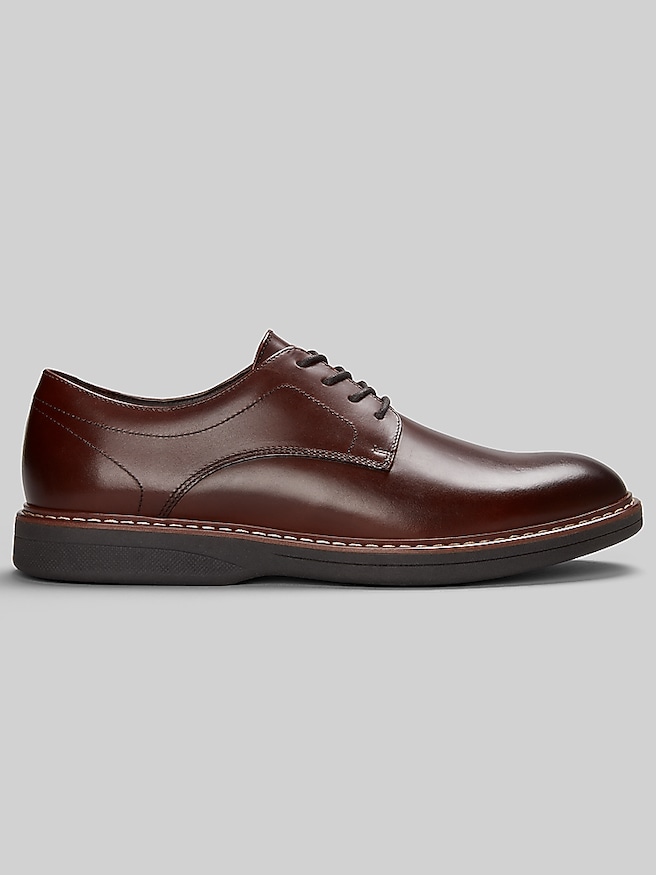
Black low top sneakers bring a clean, grounded finish to everyday clothing without the visual weight of a boot or the formality of a dress shoe. The collar sits below the ankle, leaving a simple line between the shoe and the hem of a pair of jeans, chinos, or tailored trousers. That shape makes them especially useful for outfits that fall somewhere between relaxed and polished: dark denim with an Oxford shirt, straight-leg chinos with a knit polo, or unstructured trousers with a lightweight blazer. Black also keeps the focus on proportion and texture rather than bright color. A smooth upper with matching laces and a dark sole tends to look understated, while a contrasting sole or textured panel gives the same basic silhouette a more casual character. Details matter here. A rounded toe generally feels easygoing; a slightly tapered shape can sit more neatly beneath narrower trousers. Neither needs to look pointed or squeezed. Pants that end near the top of the shoe let the low profile show, while a wider leg can balance a more substantial sole. For a cohesive look, repeat black in a belt, watch strap, or jacket rather than trying to match every part of the outfit. The appeal of men’s low top black sneakers lies in that flexibility: they can accompany a commute, a casual dinner, or a day spent moving between appointments, provided the setting welcomes sneakers. In workplaces with a relaxed dress code, a restrained design and well-kept finish can complement tailored separates without looking overly athletic. For occasions that explicitly call for formal footwear, traditional dress shoes remain the more appropriate choice. These sneakers serve a distinct purpose instead, adding ease to clothing that still looks considered. Their usefulness comes from bridging familiar wardrobe pieces, not from asking one shoe to suit every dress code or activity.
Materials influence how black low top sneakers look, feel, and hold up to repeated wear. Smooth leather can offer a structured appearance and may develop creases where the foot bends, while suede brings a softer, matte texture that needs a gentler approach to cleaning. Canvas and other woven textiles generally create a more relaxed impression, and mesh panels can encourage airflow, though breathability also depends on the lining and overall construction. Synthetic uppers vary widely in flexibility and finish, so material labels alone do not tell the whole story. A shoe that looks sleek on the outside should still flex comfortably at the ball of the foot rather than folding awkwardly through the arch. Cushioning can soften the sensation underfoot, but a plush footbed is not a substitute for the correct size, a stable base, or enough room across the forefoot. When trying on sneakers, wear the type of socks intended for everyday use and check both feet while standing. Toes should have room to move without pressing against the front, the heel should remain secure without rubbing, and laces should hold the midfoot without creating pressure across the top. Walk several steps, turn, and notice whether the collar catches the ankle or the tongue shifts to one side. Persistent pinching is a fit problem, not something to dismiss as a necessary break-in period. Anyone who uses an orthotic should check interior depth and whether the original footbed can be removed before relying on a familiar size. Sole design deserves attention as well: a broad, steady platform may feel reassuring for everyday walking, while a heavier sole can change the shoe’s feel over a long day. Traction depends on the outsole material and tread, not simply its thickness. For gym training, running, or work that requires certified protective footwear, shoes built for those demands are a better match than lifestyle sneakers chosen primarily for their appearance.
Keeping black low top sneakers looking sharp is largely a matter of small, consistent habits. Brush away loose dust before it settles into seams, and address marks with a cleaning method suited to the upper rather than using the same treatment on every material. Smooth leather often responds well to a soft, lightly dampened cloth and an appropriate leather cleaner, followed by a compatible conditioner when the care instructions recommend it. Suede calls for a dedicated brush and products made for its nap; soaking or aggressive scrubbing can leave uneven texture. Textile uppers may tolerate gentle spot cleaning, but machine washing should never be assumed safe because adhesives, linings, and structural components can react poorly. Test any cleaner on an inconspicuous area first, let shoes air-dry away from direct heat, and avoid putting them away while damp. Removing surface dirt from the edges of the soles and cleaning the laces can make a noticeable difference, particularly on an otherwise simple black design where worn details stand out. A shoehorn helps protect the heel counter from being crushed, and loosening the laces before taking shoes off reduces strain on the eyelets and back of the shoe. Giving pairs time to air out between wears can also help maintain the interior. Over time, look for uneven tread wear, separation at the sole, or cushioning that no longer feels supportive; an upper that still looks tidy does not necessarily mean the shoe is ready for the same mileage. As a gift, black low tops can suit a college student building an everyday wardrobe, a partner who favors uncomplicated clothing, or someone whose workday includes casual office settings. The most useful clues are the recipient’s usual shoe shape, preferred materials, and established size in comparable footwear, with width just as important as length. A minimalist dresser may appreciate tonal stitching and discreet details, while someone who wears relaxed denim might prefer more texture or a bolder sole. Matching those habits makes the choice feel personal while keeping the shoe’s everyday purpose at the center.