Black Friday jeans put the focus on an everyday staple with a surprisingly personal fit: a comfortable waist, the right amount of room through the seat and thighs, and a leg shape that works with familiar shoes. Denim gets its character from a twill weave, usually made primarily from cotton, that gives the fabric its recognizable diagonal texture. Traditional rigid denim has a structured feel and gradually softens with wear, developing creases and fading that reflect how it is used. Denim blended with a small amount of elastane or another stretch fiber offers added flexibility for sitting at a desk, driving, or spending a full day on the move. Fiber content is only part of the story, though; fabric weight, weave, and construction also influence how jeans feel and hold their shape. A substantial fabric can create a clean, structured line, while a lighter, softer denim may feel less restrictive from the first wear. The best fit has enough ease to move without pulling across the front pockets or leaving excessive fabric beneath the seat. Slim jeans generally follow the body more closely through the thigh and leg, straight jeans maintain a more consistent line toward the hem, and relaxed cuts provide additional room where it matters most. Those descriptions are useful starting points rather than universal measurements, since proportions can vary by cut. Rise matters just as much as the label on the fit: where the waistband sits affects comfort while seated, how a tucked shirt stays in place, and the overall balance of an outfit. For someone with fuller thighs, extra room above the knee can make more difference than a larger waist size. For someone who prefers a neater outline, a gentle taper can reduce excess fabric near the ankle without making the entire leg feel tight. Jeans that fit comfortably without relying on a tightly cinched belt tend to look more natural with everything from a plain T-shirt to an unstructured jacket.
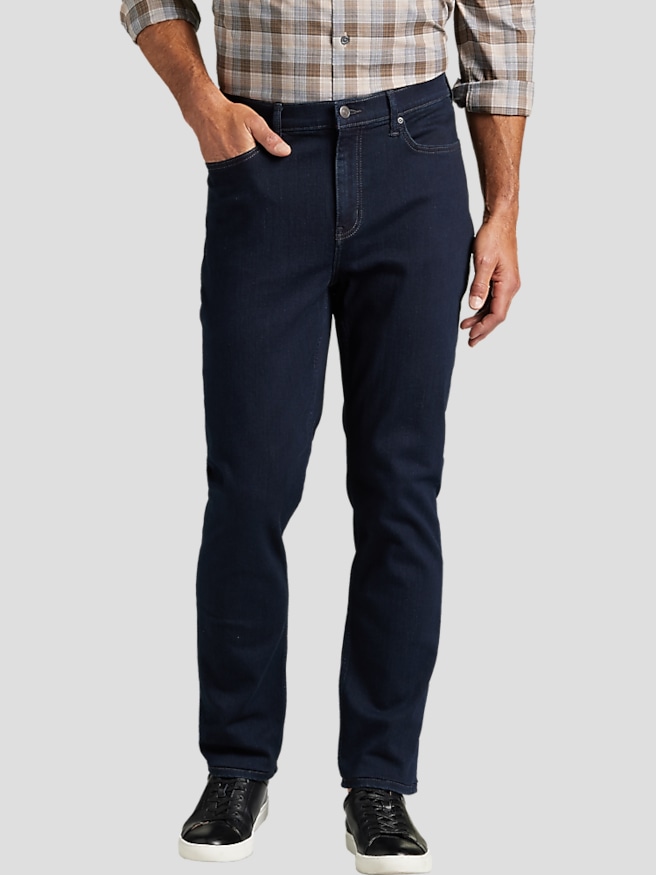
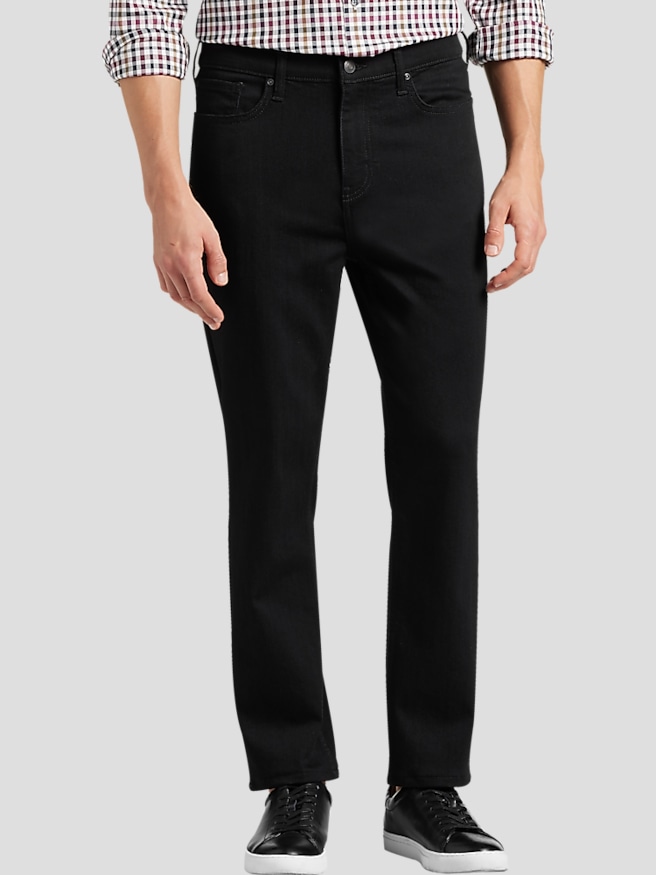
Color and finish give denim much of its range, allowing the same basic garment to feel laid-back or relatively polished. Dark indigo jeans have a deep, inky appearance that pairs easily with an Oxford shirt, a textured sweater, or a casual sport coat. A clean dark wash with minimal fading can suit a business-casual setting where denim is permitted, especially with a tidy hem and well-kept leather shoes. Medium-blue washes have a more familiar, lived-in character, making them an easy match for striped shirts, polos, and sneakers. Lighter washes tend to read as more casual, while pronounced whiskering, abrasions, and distressed details draw attention to the denim itself. Black jeans offer another direction: their restrained color can anchor a white shirt, soften the formality of a blazer, or create a simple tonal outfit with charcoal and gray. The effect depends on the finish as well as the color. Deep, even black looks sharper, while washed black has a softer appearance that works comfortably with casual layers. Leg opening and length help complete that impression. A straight leg can sit neatly over many everyday shoes, while a narrower opening creates a closer line around the ankle. Boots need enough space beneath the hem for the fabric to fall smoothly rather than catch on the shaft. Too much length can collect in heavy folds over the shoe; too little may expose more ankle than intended when seated. A slight break often gives jeans a balanced look, although a clean, shorter hem can suit a deliberately streamlined outfit. These details matter in ordinary moments: heading from a casual office to dinner, meeting friends at a neighborhood restaurant, or dressing for a family photograph without feeling overdressed. Denim is particularly useful when an outfit needs to feel considered but not formal. A textured belt, a shirt that fits through the shoulders, and shoes suited to the setting can change its character without making the combination complicated. For a wardrobe centered on a dark, versatile finish, explore Cyber Monday On Black Jeans.
Long-term satisfaction with jeans often comes down to construction and care as much as appearance. Even stitching, secure pocket attachments, and reinforced stress points contribute to everyday durability, especially around areas that experience repeated movement. A heavier fabric is not automatically better for every wearer, and stretch does not automatically mean a shorter lifespan; the balance of materials, fit, and handling matters. Jeans that are excessively tight may place added strain on seams and high-friction areas, while a comfortable fit allows the fabric to move more freely. Following the care label is the most reliable approach to washing and drying. For many washable denim fabrics, turning jeans inside out, choosing cold water, and using a mild detergent can help limit surface abrasion and preserve color. Washing with similar colors is particularly important for deep indigo and black denim, which may release dye, especially early on. Some dark finishes can also transfer color onto pale upholstery or footwear, so any dye-transfer warning deserves attention. Excessive dryer heat can contribute to shrinkage and affect stretch fibers; air-drying or a lower-heat setting may be appropriate when the care instructions allow it. Between washes, airing jeans out and addressing small marks promptly can reduce unnecessary laundering without overlooking cleanliness. These practical details also make denim a thoughtful gift for a dad, brother, partner, or friend whose everyday style is already familiar. A well-fitting pair the recipient owns can provide useful clues about waist size, inseam, rise, and preferred leg shape, although the same size designation may fit differently across cuts. Someone who wears dark denim to casual dinners may appreciate a clean finish, while someone who spends most days in sneakers may favor a softer wash and a relaxed feel. The lasting appeal of Black Friday jeans lies in that everyday usefulness: denim that feels comfortable through a long afternoon, works with clothes already in the closet, and develops character through repeated wear.