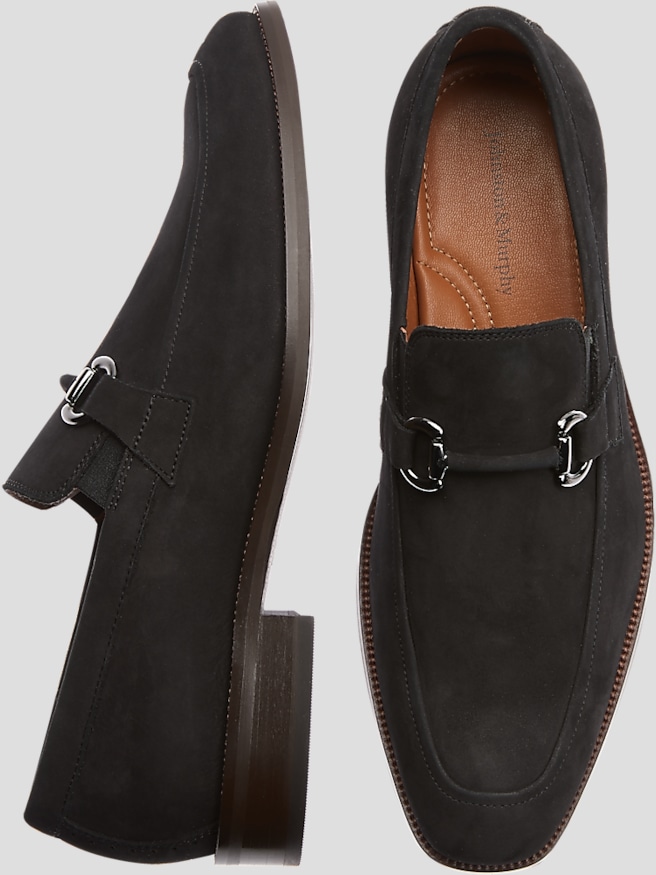
Men’s bit loafers are slip-on dress shoes distinguished by a metal ornament across the vamp, the upper section that covers the top of the foot. Also called horsebit loafers, they take their name from hardware shaped to resemble the snaffle bit used in a horse’s bridle. That small detail gives the shoe its character: more decorative than a plain loafer, but understated enough to work with tailored clothing. The hardware may have a warm gold tone, a cool silver tone, or a darker finish, each creating a slightly different contrast against the upper. Black leather with subtle hardware has a crisp, dressy appearance, while brown leather often brings out the shoe’s equestrian influence. Suede softens the effect, giving the same recognizable silhouette a more relaxed feel. Shape matters just as much as color. An elongated almond toe looks sleek beneath tapered dress pants, while a rounder toe and fuller profile can balance straight-leg trousers or substantial denim. Apron stitching, which traces the edge of the toe area, adds definition without competing with the bit itself. For an office outfit, bit loafers for men pair naturally with wool trousers, a tucked-in shirt, and a sport coat. With a suit, a low-profile pair helps maintain a clean line from the trouser hem to the shoe; a hem with little excess fabric keeps the hardware visible rather than buried beneath a heavy break. For dinner or a gathering with friends, chinos and a knit polo make an equally convincing match. Dark, neatly finished jeans can work when the setting is relaxed enough for denim. At weddings and other dressier occasions, the invitation’s dress code remains the deciding factor. Bit loafers can complement tailored attire, but their decorative detail does not automatically make every version appropriate for the most formal events. The appeal is their ability to bring a finished look to several kinds of outfits without the more structured appearance of a lace-up dress shoe.
Materials and construction influence how bit loafers feel, how they age, and where they fit into a wardrobe. Smooth leather can take on a soft sheen with regular conditioning and polishing, while natural creases gradually develop where the foot bends. Full-grain leather retains the hide’s natural surface, though comfort and durability still depend on thickness, finishing, lining, and overall construction. Suede has a textured nap that gives color depth and makes the hardware stand out; it also calls for different cleaning methods than polished leather. Synthetic uppers have their own care requirements, and their flexibility and breathability vary by material. Inside the shoe, smooth linings, well-finished seams, and cushioning under the heel can make a meaningful difference during an afternoon of meetings or an evening spent standing and mingling. A soft footbed may feel comfortable immediately, but cushioning and arch support are separate features, so neither should be assumed from appearance alone. Because loafers have no laces to adjust, the fit across the instep is especially important. The upper should hold the foot securely without pinching, and the toes need enough space to lie naturally rather than press against the front or sides. A small amount of heel movement can occur with some constructions, but persistent slipping can cause rubbing and make walking feel awkward. Leather may ease with wear, yet a painful fit is not a dependable starting point. Trying shoes with the sock thickness intended for regular use gives a more useful sense of fit than relying on size alone. Thin dress socks suit a streamlined office outfit, while no-show socks can create an exposed-ankle look without putting bare skin directly against the lining. Sole design also changes the experience. Leather soles often maintain a slender dress profile; rubber soles can add flexibility or tread, depending on their construction. For a more substantial silhouette, Lug Loafers offer a useful comparison. The terms describe different features: a bit identifies the ornament on the upper, while a lug sole identifies pronounced tread underneath, so the two details can appear on the same shoe.
Thoughtful care helps preserve both the shape of men’s horsebit loafers and the contrast between the upper and its metal accent. For smooth leather, removing surface dust with a soft brush or cloth keeps grit from being worked into the finish. A leather-appropriate conditioner can help maintain suppleness, while a compatible cream polish can refresh color and soften the appearance of minor scuffs. Products should be tested on an inconspicuous area first, especially on light-colored or specially finished leather. Suede needs a suede brush and suitable cleaning products rather than ordinary shoe polish, which can flatten the nap and alter its appearance. The bit deserves attention, too: a gentle wipe with a soft cloth removes fingerprints without exposing the surrounding upper to harsh metal cleaners. Cedar shoe trees can help maintain the toe shape and absorb some interior moisture between wears, and using a shoehorn reduces repeated pressure on the heel counter when slipping shoes on. Allowing a pair to air out between uses supports interior care, particularly when loafers are worn for a full workday. Over time, worn heel edges, loose stitching, or movement around the hardware are worth addressing before they become larger problems. Repair options depend on how the shoe is made; not every sole construction can be replaced in the same way. These practical details also matter when choosing bit loafers as a gift for a graduate, a new professional, a partner, or someone who enjoys dressing well. A familiar shoe size is a starting point, but width, instep height, preferred toe shape, and usual sock choice all affect the result. Someone who wears navy and charcoal tailoring may gravitate toward a sleek black or dark brown pair, while someone who favors chinos and textured jackets may appreciate suede or a fuller silhouette. The most useful choice reflects the recipient’s actual routine: polished enough for the occasions that call for it, comfortable enough for the time spent on foot, and distinctive without overpowering the rest of an outfit.