Big and tall sweater vests are sleeveless knit layers designed with proportions that accommodate a broader build, a longer torso, or both. They add texture and a finished appearance over a shirt without the extra fabric of sweater sleeves under a jacket. Big sizing generally provides more room through the chest and midsection, while tall sizing emphasizes additional body length; a taller man does not necessarily need a wider fit, and a broader man does not always need a longer one. That distinction matters when a vest needs to sit neatly over a tucked-in dress shirt rather than bunch at the waist or pull across the stomach. The most comfortable fit leaves enough room for the shirt underneath while allowing the knit to follow the body without stretching tightly. Shoulder edges should rest comfortably along the shoulders, and armholes should allow easy movement without excessive fabric gathering beneath the arms. A hem that overlaps the trouser waistband helps maintain coverage when sitting at a desk, reaching for a shelf, or getting into a car. Ribbing at the bottom should settle against the body rather than grip so firmly that the vest rides upward. Chest measurements and body length are useful starting points, but the intended layer matters, too: a substantial Oxford shirt takes up more space than a lightweight dress shirt. Trying the vest with a familiar shirt makes those differences easier to judge. From the side, the fabric should fall smoothly rather than tent away from the torso. Across the front, a pattern or knit texture should retain its shape instead of spreading noticeably over the chest. For button-front styles, a flat placket without gaps between buttons is another helpful sign of sufficient room. These details give big and tall sweater vests their versatility, creating a comfortable middle ground between a shirt worn on its own and the more structured appearance of a tailored jacket.
Material and knit construction influence how a sweater vest feels, drapes, and holds up to repeated wear. Cotton offers a familiar, breathable feel and can work well for men who prefer knitwear without a fuzzy surface. A fine-gauge cotton vest creates a relatively smooth layer beneath a sport coat, while a more substantial cotton knit has a stronger visual presence over a simple button-down. Wool brings natural resilience and can recover well from ordinary creasing, though softness varies with the fiber and construction. Merino wool is often used for finer knits with a smooth hand, while cashmere is associated with a soft feel that benefits from gentle handling. Synthetic fibers such as acrylic, nylon, or polyester may be blended with natural fibers to influence weight, shape retention, durability, or care requirements. The fiber label provides a more useful picture than appearance alone, since two vests with similar textures can behave quite differently after washing. Surface texture also changes the overall effect. Smooth knits keep the focus on a shirt collar or tie, fine ribs add subtle definition, and cable patterns create raised detail that stands out against plain shirting. Heavier texture adds visual volume, so the preferred effect may depend as much on personal style as on measurements. Durability comes from the combination of yarn, construction, fit, and care rather than thickness alone. Even stitching, secure buttons, and neatly finished necklines and armholes are useful details to examine. Pilling can develop where knit fabric rubs against a jacket lining, a desk edge, or a bag strap, and it does not automatically mean the garment has reached the end of its useful life. A fabric comb or sweater shaver used carefully according to its directions can tidy the surface. Avoiding an overly tight fit also reduces unnecessary strain on the knit, particularly around the chest, armholes, and lower band.
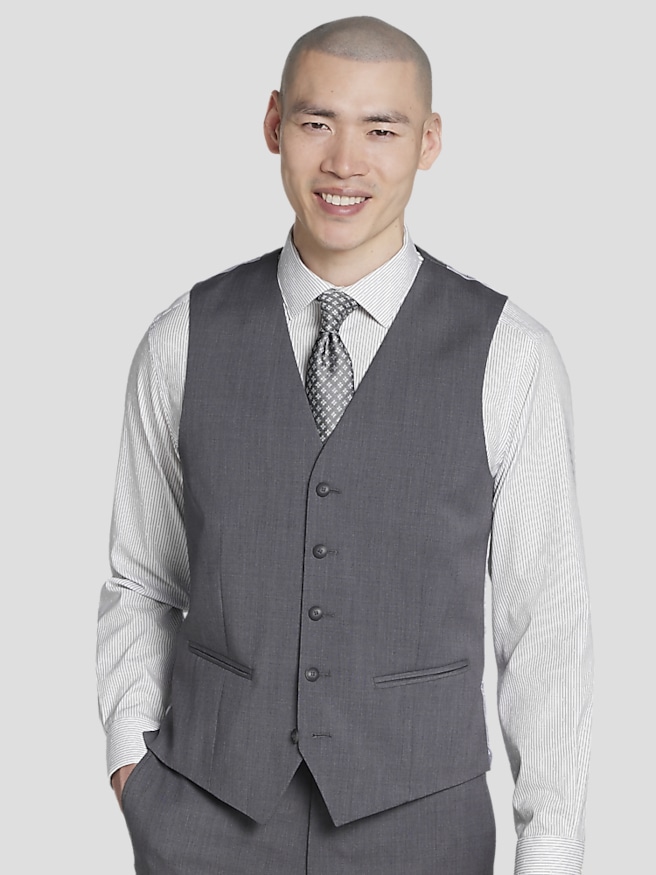
Styling a big and tall sweater vest starts with the neckline and the level of formality the day calls for. A V-neck frames a pointed shirt collar and leaves space for a tie knot, making it a natural companion for office attire, presentations, or a dinner where a collared shirt feels appropriate. A crewneck creates a more enclosed neckline and can give a patterned shirt a quieter role, with just the collar and cuffs providing contrast. Pullover styles offer an uninterrupted front, while button-front sweater vests introduce a vertical line and allow the front to be worn open or closed. Navy, charcoal, and black pair easily with white or light blue shirting; oatmeal, tan, and other softer neutrals work well with muted checks and textured trousers. A simple combination such as a navy vest, a white Oxford shirt, and gray trousers can look considered without relying on bold accessories. When the vest has a pronounced cable or rib pattern, a plain shirt keeps the textures from competing. Men who enjoy that raised knit detail can also explore Big and Tall Men's Cable Knit Sweaters for a full-sleeve approach to textured knitwear. For frequent wear, care habits help preserve the fit that made the vest comfortable in the first place. Follow the garment’s care label, including any instructions for hand washing, machine washing, or professional cleaning. When washing is permitted, gentle handling and the recommended water temperature help protect the fibers. Many knits benefit from being reshaped and dried flat when the label allows, since hanging a wet sweater vest can stretch the body. Folded storage helps prevent hanger marks at the shoulders. As a gift for a father, partner, brother, or friend, a sweater vest is especially thoughtful when it matches an established routine, such as wearing collared shirts to work or dressing up for family dinners. Confirming both size and preferred body length makes the choice more personal, while a familiar color and manageable care requirements help it become an easy part of the recipient’s wardrobe.