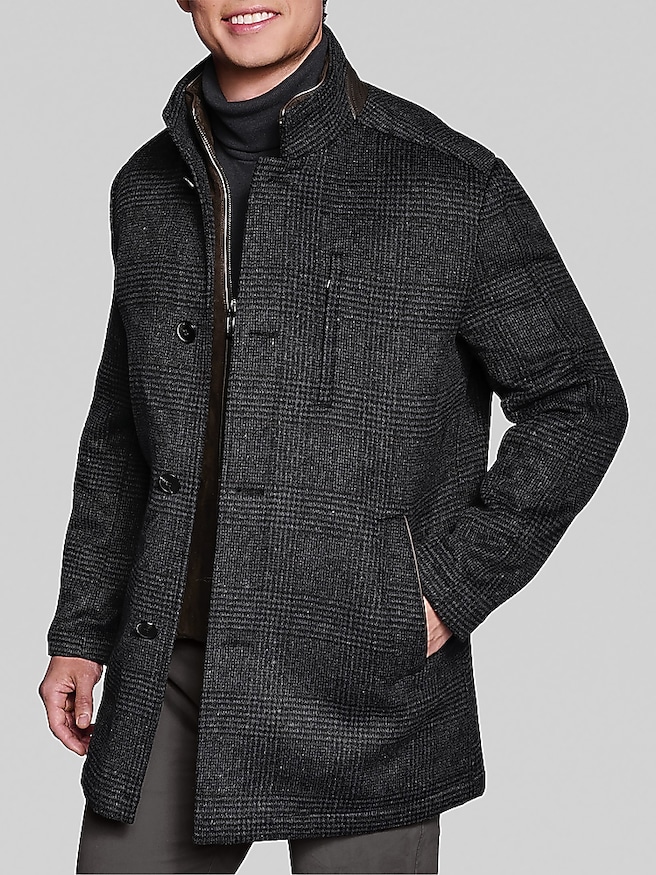
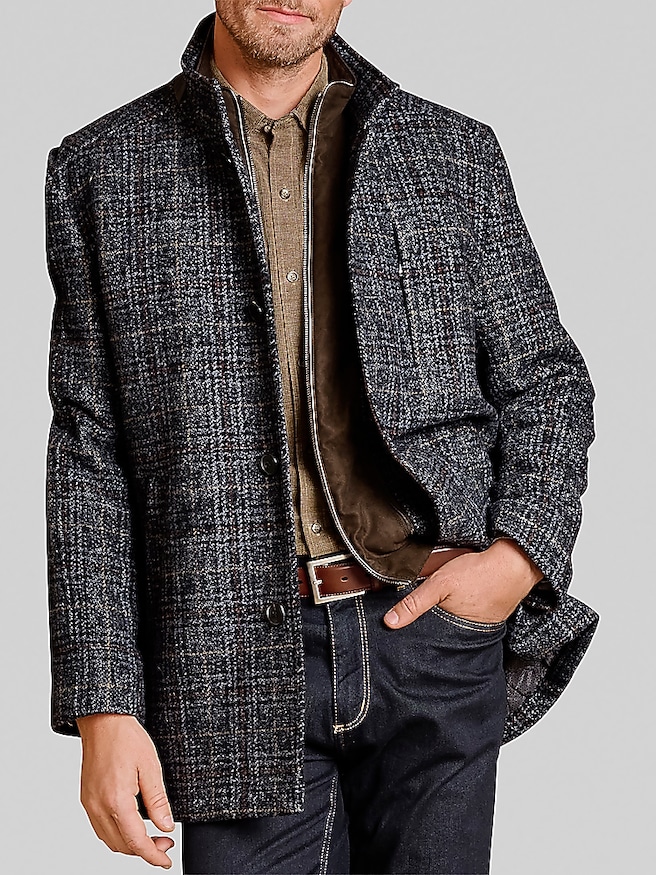
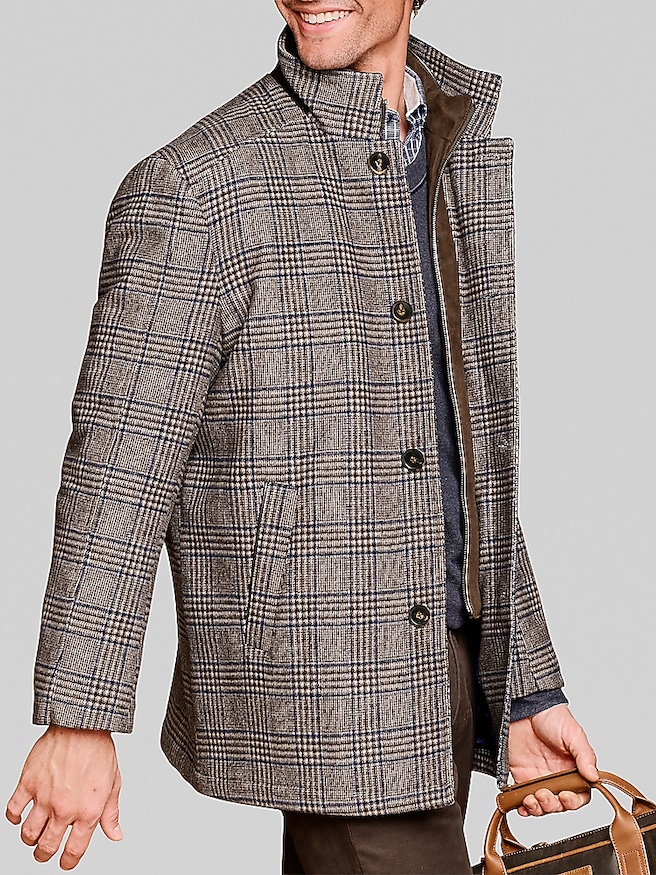
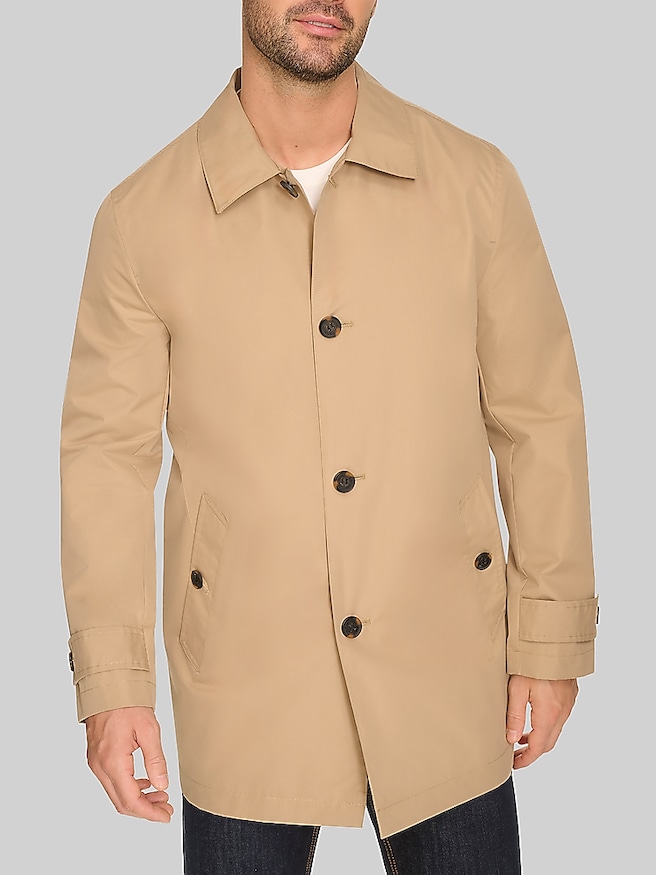
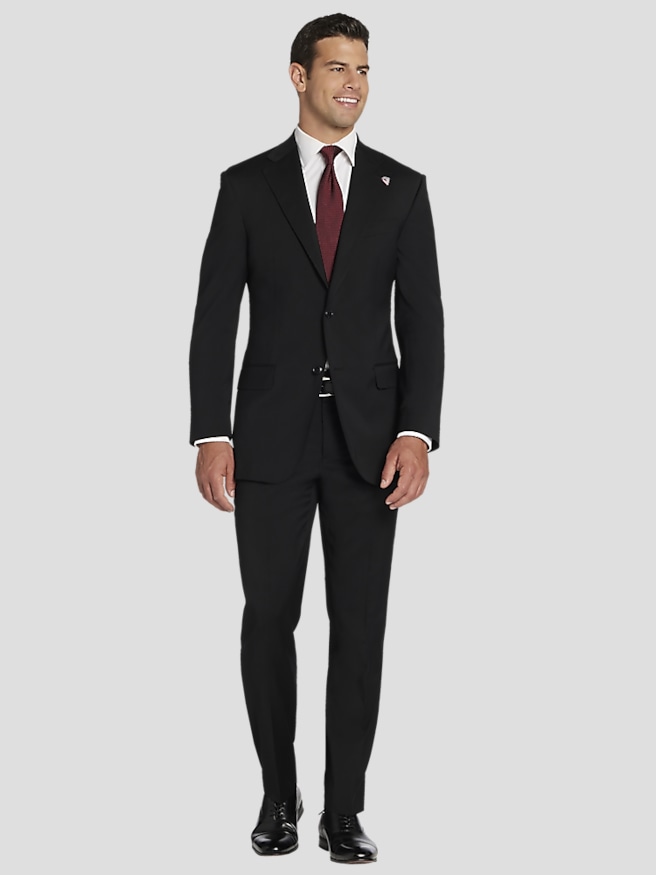
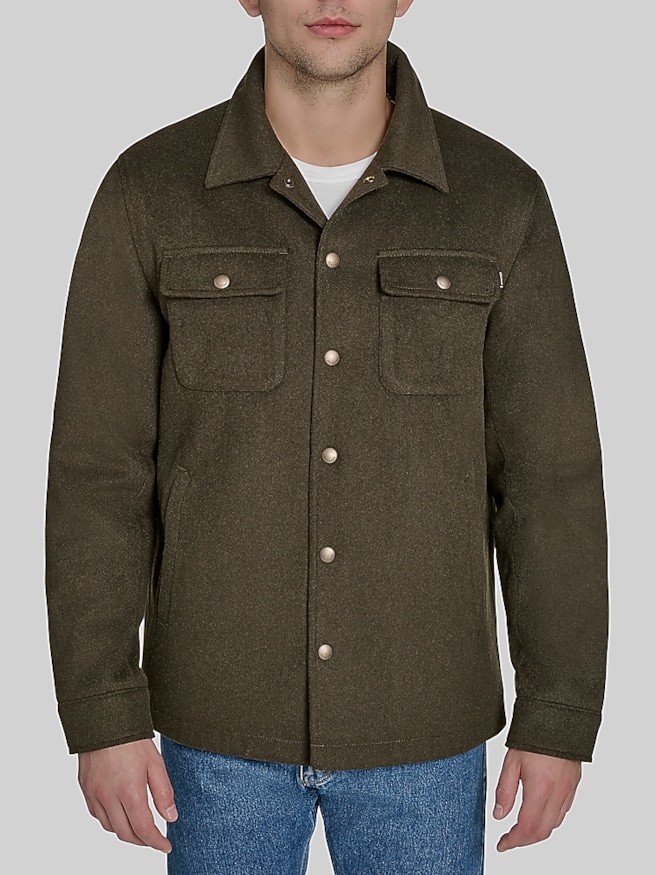
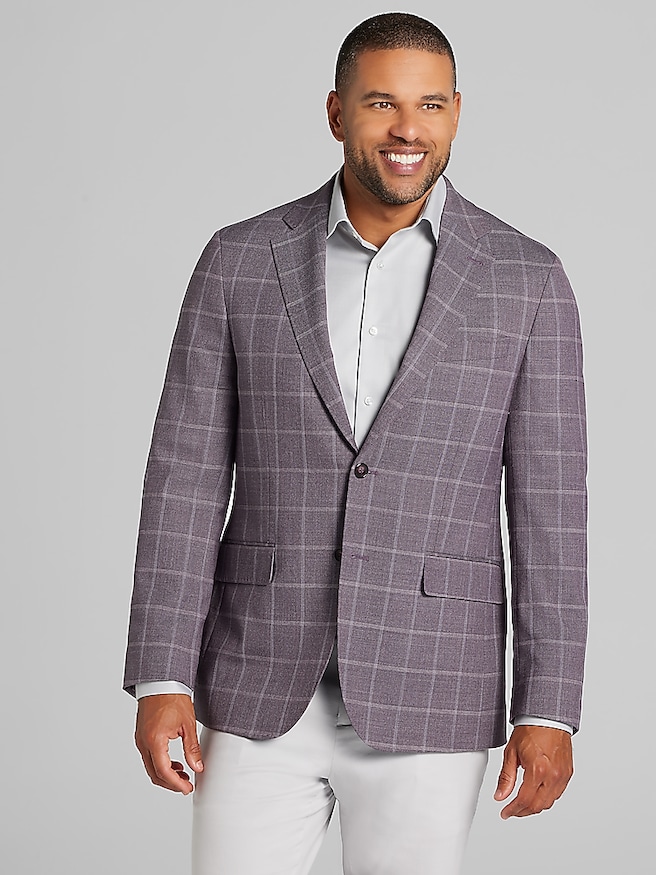
Big and tall men's wool coats combine the warmth and texture of wool with proportions designed to accommodate a larger build, a taller frame, or both. They serve as an outer layer over office clothing, occasion wear, and everyday outfits, adding coverage without making a carefully chosen jacket or sweater feel crowded underneath. Wool's naturally crimped fibers trap insulating air, while the fabric's ability to absorb moisture vapor can help keep it comfortable through a mix of outdoor walks and indoor stops. Construction matters as much as fiber content: a dense wool cloth generally blocks moving air better than an open weave, and a lining helps the coat slide over sleeves and knitwear. All-wool fabrics offer the fiber's distinctive hand and drape, while wool blends may incorporate other fibers for added strength, softness, or a different texture. The fiber label provides a clearer picture than appearance alone, since a smooth finish and a brushed surface can feel quite different even at similar weights. Heavier cloth can provide substantial coverage for extended time outside, but weight alone does not determine warmth; weave, lining, fit, and the layers underneath all contribute. Wool can handle a brief encounter with light moisture, though a wool coat should not be treated as waterproof protection for prolonged rain or wet snow. Silhouette also shapes how a coat works in daily life. A longer overcoat offers more coverage over a suit and along the legs, while a shorter coat can feel less restrictive when climbing into a vehicle or walking quickly between stops. Single-breasted fronts create a relatively clean line with less fabric overlap; double-breasted fronts add an overlapping layer and a more pronounced, tailored appearance. Charcoal, navy, camel, and black are familiar wool-coat colors because they coordinate readily with dress trousers, denim, leather shoes, and boots. Subtle herringbone or other woven texture can add visual depth without relying on a bold pattern.
Fit is especially important in big and tall wool outerwear because extra width and extra length address different needs. Big sizing generally emphasizes room through the body, while tall sizing typically adds length through the torso and sleeves; the exact measurements vary by cut and size chart. A taller man may need longer sleeves without substantial additional width, while a broader man may need more space across the chest, upper back, and waist without a longer hem. A well-proportioned coat accommodates those differences rather than simply scaling every measurement upward. On a structured coat with set-in sleeves, shoulder seams should sit near the natural shoulder line instead of hanging far down the upper arm. The front should close comfortably over the intended outfit, with no pronounced pulling around the buttons or tight horizontal lines across the back. There should also be enough freedom to reach for a steering wheel, hold a handrail, or sit down without the upper sleeves binding. Layering room is useful, but excessive volume can leave the coat looking loose and allow drafts through large openings. A coat worn mainly over a suit needs sufficient space for the jacket's shoulders and sleeves, along with enough length to cover its hem. One worn over a fine-gauge sweater can have a closer profile, provided movement remains comfortable. Collar shape and lapel width help establish the overall proportions, while a back vent can make a longer coat easier to move in. Pocket placement matters, too: hand pockets should be accessible without an awkward reach, and a phone or pair of gloves should not create a bulky outline that strains the fabric. For a more casual outfit, Big And Tall Wool Shirts can complement wool outerwear with an additional textured layer, leaving room to adjust the combination to the day's plans.
The appeal of a big and tall wool coat extends beyond a single dress code. Over a suit, its substantial fabric and defined shape provide a polished finish for a business meeting, an evening performance, or a wedding with time spent outdoors between venues. With a sweater, dark jeans, and boots, the same general category feels at home on a train platform, at dinner, or on a walk through town. Intended use helps determine which details matter most: a commuter may value easy movement and practical pockets, while someone who regularly wears tailoring may place greater emphasis on length, lapel shape, and how smoothly the coat falls over a jacket. A wool coat can also make a thoughtful gift for a father, partner, brother, or friend when his measurements and preferred layering habits are known; his usual shirt size alone may not establish the right outerwear fit. Lasting wear depends on both construction and care. Even stitching, secure buttons, a lining that does not pull, and neatly finished pocket openings are useful signs of careful assembly. Friction at cuffs, underarms, and pocket edges can gradually raise surface fibers, so some pilling is possible even with good wool cloth. Gentle brushing with a suitable garment brush helps remove surface dust, and occasional professional attention may be appropriate for more persistent marks or wear. The care label should govern cleaning, since wool coats often combine outer fabric, lining, interfacing, and trims with different care requirements. Machine washing or high heat can distort some constructions. Between cleanings, a broad, supportive hanger helps maintain the shoulders, and enough closet space prevents the coat from staying compressed. If the fabric becomes damp, letting it air-dry away from direct heat protects its shape. Emptying pockets before hanging also reduces unnecessary strain. These small habits help preserve the drape, texture, and clean outline that make a well-fitted wool coat useful across workdays and dressed-up occasions.