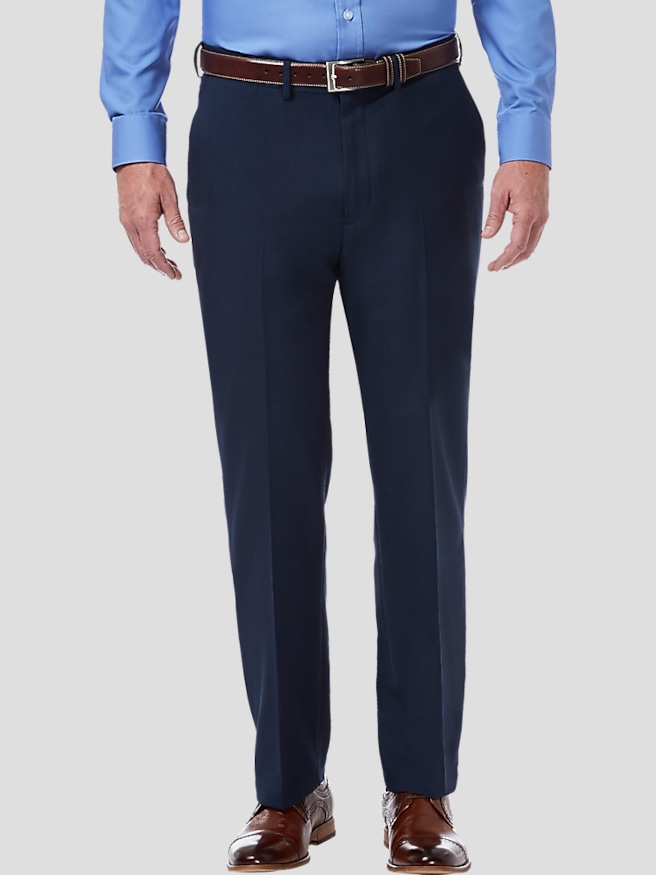
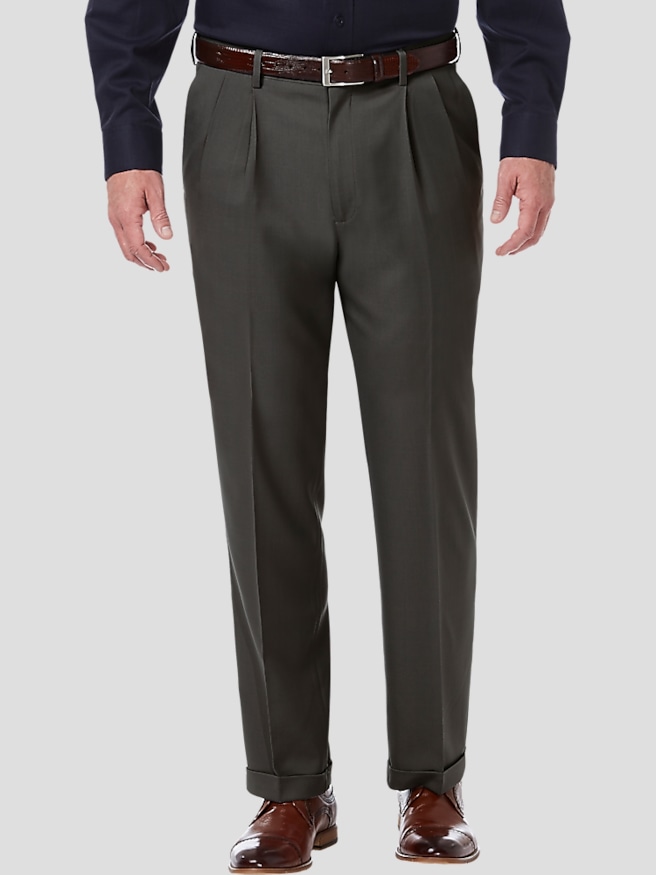
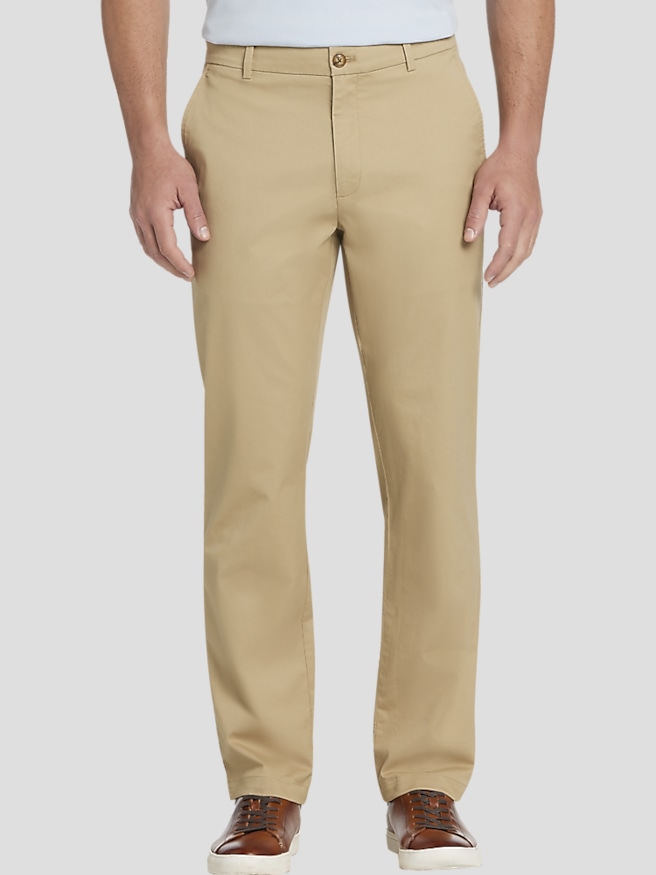
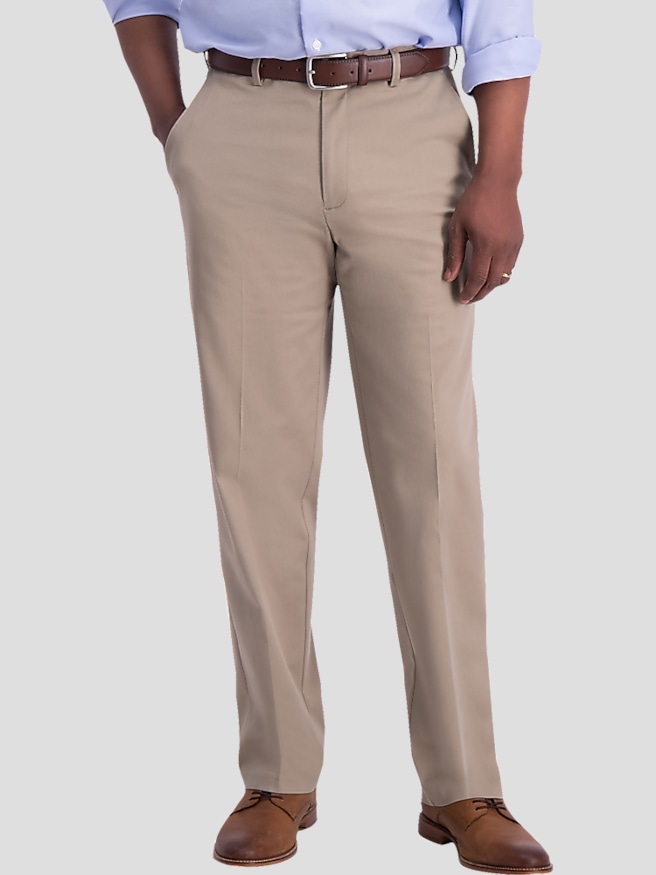
Big and tall men’s khaki pants bring a familiar, versatile look to wardrobes that need more than a standard waist size or inseam. Designed around larger or taller proportions, these pants can provide additional room through the waist, seat, and thighs, longer leg lengths, or a combination of those features. Big and tall sizing does not describe a single body type: a taller man may need extra length without extra width, while a broader build may call for more room through the seat without a longer inseam. The rise, measured from the crotch seam to the top of the waistband, also affects how comfortably pants sit when standing, walking, or settling into a desk chair. A well-proportioned pair rests securely at the intended waist position, with pockets that lie relatively flat and enough room to sit without pulling across the lap. Classic and relaxed cuts generally provide a roomier outline, while straight legs maintain a consistent shape from the knee toward the hem. A tapered leg narrows toward the ankle for a more defined silhouette, though the amount of room through the thigh still matters. Fit names vary, so measurements and the garment’s cut are more useful than the label alone. Khaki shades range from pale sand to deeper tan, giving these pants a neutral foundation that works with navy, white, charcoal, burgundy, and olive. The term khaki often describes the color, while chino commonly refers to a style of cotton-twill trousers; the two terms overlap but are not identical. That combination of understated color and a tidy silhouette makes big and tall khakis useful for business-casual offices, family gatherings, dinner reservations, and everyday plans that call for something more polished than jeans. They can anchor an outfit without drawing attention away from a patterned shirt, a textured sweater, or a well-fitted sport coat.
Fabric plays a substantial role in how big and tall khaki pants feel over a full day. Cotton twill is a familiar choice, recognized by its subtle diagonal weave and substantial yet pliable feel. Cotton-rich fabrics can soften with wear, while blends containing polyester may improve wrinkle resistance and help the fabric maintain its shape. A small amount of elastane or spandex can add give for bending, climbing stairs, and sitting through a long meeting or drive. Stretch is most useful when the underlying fit is already comfortable; it should support movement rather than compensate for a waistband or thigh that is too tight. Fabric weight matters as well. A heavier twill generally has a more structured appearance, while a lighter cloth may drape more softly. Neither weight alone guarantees durability, which also depends on the weave, stitching, construction, and care. Waistband construction deserves similar attention. A structured waistband creates a traditional trouser appearance, while designs with flexible sections may accommodate movement more comfortably. Belt loops should support a belt without bunching the fabric, and the closure should sit flat rather than strain. Front styling changes the overall impression, too. A flat front keeps the area below the waistband smooth and uncluttered; pleats introduce folds that can provide additional ease, depending on the cut. For a closer look at that streamlined style, men’s flat front khaki pants offer a related category to explore, with waist and inseam measurements remaining important to fit. Pocket placement and depth are practical considerations, especially for anyone carrying keys or a phone throughout the day. Overfilled pockets can distort an otherwise clean line, so a comfortable fit should leave room for everyday essentials without visible pulling. Strong seams, secure buttons, and neatly finished hems are useful construction details to consider in pants intended for frequent rotation. Together, these details influence whether a pair feels easy and looks composed from the first appointment to the trip home.
Styling big and tall men’s khaki pants starts with the level of polish an occasion requires. For an office with a business-casual dress code, a tucked-in button-down shirt and leather loafers create a straightforward combination, with a belt that complements the shoes. A navy sport coat adds definition for a presentation or a dinner where a full suit would feel unnecessary. For less formal plans, a polo or an untucked shirt with an appropriate hem length keeps the outfit relaxed without looking unfinished. Clean, low-profile sneakers can work with casual combinations, while derbies or loafers give the same khakis a dressier character. Hem length helps tie those choices together. A slight break allows the fabric to rest lightly on the shoe, while a shorter, carefully tailored hem produces a cleaner line with little or no folding. Excess fabric pooling at the ankle can make otherwise well-fitting pants appear oversized, particularly when the leg opening is wide. Checking the length with the shoes most often worn with the pants gives a more useful picture than judging the hem barefoot. For repeated wear, care should follow the garment’s label rather than a single rule for all khakis. Some cotton-rich fabrics can shrink with excessive heat, and stretch blends may require particular washing and drying settings. Prompt attention to spills, washing with compatible colors, and avoiding an overloaded machine can help preserve the fabric’s appearance. Removing washable pants promptly after drying and smoothing the seams before hanging can reduce unnecessary creasing. Pressing, when permitted, should use a setting appropriate to the fabric blend. Khakis can also make a practical gift for a father, partner, or adult son who prefers versatile clothing, especially when the recipient’s waist, inseam, and preferred rise are known. Whether worn at a desk, on a trip, or to a casual celebration, the most useful pair balances comfortable proportions, dependable construction, and a shape that fits naturally into an existing wardrobe.