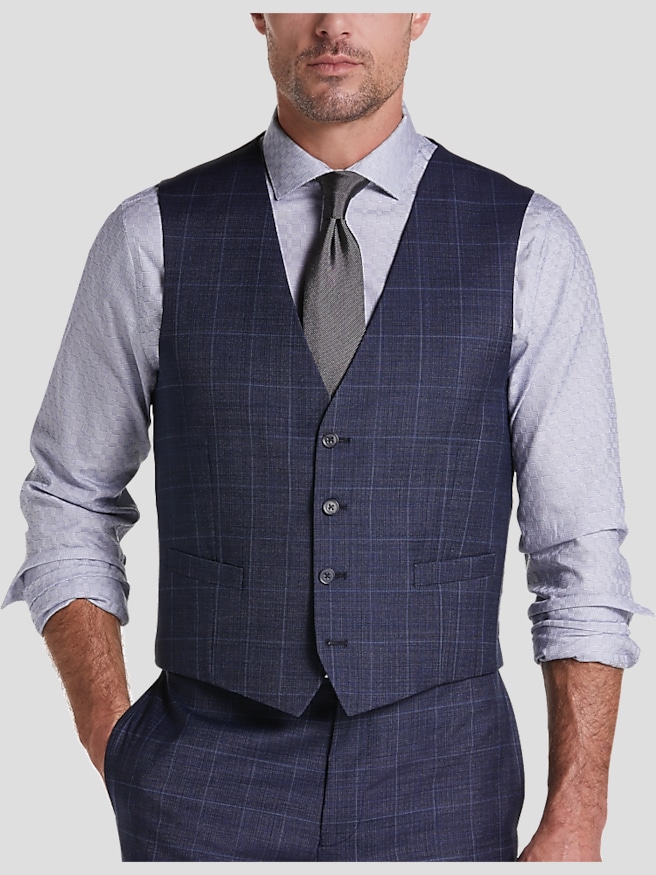
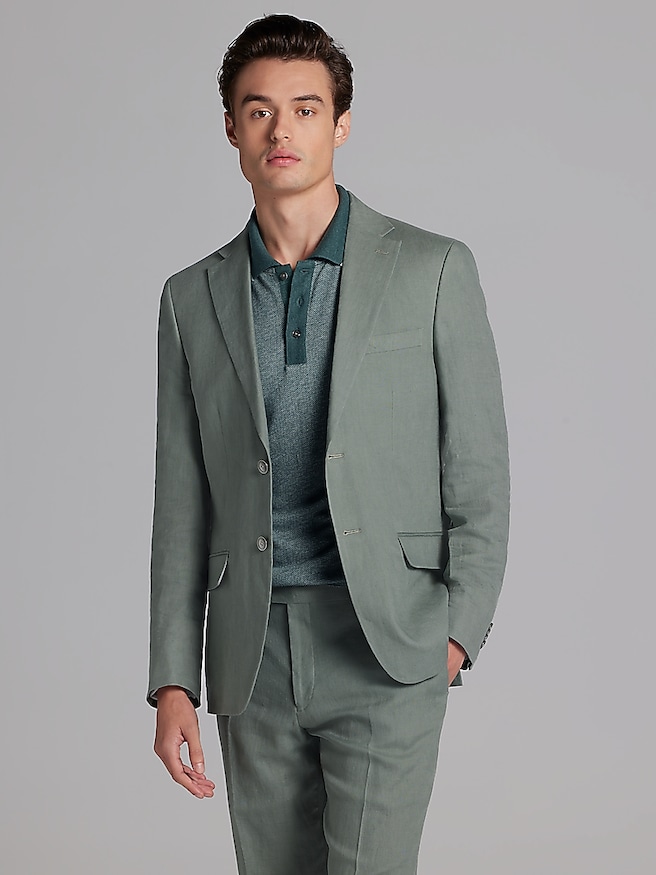
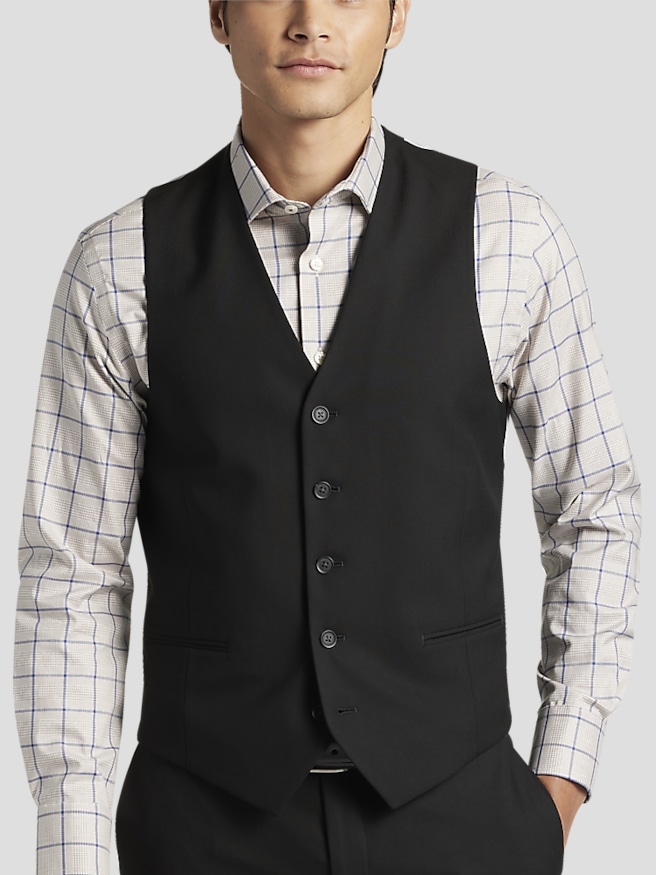
Beach wedding vests give a celebration by the water a tailored feel without losing the ease of the setting. Worn over a dress shirt, a vest creates a defined shape through the torso and keeps an outfit looking complete when a jacket comes off for dinner or dancing. That balance makes it a natural choice for a groom, a wedding party, or a guest whose invitation calls for dressed-up attire without the formality of a full three-piece suit. The setting still matters: a ceremony directly on the sand has a more relaxed character than a reception in a coastal ballroom, even when both overlook the same shoreline. A vest can connect those settings, adding structure to an otherwise simple shirt-and-trouser combination. Soft beige, stone, light gray, and muted blue sit comfortably against pale sand and wood decking, while navy and deeper gray create a stronger outline in photographs. Subtle texture can be just as expressive as color. A lightly slubbed weave has an easygoing character, while a smoother surface feels more polished alongside a crisp shirt and neatly pressed trousers. Matching the vest to the trousers produces a continuous, suit-like appearance; a considered contrast makes the vest more prominent. For wedding parties, a shared color family can bring the group together without requiring every person to wear an identical shade from neck to shoe. The groom might wear a vest that matches the suit while attendants echo its tone through their trousers or accessories. In photographs taken along a boardwalk or beside a dune, these small connections tend to look intentional without competing with the surroundings. Beach wedding vests work best as part of a complete outfit, with the invitation’s dress code, the ceremony location, and the couple’s preferences shaping how relaxed or formal that outfit feels.
Fabric and construction influence how a vest feels throughout a celebration, especially when the schedule includes standing for a ceremony, sitting through dinner, and spending time on the dance floor. Linen has a distinctive texture and a relaxed drape, with natural creasing that belongs to its character rather than signaling poor care. Linen blends can soften that effect, though their feel and wrinkle behavior depend on the fibers and proportions involved. Cotton offers a familiar hand and can suit less formal combinations, while lightweight wool can provide a smoother finish, useful recovery, and a clean line with tailored trousers. Fabric weight alone does not tell the whole story: the weave, lining, and amount of internal structure also affect comfort and movement. A fully lined vest may glide neatly over a shirt, while a less structured design can feel more flexible. Fit deserves equal attention because a vest sits close to the body and makes pulling or excess fabric easy to see. The front should lie smoothly when buttoned, without strain radiating from the buttons or loose folds collecting around the waist. Armholes need enough room for reaching across a table or greeting another guest, but should not gape noticeably away from the shirt. Shoulder sections should rest flat, and the neckline should frame the shirt collar rather than crowd it. Length is particularly important with wedding attire: the vest and trouser waistband should meet cleanly so that a strip of shirt does not interrupt the outfit when standing naturally. A rear adjustment strap can refine the waist, but it cannot correct a vest that is fundamentally too narrow through the chest or too long through the body. Sitting down during a fitting gives a more realistic sense of comfort than standing in front of a mirror alone. For a wedding party with a range of builds, consistent color and fabric can create cohesion while each person wears a size and cut suited to their proportions.
The strongest combinations give the vest a clear role rather than asking every part of the outfit to stand out. With a textured vest, a plain dress shirt keeps the look balanced; with a smooth, solid vest, a restrained tie pattern can add interest without making the outfit busy. A vest can also complete the look of Beach Wedding Suits For Men, carrying the suit’s color through the torso or introducing a complementary shade. When mixing separate pieces, close-but-not-matching colors deserve attention in natural light, since two pale grays or sandy neutrals may have noticeably distinct undertones. Either a convincing match or a deliberate contrast usually looks more resolved than an almost-match. Shirt fabric matters, too: bulky material can bunch beneath a close-fitting vest, while a well-fitting shirt helps maintain a smooth line at the waist and armholes. Footwear should reflect both the dress code and the walking surface, whether the celebration involves a paved terrace, wooden steps, or a sandy approach. After the event, thoughtful care helps preserve the vest’s shape and finish for another occasion. The care label remains the best reference for cleaning, since washable fibers do not necessarily mean that the lining, backing, and internal construction can tolerate machine washing. Prompt attention to spills, gentle airing after wear, and storage on a supportive hanger can reduce unnecessary wear. For travel, a vest benefits from being packed with its front panels lying flat rather than tightly folded around shoes or accessories. Any steaming or pressing should follow the garment’s care directions, with particular attention to heat-sensitive linings and decorative details. Secure buttons, tidy stitching, and a smooth lining are worth checking before the next event. Beyond the wedding, a versatile vest can return to service for an anniversary dinner, a dressed-up gathering, or another celebration where a little tailoring feels appropriate. Its lasting appeal comes from that combination of shape, texture, and usefulness: enough polish for a meaningful occasion, with room to become part of a broader wardrobe.