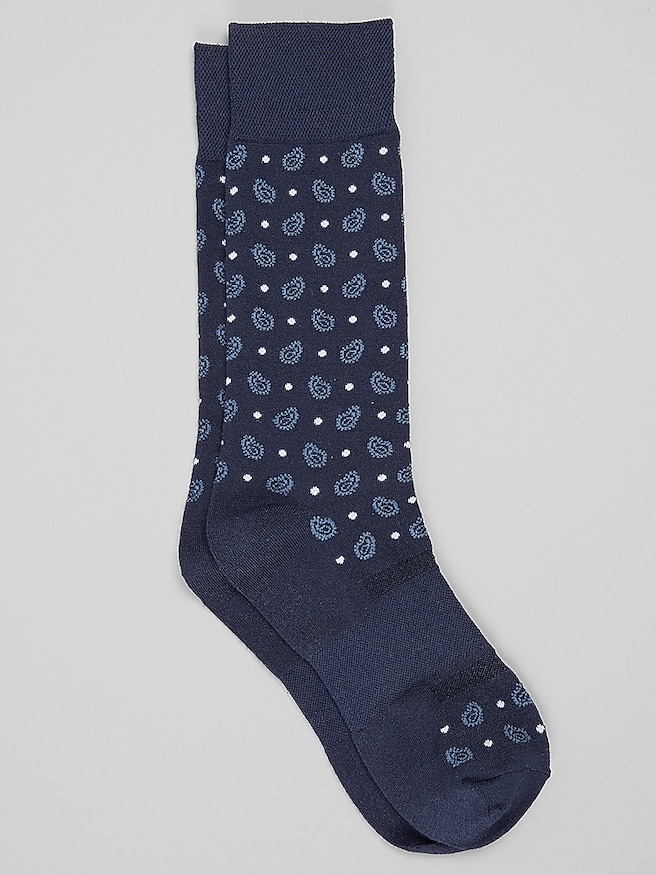
Argyle socks feature a repeating pattern of diamond shapes crossed by thin diagonal lines, creating a layered geometric design with roots in Scottish tartan traditions. The filled diamonds give the pattern its blocks of color, while the intersecting lines add contrast and movement. Long associated with golf attire and classic menswear, argyle brings recognizable character to an otherwise understated part of an outfit. A glimpse of diamonds beneath a trouser cuff can connect the colors of a shirt, sweater, or jacket without making every piece match. Navy and gray combinations sit naturally beneath charcoal trousers, while burgundy, forest green, or muted gold can add a richer accent to brown shoes and neutral tailoring. A pair with one color close to the trousers creates a quieter effect; stronger contrast makes the pattern more noticeable when seated or walking. The size of the diamonds matters, too. Smaller repeats tend to look more restrained, while larger shapes give the design a bolder, more graphic presence. Fine diagonal lines can introduce an additional color without giving it the same visual weight as the main diamonds. That balance makes argyle adaptable to both a business wardrobe and more relaxed combinations of chinos, denim, loafers, and lace-up shoes. With a pinstriped suit or checked shirt, a smaller-scale argyle pattern in related colors can keep the overall look cohesive. With solid clothing, a more pronounced diamond pattern has room to stand out. Argyle also occupies a distinctive place among Patterned Socks: its structured geometry feels familiar enough for traditional tailoring, yet its color combinations allow plenty of individual expression. The same recognizable motif can read as subtle or playful depending on the contrast, scale, and clothing around it. For someone who usually wears solid socks, a two-tone or closely shaded argyle offers a measured change rather than a dramatic departure. A brighter combination can serve as a deliberate accent beneath a simple suit, especially when the rest of the outfit stays clean and understated.
The feel of argyle socks depends on their fiber blend, knit construction, and fit as much as their appearance. Cotton is often chosen for its softness and breathability, though the way a cotton blend handles moisture depends on the other fibers and the fabric’s construction. Merino wool can provide a soft feel and moisture management, while nylon or polyester may contribute strength, shape retention, or quicker drying. A small amount of elastane adds stretch that helps the sock follow the foot and recover after wear. Fiber percentages offer useful information, but they do not tell the whole story: two socks with similar compositions can feel noticeably different because of yarn thickness, stitch density, and finishing. A smooth, fine-gauge knit generally fits more easily inside close-fitting dress shoes, while a thicker construction takes up more space and may feel better in roomier footwear. Cushioning beneath the heel or ball of the foot can add comfort during extended standing, provided it does not make the shoe feel tight. Toe seams are another small detail with a noticeable effect, particularly in shoes with a snug toe box. A flatter seam can reduce bulk across the toes, and reinforced heels and toes can help the areas that receive the most friction withstand repeated wear. Correct sizing keeps these features where they belong. The heel section should sit at the heel rather than pull toward the arch or bunch above it, and the toes should have room without loose fabric folding underneath. The cuff should hold securely without digging into the leg. Crew and mid-calf lengths work with many everyday combinations, while over-the-calf socks offer more coverage beneath tailored trousers, especially when seated. A well-fitting pair also keeps the diamonds from stretching excessively or twisting around the leg. Consistent coverage, comfortable stretch, and a stable fit make the pattern look intentional throughout a day of commuting, meetings, or time on foot, rather than only when first getting dressed.
Argyle socks suit occasions where a little personality belongs alongside polished clothing. In an office, a restrained palette can complement a suit without competing with a patterned tie. At a wedding, coordinated colors can give a groom or groomsmen a shared detail that appears when trouser hems lift, while still respecting the event’s dress code. For dinner out or a family celebration, a more colorful pair can enliven plain trousers and simple shoes without requiring another accessory. Their familiar pattern also makes them a practical gift for a father, brother, partner, graduate, or colleague who enjoys classic clothing. A recipient’s usual wardrobe offers a better starting point than color alone: someone who wears navy tailoring may get frequent use from blue and gray diamonds, while someone drawn to earth tones may prefer brown, olive, or burgundy combinations. The right size, preferred sock height, and sensitivity to particular fibers matter just as much as the design. Care helps preserve both the fit and the crisp appearance of the pattern. The care label should determine washing and drying methods, especially for wool blends or constructions with specific requirements. Turning socks inside out can reduce surface abrasion, and washing with similar colors helps limit unwanted color transfer. Excessive heat can affect elastic fibers and may cause some materials to shrink, so drying methods deserve the same attention as washing. Rough contact with exposed zippers or hook-and-loop fasteners can snag yarns and leave the diamond pattern looking uneven. Keeping toenails smooth and allowing shoes to dry between wears can also reduce avoidable wear and friction. Rotating pairs spreads repeated use across the drawer, while storing socks together without tightly stretching one cuff over the other avoids unnecessary tension. With thoughtful construction, a suitable fit, and consistent care, argyle socks can become a dependable part of a wardrobe, offering a recognizable pattern that works with familiar clothing in a variety of settings.