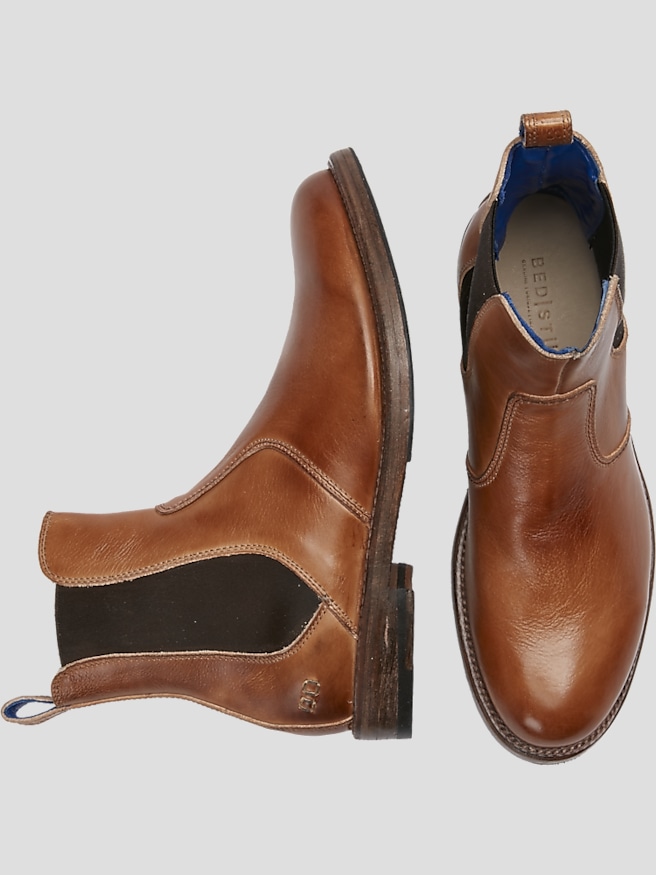
Ankle boots for men bridge the space between low-cut shoes and taller boots, with a shaft that sits at or just above the ankle and a shape that works with many everyday outfits. Their appeal comes from proportion: there is enough height to give jeans or trousers a defined finish without the coverage of a full-height boot. Within the broader category of boots for men, ankle-height styles range from smooth, close-fitting silhouettes to substantial lace-ups with textured soles. Chelsea boots have elastic side panels and a pull-on design, creating an uninterrupted line that looks especially clean beneath tapered trousers. Chukka boots usually have two or three pairs of eyelets, open lacing, and a simpler upper that can feel relaxed in suede or more polished in smooth leather. Military-inspired ankle boots bring visible lacing, heavier stitching, and a sturdier profile to casual outfits. These distinctions matter more than the category name alone. A slim black leather boot with restrained stitching can complement dress trousers and a sport coat in an office where tailored separates are customary, while a rounded suede chukka feels at home with chinos and an untucked button-down. Dark denim, a plain T-shirt, and a structured jacket give a heavier lace-up boot enough visual weight to look balanced. Brown shades create a softer contrast with navy, olive, and denim; black keeps the overall effect sharper and more uniform. The trouser opening also shapes the result. A hem that falls neatly over the boot shaft leaves a continuous line, while fabric that bunches heavily around the ankle can hide the details and make the outfit look less intentional. For dressier settings, a modest heel, subtle sole edge, and clean toe generally pair more easily with tailoring than pronounced tread or oversized hardware. Ankle boots can suit dinners, office days, and casual gatherings, though traditional formal dress codes may call for dress shoes instead.
Materials and construction influence how men's ankle boots look, feel, and hold up to repeated wear. Smooth leather offers a defined surface that can be polished or left with a more understated finish, depending on the leather and its treatment. Full-grain leather retains the hide's natural surface and may develop visible character with use, although the leather grade alone does not determine the quality of the whole boot. Suede has a napped texture that softens the appearance of otherwise structured clothing, making it a natural companion for denim, chinos, and textured trousers. Nubuck has a finely buffed outer surface and a velvety feel, but it requires care suited to its finish rather than ordinary shoe polish. Synthetic uppers vary widely in flexibility and breathability, so their construction and care requirements deserve attention alongside appearance. Inside the boot, lining texture, seams, cushioning, and footbed shape all affect comfort. A padded footbed may soften each step, but padding cannot compensate for a toe box that presses against the toes or an instep that feels pinched. A comfortable fit leaves room for the toes to move while keeping the foot secure through the heel and midfoot. Trying boots with the socks intended for regular wear gives a more useful sense of fit than relying on a familiar size alone. Feet can become slightly fuller over the course of a day, and walking across a firm surface helps reveal pressure that may not be noticeable while seated. Chelsea boots depend on the shape of the upper and elastic panels for their hold; lace-up styles allow more adjustment across the instep. Slight movement at the heel can occur in a new pull-on boot, but repeated lifting, rubbing, or forward sliding suggests a mismatch. Leather may soften with wear, yet boots that feel painfully tight should not be expected to become comfortable simply through use. Sole design matters, too: low-profile soles keep the appearance refined, while deeper tread adds visual bulk and can provide grip depending on the compound and surface.
Durability comes from the relationship between the upper, sole, stitching, and everyday use rather than any single feature. Even stitching, securely attached heels, neatly finished edges, and reinforced areas around lace eyelets are useful signs of thoughtful construction. Welted or stitchdown construction may allow resoling when the upper remains sound, while some cemented soles are more difficult to replace; repair options depend on the boot's design and a cobbler's assessment. Rubber outsoles often make sense for walking between appointments or spending substantial time on hard floors, although traction and cushioning vary by sole composition. Leather soles have a traditional dress-shoe appearance and a distinct feel underfoot, but they require their own maintenance and may feel less forgiving on long walks. A rugged-looking ankle boot is not automatically protective footwear. Jobs with safety requirements call for verified features and the appropriate ratings, not simply a thick sole or reinforced-looking toe. For everyday pairs, consistent care helps preserve both the finish and the shape. Surface grit can wear against leather and seams, so a soft brush or cloth is useful after wear. Smooth leather generally benefits from a compatible cleaner and occasional conditioning according to the manufacturer's directions; testing a treatment on a discreet area helps avoid an unwanted color change. Suede and nubuck need tools and treatments made for their texture, since conventional polish can flatten the nap or alter the finish. Letting boots air out between wears, keeping them away from direct heat, and using properly fitted shoe trees can help manage moisture and maintain their form. Storage with enough space around the shafts prevents unnecessary creasing and scuffing. Ankle boots also make a thoughtful gift for someone building a work wardrobe, replacing a well-worn everyday pair, or favoring footwear that crosses between casual and tailored outfits. The most personal choice reflects the recipient's usual trouser shapes, preferred colors, fastening preferences, and fit needs. A pair that feels comfortable and works with clothing already in regular rotation is more likely to become a lasting wardrobe staple.