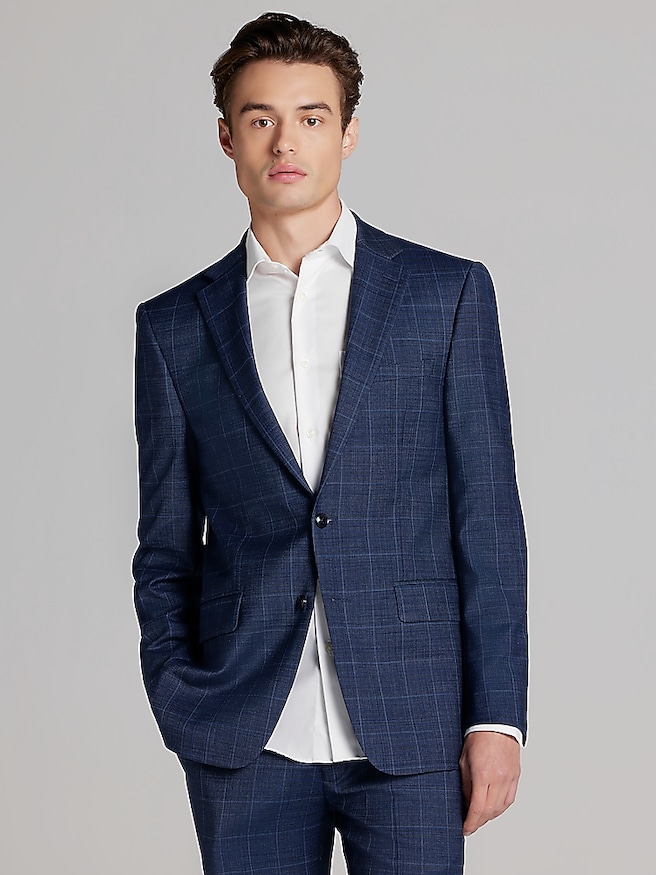
Affordable designer suits bring a designer’s point of view to the coordinated jacket and trousers at the center of a polished wardrobe. That influence may appear in a sharply defined shoulder, a distinctive lapel shape, a clean trouser line, or a subtle fabric pattern rather than an obvious logo. For men dressing for work, weddings, interviews, or milestone celebrations, the appeal is a complete look with a clear sense of proportion. A matching suit creates visual continuity from shoulder to hem, giving even a simple shirt and tie a finished appearance. Navy and charcoal are versatile foundations because they work with a broad range of shirt colors and accessories, while medium gray offers a lighter visual effect without feeling casual. A fine pinstripe or restrained check adds interest that becomes more noticeable up close, making texture and pattern part of the design rather than a distraction. Fit determines how those details read on the body. A jacket should sit smoothly across the shoulders, with a collar that rests against the shirt rather than pulling away from the neck. The front should close without pronounced pulling around the button, and the sleeves should allow comfortable movement without excess fabric gathering at the upper arm. Slim silhouettes typically follow the torso and taper through the leg; more generous silhouettes provide additional room through the chest, seat, and thighs. Neither approach needs to feel restrictive or oversized. Trouser rise, jacket length, and the amount of fabric resting on the shoes all affect the overall balance. Someone who spends much of the day seated may appreciate room through the waist and thigh, while someone moving between meetings and presentations needs a jacket that stays composed when standing, walking, and reaching. Alterations can refine sleeve length, trouser hems, and some aspects of the waist, but a sound fit through the shoulders provides the strongest starting point. The result is a suit that looks intentional in a conference room and feels comfortable through the reception afterward.
Fabric and construction help determine how a designer suit feels over a full day and how well it holds its appearance with repeated use. Wool is a traditional suiting material because it drapes cleanly, allows moisture vapor to pass through, and has natural resilience that helps wrinkles relax between wears. Wool blends combine those characteristics with other fibers, though the balance depends on the fabric’s actual composition. Polyester can contribute durability and wrinkle resistance, while a small amount of elastane can add stretch. Stretch does not replace proper fit: fabric under constant tension can still pull across the jacket front or strain at the trouser pockets. Linen and cotton create distinctive textures and a less formal impression, with creasing that is often part of their character rather than a flaw. The outer fabric is only part of the experience. Jacket lining, internal structure, and seam finishing influence how easily the garment moves over a shirt and how smoothly the front hangs. A more structured jacket can emphasize a defined chest and shoulder, while softer construction creates a more relaxed outline. Neither is automatically better; the intended setting and the wearer’s preferences matter. For a suit worn frequently, even stitching, neatly finished seams, and fabric that recovers after sitting are useful qualities. Care also affects longevity. The garment’s care label should determine the cleaning method, since fibers, linings, and internal components may have different requirements. Between professional cleanings, a broad, shaped hanger supports the jacket’s shoulders, and trousers stored without bunching are less likely to develop stubborn creases. A gentle clothing brush can remove surface dust, while time hanging in a ventilated space helps the fabric recover after wear. Heavy pressure from a household iron can leave shine on some suit fabrics, making careful pressing important. Prompt attention to loose buttons and minor seam issues helps prevent small problems from becoming more noticeable damage. These habits preserve the silhouette and surface finish that give a well-made suit its character.
The most useful affordable designer suits also make sense for the occasions in a man’s life. For an interview, a solid suit with a light-colored dress shirt, restrained tie, and polished leather shoes keeps the emphasis on the person wearing it. In a workplace where tailoring is part of the routine, subtle changes in shirts, ties, and pocket squares can give the same suit a distinct appearance without disrupting its professional character. A textured tie against a smooth fabric creates quiet contrast; a patterned shirt works best when its scale remains visually separate from any pattern in the suit. Wedding guests can use the invitation’s dress code and venue as context, with the understanding that a conventional suit does not replace a tuxedo when black tie is required. For a less formal celebration, an open-collar shirt can soften the effect while preserving the clean lines of the jacket and trousers. Prom calls for a similar balance between personal expression and a cohesive outfit, and Designer Prom Suits connects that interest in design with a milestone occasion. A distinctive color or fabric can carry the look without every accessory competing for attention. Comfort deserves equal consideration at events involving photographs, a seated meal, and time on the dance floor. Sleeve length, a secure trouser waist, and a hem that clears the floor contribute as much to an assured appearance as decorative details. As a gift for a graduate, spouse, or someone beginning a new professional role, a suit is particularly personal because measurements and preferred silhouette matter. The recipient’s participation helps align the fit and design with how the suit will actually be worn. Across these settings, the strongest choices share a practical foundation: fabric suited to the intended use, proportions that complement the wearer, and details that remain appealing beyond a single event. Designer character is most convincing when it supports that foundation, creating a finished outfit that feels considered rather than overworked.