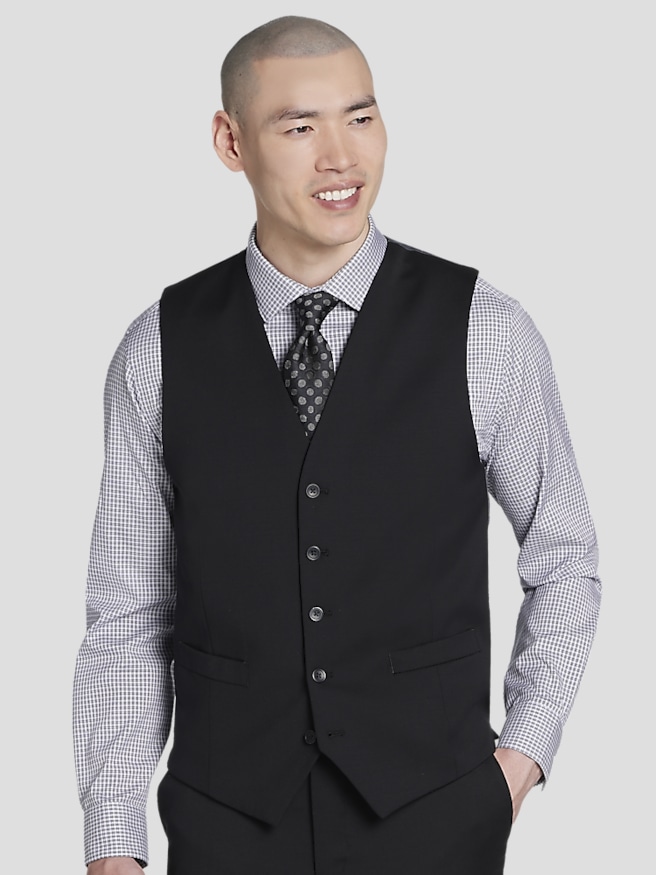
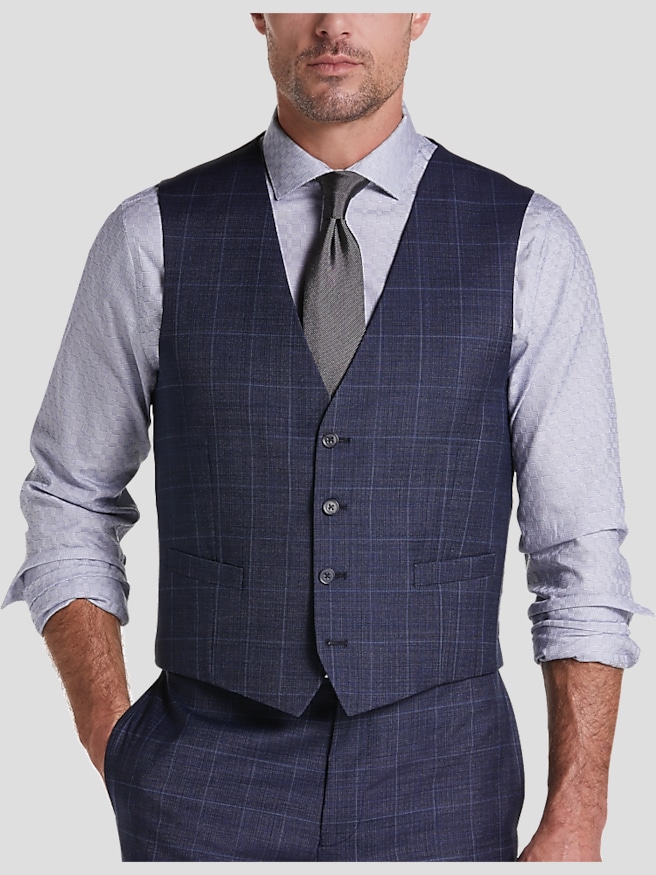
4XLT vests are designed for big and tall proportions, combining a generous fit through the torso with added body length. The size designation generally means 4XL Tall, but exact chest measurements, waist measurements, and finished lengths vary by maker and cut. That distinction matters: a vest can have enough room around the chest yet still sit too high at the waist, leaving a strip of shirt visible above the trousers. A tall cut addresses length as well as width, helping the front and back sit in proportion on a longer frame. The category includes tailored dress vests, often called waistcoats, along with casual zip-front and button-front layers. Each serves a slightly different purpose, from completing a three-piece suit to adding pockets and structure over a knit shirt. For a dress vest, the front should generally cover the trouser waistband while lying smoothly across the chest and stomach. Buttons should fasten without pulling the fabric into horizontal lines, and the armholes should allow comfortable movement without exposing excessive shirt fabric at the sides. A useful fit check is to sit in a chair, reach forward, and stand again; the vest should remain comfortable rather than climb noticeably up the torso. Casual styles typically need more room for the layer underneath, especially when worn over a substantial knit or an overshirt. Measurements taken over the intended base layer provide a more useful comparison than relying on a familiar size alone. Shoulder placement also deserves attention, since overly broad shoulders can make a vest look oversized even when the body fits. For someone comparing adjacent sizes, 3XLT Vests offer another sizing reference, but the decision should come from the relevant size chart rather than an assumption that every cut fits alike. The goal is enough space to move, with a length and silhouette that look deliberate.
Fabric and construction give 4XLT vests much of their character. Wool and wool-blend dress vests can provide a refined surface and natural drape, making them suitable companions to tailored trousers and jackets. A smooth worsted texture reads more formally than a pronounced weave, while a subtle herringbone or textured finish adds visual depth without needing a bold pattern. Synthetic blends may contribute shape retention and wrinkle resistance, although performance depends on the fabric composition and construction rather than the fiber name alone. A small amount of stretch can make sitting and reaching more comfortable, but it cannot compensate for a vest that is too narrow through the middle. Cotton twill, knit fabrics, and fleece give casual vests a more relaxed feel, with differences in weight, surface texture, and flexibility that affect how they sit over another layer. Quilted designs introduce additional volume, so their fit should be assessed with that construction in mind. The back of a dress vest matters as much as the front: some designs use a smooth lining fabric, while others continue the main fabric around the body. That detail becomes especially noticeable when a jacket comes off at a reception or during a long workday. An adjustable back strap can refine the waist slightly, but tightening it too far may create bunching rather than a clean shape. For coordinated tailoring, a vest made from the same cloth as the jacket and trousers produces the most consistent result. When combining separates, an intentional contrast usually looks more considered than two nearly matching shades with visibly different textures. A charcoal vest with lighter gray trousers, for example, makes the contrast clear. Navy, gray, black, and brown also provide versatile starting points for shirts and accessories. A patterned tie can supply the focal point against a plain vest, while a textured vest often benefits from a simpler shirt and tie combination. Under a jacket, the vest should add definition without making the chest or armholes feel crowded.
The best use for a 4XLT vest depends on both the setting and the way it fits into an existing wardrobe. For office presentations, wedding celebrations, dinners, and other occasions involving tailored clothing, a dress vest helps maintain a finished appearance even without a jacket. Formal events still call for attention to the stated dress code; an everyday waistcoat is not automatically a substitute for the components of formal evening attire. For less structured outfits, a casual vest can frame a collared shirt, polo, or simple knit without the bulk of a full jacket. Pocket placement can make a practical difference during an active day, but loading the pockets with a phone, keys, and a thick wallet may distort the front. Keeping heavier belongings elsewhere preserves the line of a tailored vest and reduces strain on pocket openings. Durability is worth considering at those stress points, along with secure button stitching, neatly finished seams, and a zipper that operates smoothly without catching the surrounding fabric. Care should always follow the sewn-in label, particularly when the shell, lining, and trim contain different fibers. Some tailored fabrics require professional cleaning, while certain casual fabrics permit machine washing; neither method should be assumed from appearance alone. Prompt attention to marks, gentle handling, and appropriate cleaning help protect both color and shape. A light brushing can remove surface lint from suitable tailored fabrics, and a hanger that supports the shoulders helps a woven vest retain its form between wears. Knit vests may be better stored folded to limit stretching. Excessive heat can affect synthetic fibers, elastic components, and some finishes, making care-label guidance especially important when drying or pressing. As a gift, a vest works best when the recipient’s measurements, preferred fit, and usual clothing choices are known. Someone who regularly wears tailored trousers may appreciate a dressier silhouette, while someone who favors polos and denim may get more use from a relaxed layer. In either case, comfortable movement, balanced proportions, and fabric suited to the intended outfit matter more than the size label by itself.