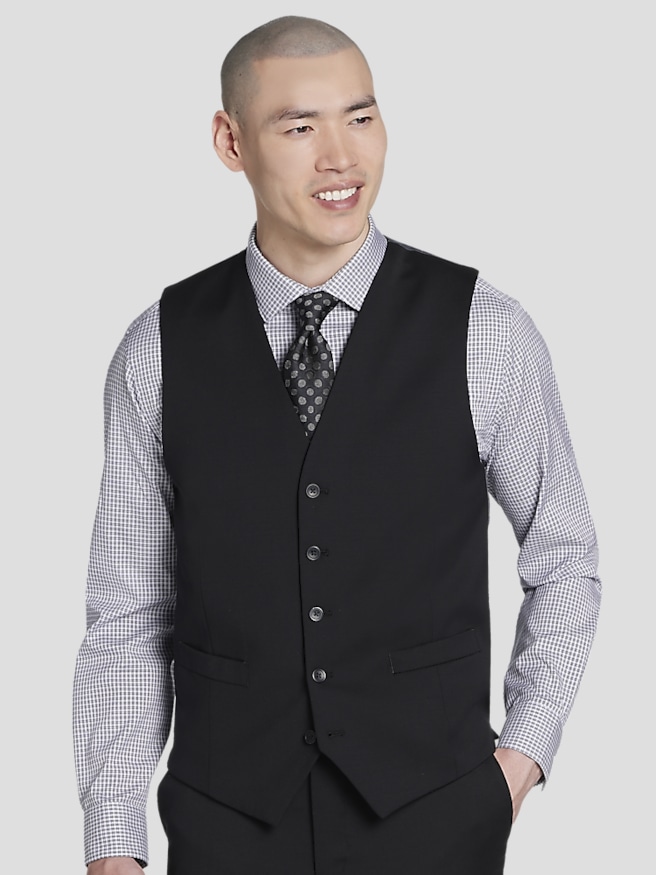
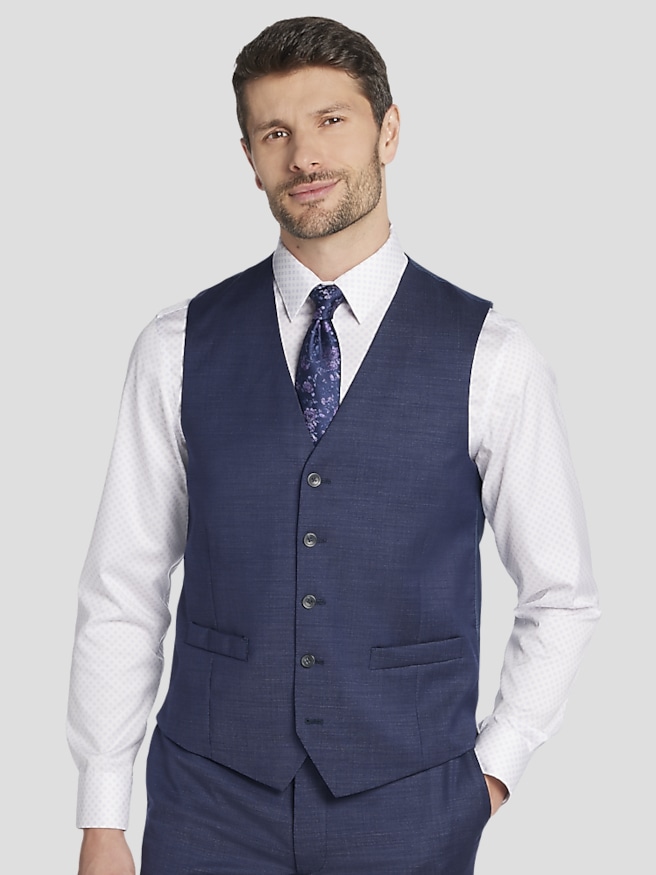
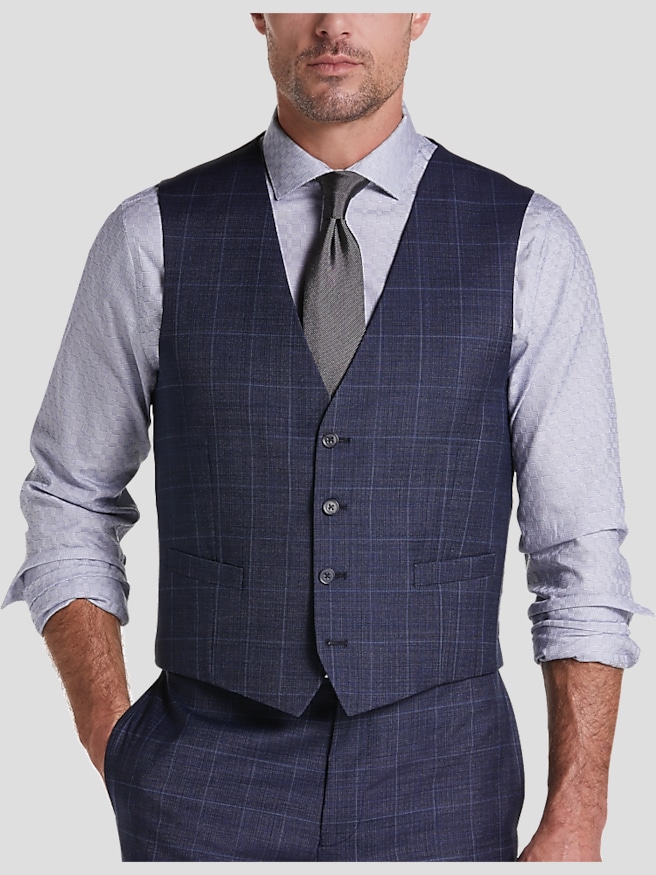
2XLT vests are designed for men who need an extra-extra-large fit with tall proportions, typically providing additional torso length compared with a standard 2XL. The designation describes a size category, not a universal set of measurements, so chest, waist, and garment length remain the most useful points of comparison. A well-fitting vest should sit close enough to create a clean outline without pulling across the stomach or restricting movement through the chest. On a button-front dress vest, the fabric should lie smoothly between the buttons rather than forming tight horizontal lines. The armholes should allow comfortable movement without leaving large gaps that expose too much of the shirt underneath. Length matters just as much as width: a dress vest should generally cover the trouser waistband when standing naturally, without a strip of shirt showing between the two. For someone with a longer torso, a tall cut can help achieve that coverage without choosing a garment that is unnecessarily wide. Try the vest over the type of shirt intended for regular wear, then sit, reach forward, and bring both arms across the body. These everyday movements reveal tension that may not be obvious in a mirror. Check the back as well as the front, especially if an adjustable strap gathers the fabric at the waist. That adjustment can refine the shape, but it cannot correct a vest that is fundamentally too small or too large. Shoulder seams should rest neatly rather than extending noticeably beyond the shoulders, and the neckline should frame the shirt collar without buckling. If measurements suggest a substantially larger fit, 4XLT Vests are another size category to consider, with the garment’s size chart guiding the comparison. The goal is balanced coverage through the chest, waist, and torso, not simply more fabric in every direction. Taking measurements over a lightweight shirt can make that comparison more useful, particularly when choosing between standard and tall proportions. A familiar vest that already fits comfortably can also provide a helpful reference for length and overall shape.
Material and construction influence how a 2XLT vest looks, moves, and fits into an outfit. Wool and wool-blend dress vests often have a refined surface and a drape suited to tailored trousers, dress shirts, and suit jackets. Depending on the weave and finishing, they can look crisp and structured or slightly softer and more textured. Cotton offers another approach, with fabrics ranging from smooth woven finishes to more pronounced twills. Linen has a distinctive texture and develops natural creasing, which works best when that relaxed appearance suits the occasion. Synthetic fibers may contribute wrinkle resistance, shape retention, or easier maintenance, although performance depends on the complete fabric blend and construction. A small amount of stretch can make sitting and reaching more comfortable, but stretch should complement a suitable fit rather than compensate for tightness. Lining also deserves attention because it affects how easily a vest moves over a shirt and how smoothly it sits beneath a jacket. For a coordinated suit, matching fabric, color, and texture creates a unified appearance; two fabrics that seem close in a photograph may look noticeably separate side by side. For an intentionally contrasting outfit, a textured gray vest with navy trousers can look considered without requiring an exact match. A simple shirt provides a quiet background for a patterned vest, while a solid vest can balance a checked or striped shirt. In professional settings, keeping the front smooth and the pockets lightly filled helps preserve a tidy silhouette through meetings, presentations, and dinner afterward. For weddings and other dressed-up occasions, check how the vest neckline works with the tie and how much remains visible when the jacket is buttoned. Less structured woven vests and knit styles can pair naturally with chinos or clean, dark denim when the setting calls for something more relaxed. The most useful choice reflects the clothes already in regular rotation and the level of formality expected, whether that means a coordinated three-piece look or a separate layer over an open-collar shirt.
Thoughtful care helps a vest retain its shape and keeps small construction details working as intended. Always follow the care label, since the shell, lining, interfacing, and trim may require treatment that is not obvious from the outer fabric alone. A wool blend is not automatically machine washable, and a washable outer material does not guarantee that the entire garment can tolerate the same process. After wearing a tailored vest, empty the pockets and let it air before storing it on a suitable hanger. Brush away surface dust gently when appropriate for the fabric, and address spills promptly according to the care instructions rather than rubbing them deeper into the weave. If pressing is permitted, use the recommended setting and a pressing cloth to help prevent shine or marks. Knit vests generally benefit from folded storage that avoids stretching the shoulders. Durability also depends on ordinary habits: overfilling pockets can distort the front, forcing a strained button can loosen its stitching, and repeatedly pulling on an adjustment strap can stress its attachment points. When evaluating construction, look for even stitching, secure buttons or closures, neatly finished edges, and a lining that lies flat without twisting. Pocket openings and the areas around the armholes deserve particular attention because they receive frequent handling and movement. A vest intended for regular office wear benefits from dependable shape retention and a care routine that fits the wearer’s schedule, while one reserved for special occasions should coordinate easily with the trousers, shirt, and jacket worn alongside it. As a gift, a 2XLT vest is most practical when the recipient’s chest measurement, preferred torso length, and usual style are known; a size label alone leaves too much to chance. Whether dressing for a celebration, a client meeting, or an evening out, the right proportions should make the vest feel like a natural part of the outfit. Smooth coverage at the waistband, comfortable movement, and fabric suited to the occasion are the details that make it useful beyond a single wearing.