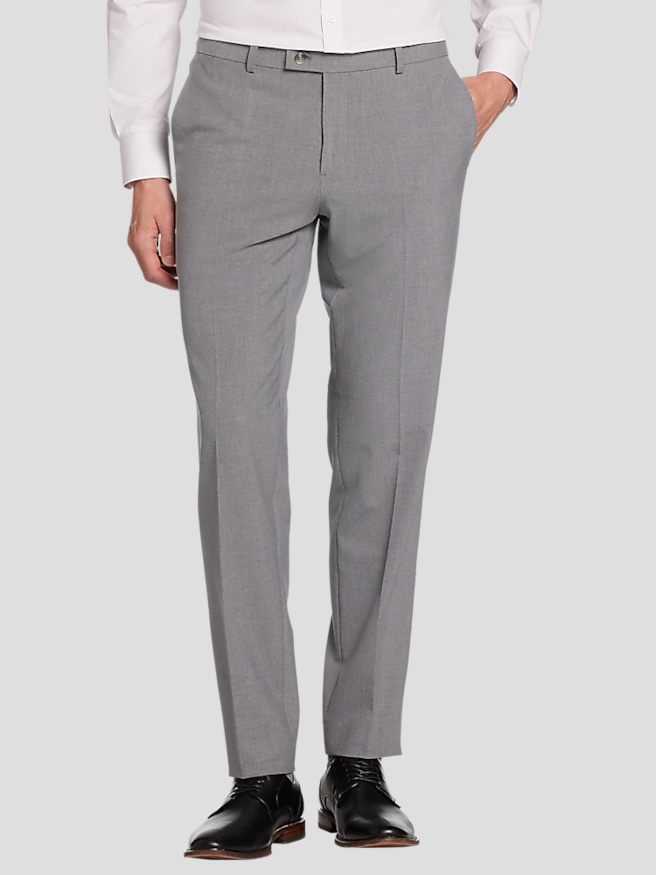
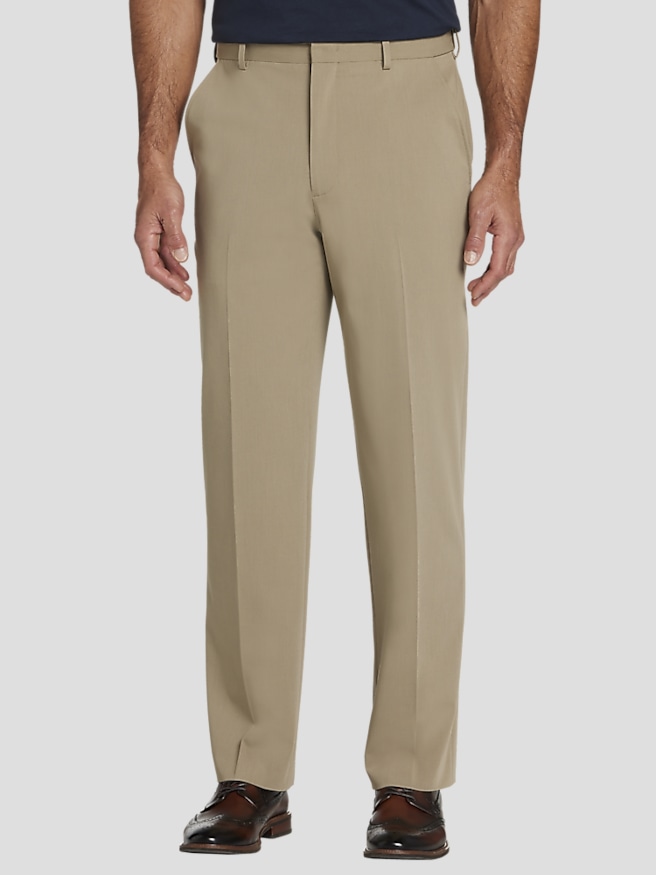
32W dress pants are men’s dress trousers labeled for a nominal 32-inch waist, with the inseam measured separately to determine leg length. That distinction matters: a 32W label identifies the waist size, not the length of the pants or how closely they fit through the seat and thigh. In a label such as 32W x 32L, the first number refers to the nominal waist measurement and the second to the inseam in inches. Actual garment measurements can vary by cut and construction, so the size label is a starting point rather than a promise that every pair will feel identical. Slim fits generally sit closer through the thigh and taper toward the ankle, while classic fits tend to provide more room through the seat and leg. A modern fit often falls between the two, though those terms are not standardized across all trousers. Rise also changes the feel: pants designed to sit closer to the natural waist will fit differently from a lower-rise cut, even when both carry the same waist label. A comfortable waistband should stay in place without pinching when seated, and the front pockets should lie reasonably flat rather than pull open. For someone who spends much of the day at a desk, enough room through the hips and thighs can matter as much as a clean silhouette while standing. Flat-front construction creates an understated line, while pleats can provide additional room and a more traditional appearance. At the hem, little or no break gives a crisp finish above the shoe; a slight break creates a softer fold over the top. The right balance depends on the trouser cut, footwear, and personal preference. A tailor can assess hem length and some fit adjustments, but starting with a comfortable waist and suitable rise makes a noticeable difference in how dress pants look and feel throughout a full day.
Fabric gives 32W dress pants much of their character, influencing everything from the way the legs hang to how the trousers respond to repeated wear. Wool is valued for its drape and natural resilience, making it a familiar choice for polished office clothing and dressier occasions. A fine, smooth weave creates a refined surface, while subtle texture can add depth without relying on a bold pattern. Wool blends combine different fibers to balance appearance, feel, and maintenance requirements, with the exact blend determining the result. Polyester can contribute strength and wrinkle resistance, while viscose may add softness and fluidity. Cotton-based dress trousers generally have a more relaxed character and can work well in offices where a jacket is optional. A small amount of stretch fiber can make sitting, walking, and climbing stairs more comfortable, although stretch does not replace the need for enough room through the seat and thighs. Fabric recovery matters, too: trousers that return toward their original shape after movement are less likely to develop a loose-looking knee during the day. Construction deserves attention alongside fiber content. Secure pocket openings, even stitching, and a waistband that lies smoothly help support regular wear. Pocket lining should feel comfortable rather than bulky, especially with a tucked-in shirt. Care requirements vary, so the garment’s care label should determine whether cleaning at home or professional cleaning is appropriate. Machine-washable trousers still need the specified water temperature and drying method, and garments labeled for dry cleaning should receive that treatment. Hanging dress pants neatly after wear helps preserve the crease and limits unnecessary wrinkles. Emptying pockets before storage prevents keys, wallets, and other small objects from distorting the fabric. Following the recommended pressing instructions, avoiding excessive heat, and addressing marks promptly according to the care label can help protect the finish. Rotating between pairs also gives each garment a rest and reduces concentrated wear from repeated use.
The appeal of 32W dress pants extends beyond a single dress code. For a business-professional office, dark navy, charcoal, and black create a composed foundation for dress shirts, leather shoes, and tailored jackets. Navy pairs naturally with a white or pale blue shirt, while charcoal works with everything from a crisp button-front to a fine-gauge knit. Black trousers can create a clean, restrained outfit for evening dinners and dressier gatherings, though the occasion’s dress code should always guide the final choice. Business-casual settings allow more variation in color and texture: medium gray trousers with a tucked-in shirt and loafers look put together without requiring a full suit. A textured sport coat can add dimension, but separate dress pants should not be assumed to match a suit jacket simply because the colors look similar. Differences in weave, finish, and shade often become more noticeable when the pieces are worn together. For interviews, presentations, graduation ceremonies, and wedding guest outfits, a comfortable fit helps keep attention on the occasion rather than on adjusting a waistband or tugging at tight fabric. Someone who moves between meetings and client dinners may favor a streamlined cut that works with both a jacket and a shirt on its own. A person who carries a phone or wallet in trouser pockets may appreciate a little extra room so the outline stays neat. Dress pants can also make a practical gift for a graduate starting a new job or someone updating professional clothing, provided the waist size, inseam, preferred fit, and care preferences are known. A familiar size label from a well-fitting pair is more useful than guessing from height or build. For someone who typically wears a nominal 38-inch waist, 38W Dress Pants is the relevant size category to consider instead. With the appropriate waist, leg length, fabric, and cut, dress trousers become a dependable foundation for outfits that need to look considered without feeling complicated.